

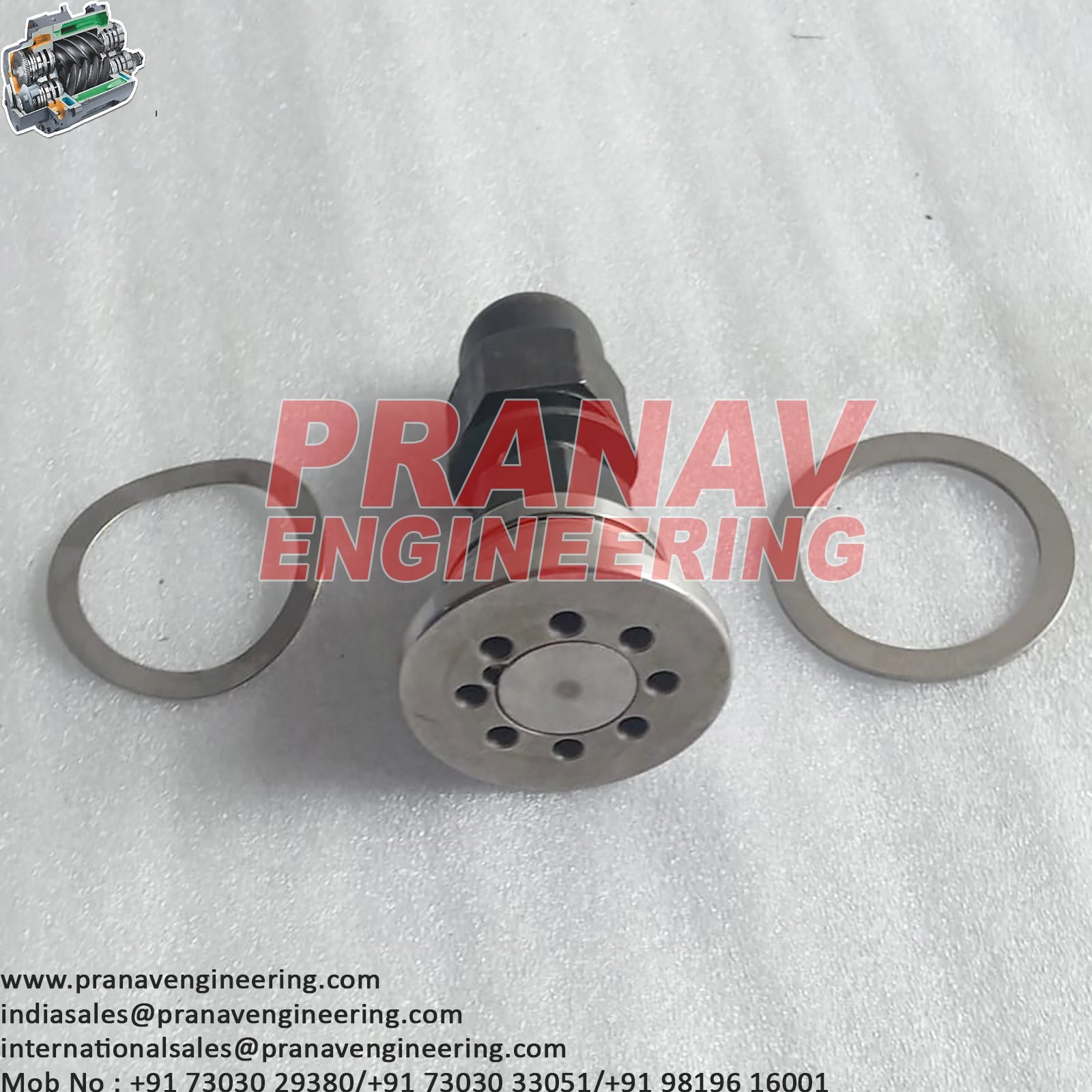


VALVE ASSEMBLY-32156697
A compressor valve assembly is a critical mechanical component responsible for controlling the flow of gas or air into and out of the compressor cylinder during the compression cycle.
A compressor valve assembly is a critical mechanical component responsible for controlling the flow of gas or air into and out of the compressor cylinder during the compression cycle. It ensures efficient operation by allowing the gas to enter the cylinder during the suction stroke and preventing reverse flow during the compression and discharge strokes. Proper valve design, material selection, installation, and maintenance are essential for achieving reliable compressor performance, energy efficiency, and extended service life.
A typical compressor valve assembly consists of a valve plate, suction valve, discharge valve, valve springs, spring retainers, valve guards, seat components, and associated fasteners. Depending on the compressor design, the assembly may be manufactured as a plate valve, ring valve, poppet valve, or reed-type valve. The components are designed to withstand repeated high-frequency opening and closing, pressure variations, temperature changes, and mechanical stresses generated during compressor operation.
During the suction stroke, the pressure inside the cylinder decreases below the suction-line pressure. This pressure difference causes the suction valve to open, allowing gas to enter the cylinder. As the piston moves in the opposite direction, the suction valve closes and the gas is compressed. When the cylinder pressure exceeds the discharge-line pressure, the discharge valve opens and permits the compressed gas to flow into the discharge line. The valve then closes when the pressure difference reverses, preventing the compressed gas from flowing back into the cylinder.
The valve assembly must be manufactured with high dimensional accuracy and suitable surface finish to ensure proper sealing and minimize leakage. Valve plates, seats, and other wear surfaces are commonly manufactured from specially selected alloy steels or other materials capable of resisting fatigue, impact, corrosion, and wear. Springs must maintain the required operating force throughout the service life of the valve.
Regular inspection and maintenance of the compressor valve assembly are important to prevent performance deterioration and unexpected shutdowns. Common problems include valve plate damage, spring failure, carbon or dirt deposits, excessive wear, leakage, improper seating, and broken valve components. Symptoms may include reduced compressor capacity, increased discharge temperature, abnormal noise, higher power consumption, and unstable operating pressure.
Correct assembly procedures, proper torque of fasteners, clean working conditions, and use of approved replacement parts are necessary to maintain valve reliability. Overall, the compressor valve assembly plays a vital role in maintaining gas-flow control, compression efficiency, equipment safety, and dependable compressor operation.