

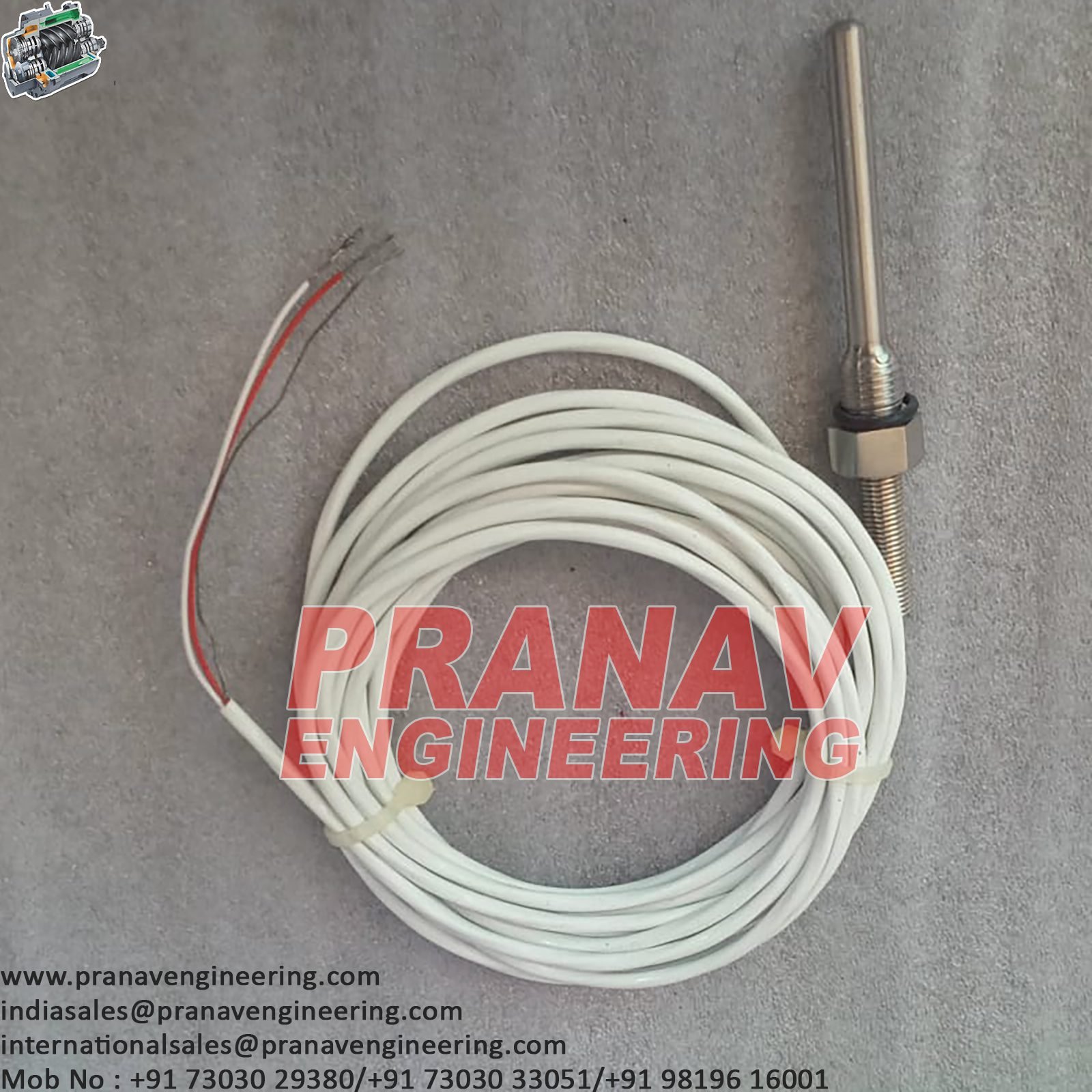
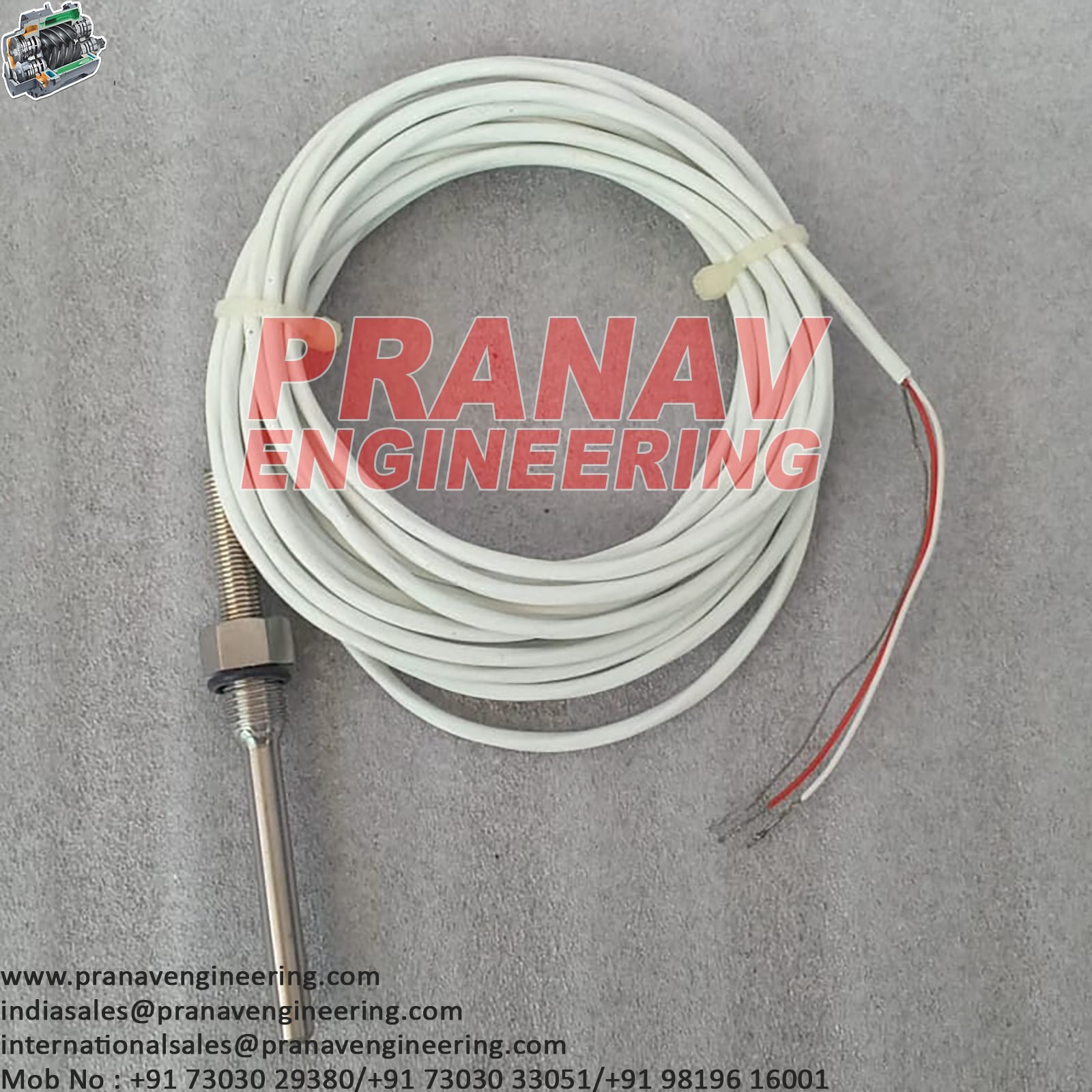
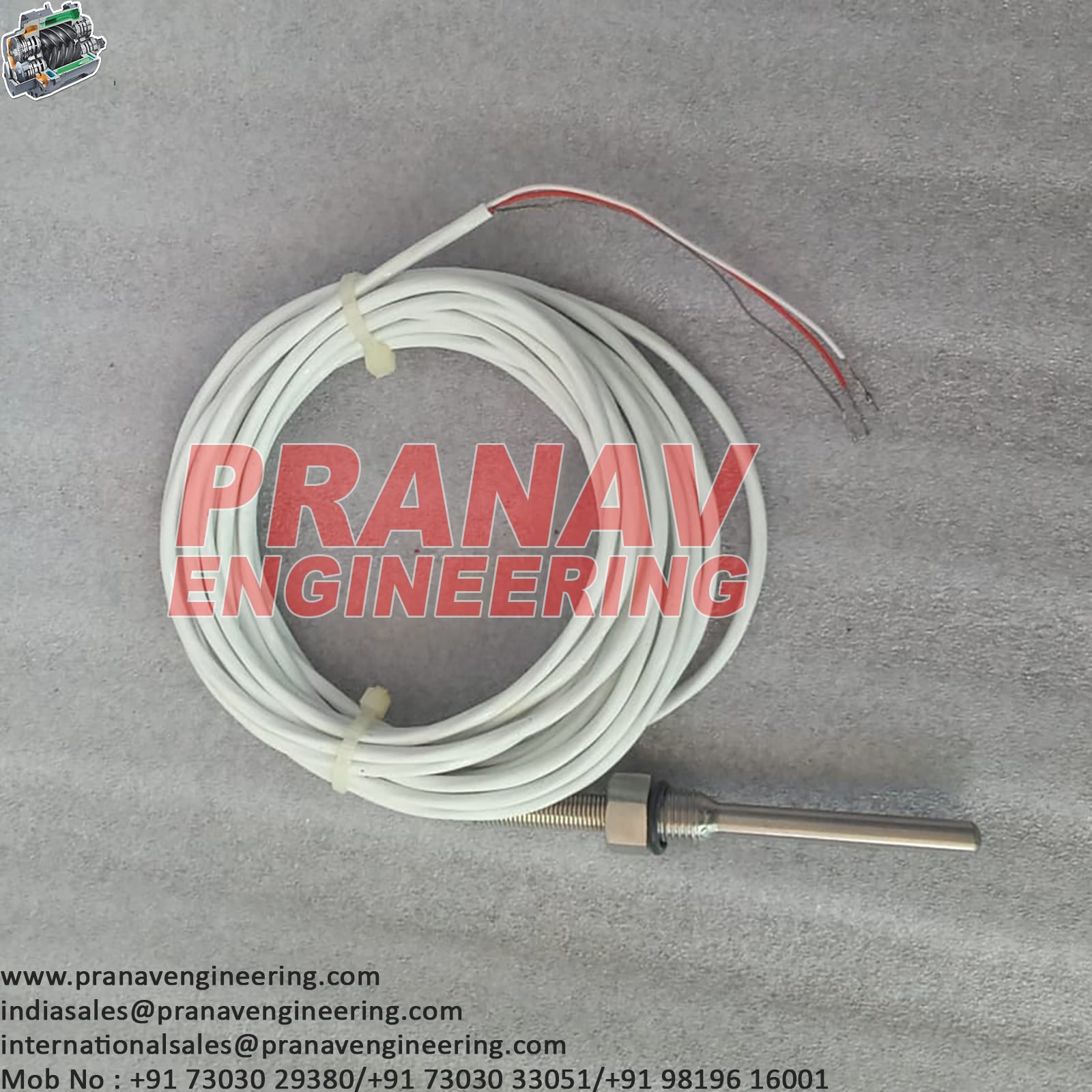
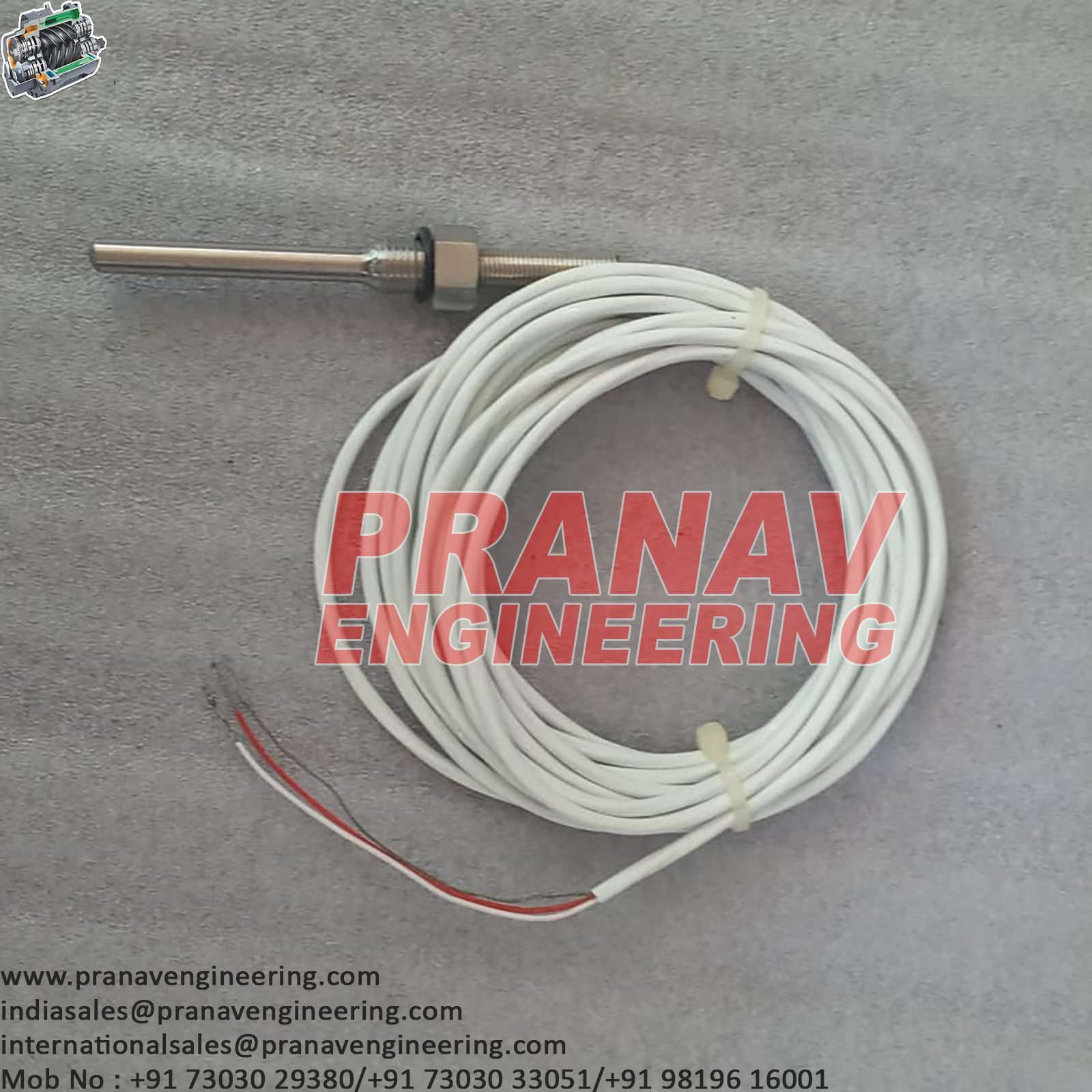
TEMPERATURE SENSOR-39586227
RTD sensors offer high accuracy and stability, making them ideal for industrial compressor systems.
A temperature sensor is an important component used in compressors to monitor and control operating temperatures during compressor operation. It helps maintain the efficiency, safety, and reliability of the compressor system by continuously detecting temperature changes in critical areas such as the air outlet, oil system, motor winding, discharge line, or cooling unit.
Compressors generate heat during the compression process because air pressure increases and mechanical parts operate continuously under load. Excessive heat can reduce compressor performance, damage internal components, degrade lubricating oil, and increase maintenance costs. A temperature sensor helps prevent these issues by providing real-time temperature monitoring.
The sensor works by measuring temperature and converting it into an electrical signal that is sent to the compressor controller or monitoring system. When the detected temperature exceeds the preset safety limit, the controller can trigger an alarm, activate cooling systems, or automatically shut down the compressor to prevent overheating and equipment failure.
Different types of temperature sensors are commonly used in compressors, including thermocouples, RTD (Resistance Temperature Detector) sensors, and thermistors. Thermocouples are suitable for high-temperature applications and provide fast response times. RTD sensors offer high accuracy and stability, making them ideal for industrial compressor systems. Thermistors are compact and cost-effective, often used for precise temperature measurement in smaller compressor units.
Temperature sensors are widely installed in rotary screw compressors, piston compressors, centrifugal compressors, and industrial air compressor systems. They are essential in industries such as manufacturing, automotive, pharmaceuticals, food processing, construction, and power generation, where compressor performance directly affects operational productivity.
Key advantages of compressor temperature sensors include improved equipment protection, reduced downtime, enhanced operational efficiency, better energy management, and lower maintenance expenses. By monitoring temperature continuously, operators can identify abnormal operating conditions early and perform preventive maintenance before major failures occur.
Modern compressor temperature sensors are designed for durability and long service life. Many models offer resistance to vibration, dust, oil contamination, and harsh industrial environments. Some advanced systems also support digital communication for integration with industrial automation and remote monitoring platforms.
In industrial compressor applications, a temperature sensor plays a vital role in ensuring stable operation, protecting valuable equipment, and maintaining optimal performance. Proper temperature monitoring not only extends compressor life but also improves overall system reliability and operational safety, making temperature sensors an essential component in modern compressor technolog.