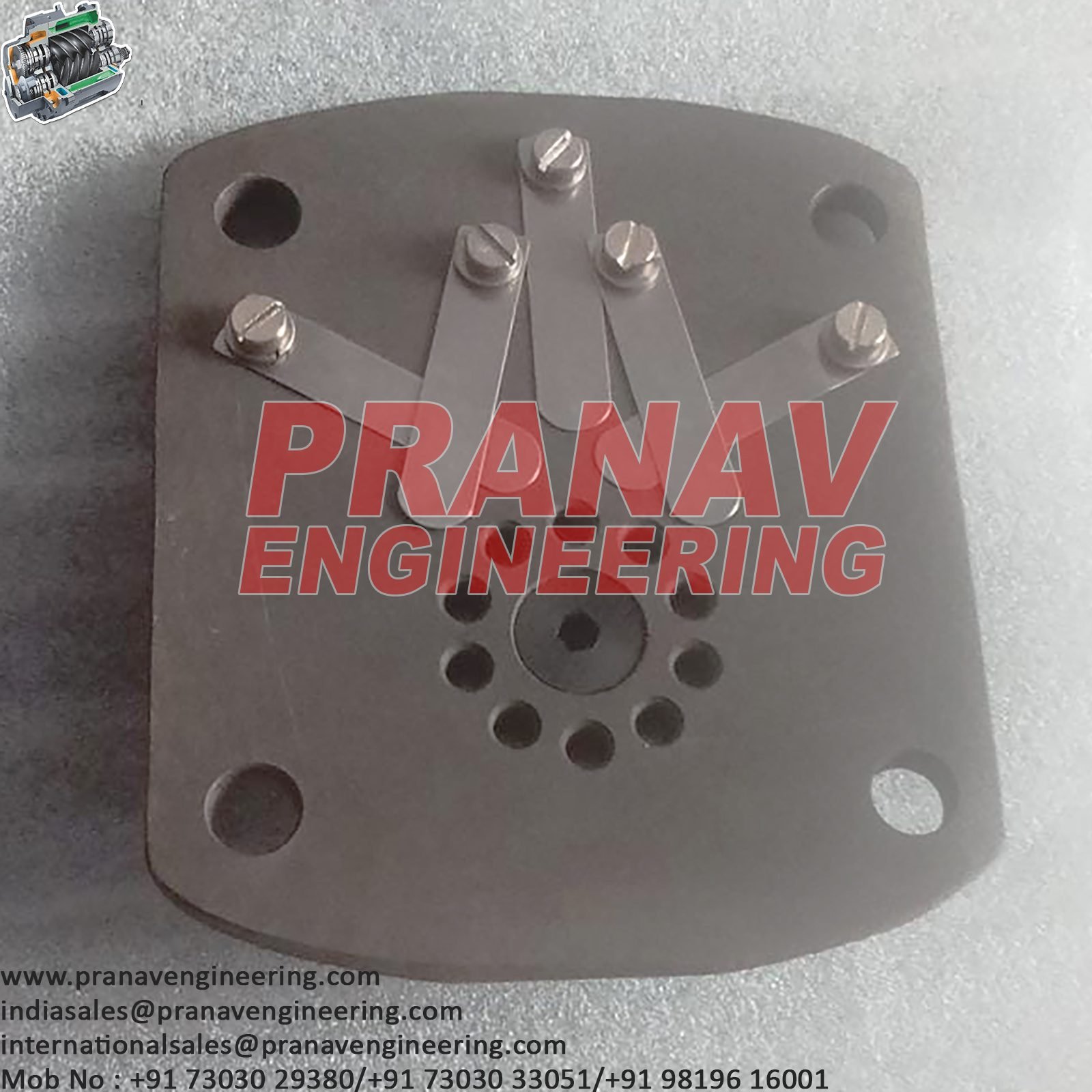
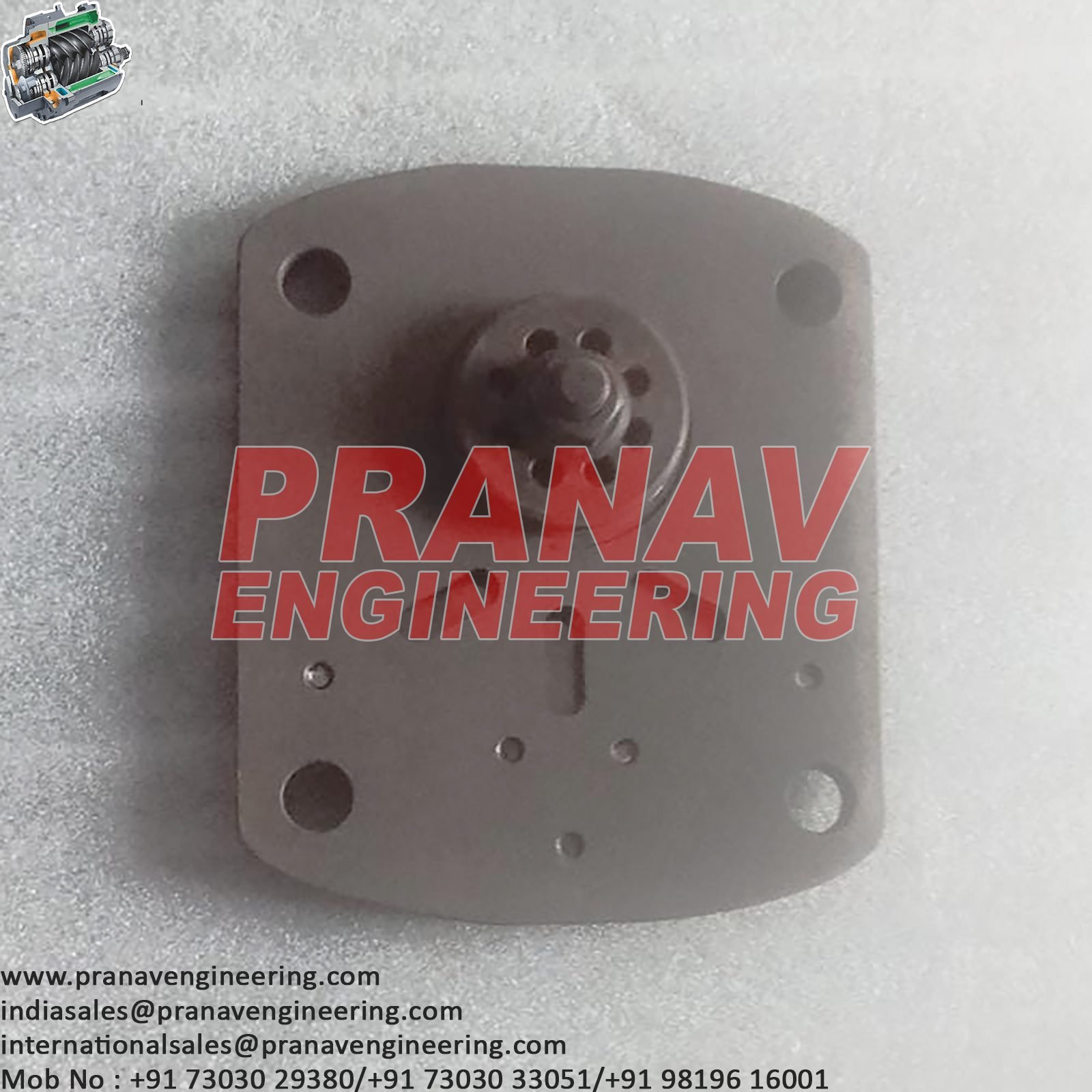
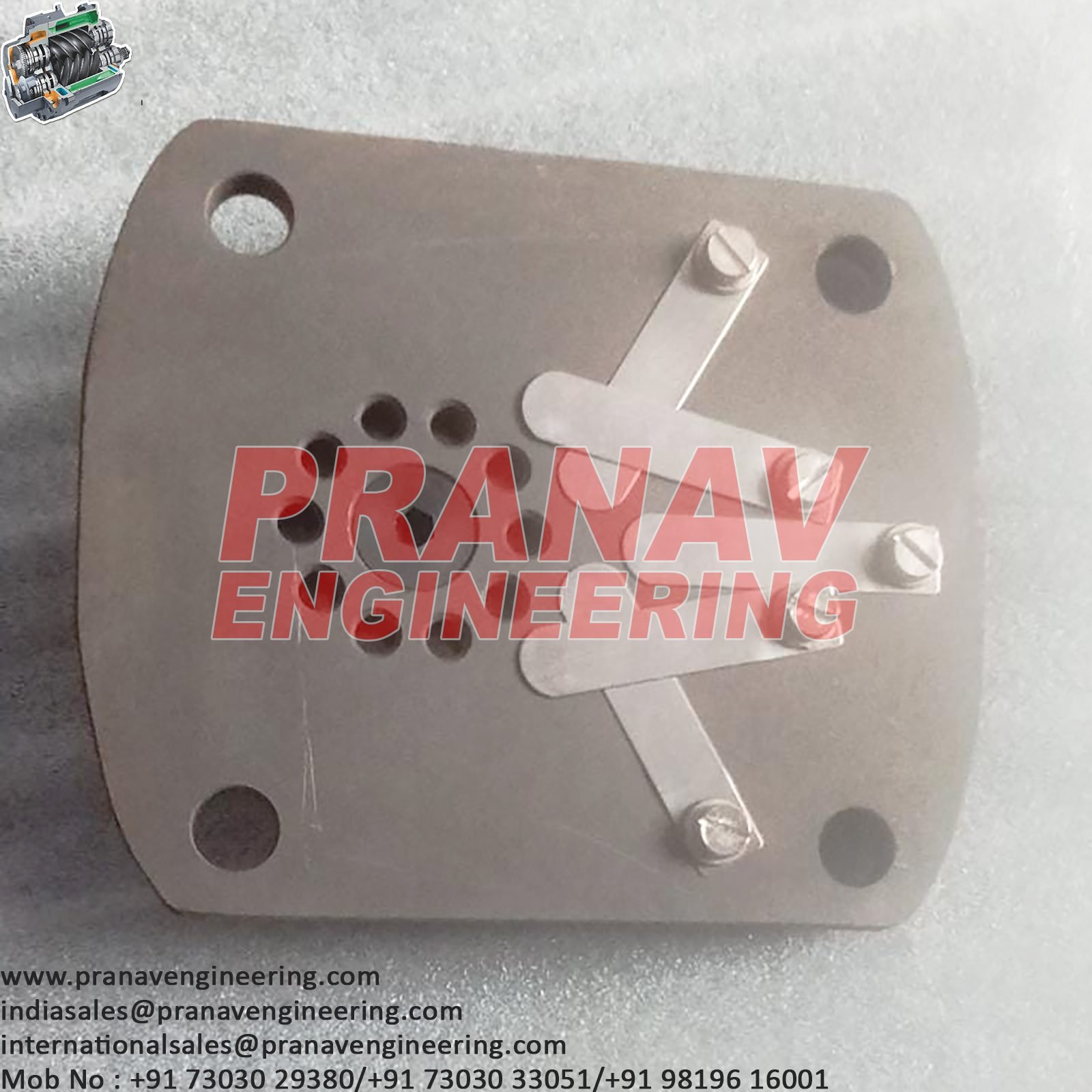
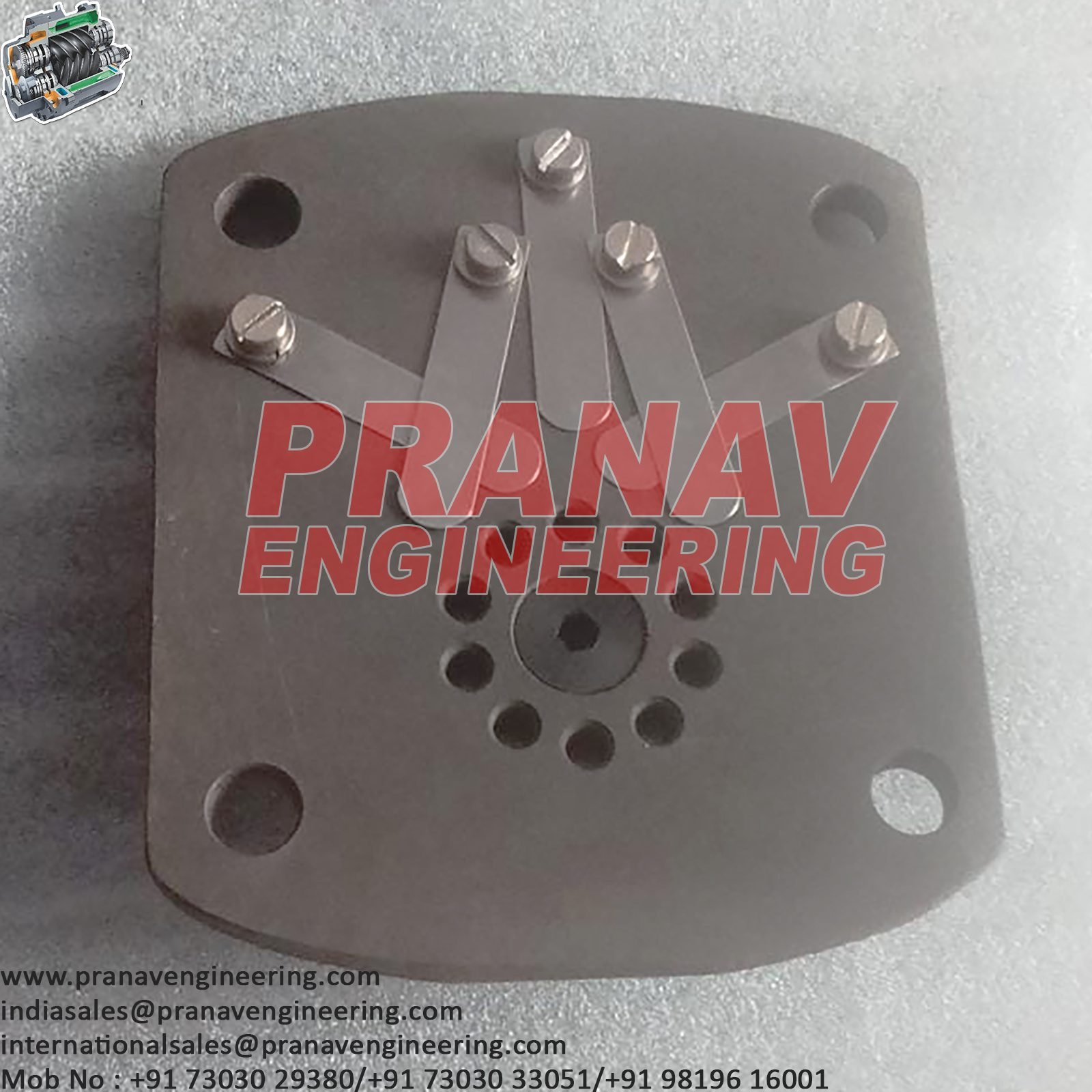
SEAT PLATE ASSEMBLY-32229817
The seat plate assembly is an important component of a reciprocating compressor valve system.
The seat plate assembly is an important component of a reciprocating compressor valve system. It is mainly used to support and locate the valve components and to provide a proper sealing surface through which compressed gas can flow in the required direction. The seat plate assembly is designed to withstand repeated pressure fluctuations, mechanical loads, and temperature changes during continuous compressor operation.
The seat plate assembly generally consists of a valve seat, seat plate, valve elements, springs, retainers, and associated fastening components, depending on the compressor design. The exact construction varies according to the compressor model, pressure rating, gas being compressed, and manufacturer’s specifications.
The valve seat provides the sealing surface against which the valve element closes. A properly machined valve seat is essential for preventing leakage when the valve is closed. It must have good surface finish, hardness, and wear resistance because it is subjected to repeated opening and closing cycles.
The seat plate acts as a supporting and positioning member for the valve assembly. It maintains the correct alignment of the valve components and helps distribute mechanical loads over the assembly. The seat plate also contributes to maintaining the required flow passages for gas movement.
The valve element moves according to the pressure difference across the valve. In the suction valve, it allows gas to enter the cylinder during the suction stroke and prevents reverse flow during compression. In the discharge valve, it allows compressed gas to leave the cylinder and prevents the gas from returning to the cylinder.
Valve springs are used to control the movement of the valve elements and help return them to their closed position. The spring force must be correctly selected because excessive force can restrict gas flow, while insufficient force may cause valve flutter or leakage.
The seat plate assembly is subjected to severe operating conditions. Continuous impact between the valve element and seat can cause wear, pitting, cracking, deformation, or loss of sealing efficiency. Deposits, dirt, improper lubrication, excessive temperature, and incorrect assembly can also reduce valve performance.
A damaged seat plate assembly may result in reduced compressor capacity, increased power consumption, higher discharge temperature, abnormal valve noise, pressure loss, and gas leakage. Therefore, regular inspection and maintenance are necessary. During inspection, the valve seat and seat plate should be checked for cracks, erosion, wear marks, deformation, and proper surface condition. Springs should also be inspected for loss of tension or breakage.
During reassembly, all components must be cleaned properly and installed in the correct orientation. Fasteners should be tightened according to the manufacturer’s specified torque. Proper valve clearances and alignment must be maintained to ensure reliable operation.
In conclusion, the seat plate assembly is a critical part of the compressor valve system. It supports the valve components, ensures proper gas flow, and helps maintain effective sealing. Regular inspection, accurate installation, and timely replacement of damaged components are essential for achieving efficient, safe, and reliable compressor operation.