

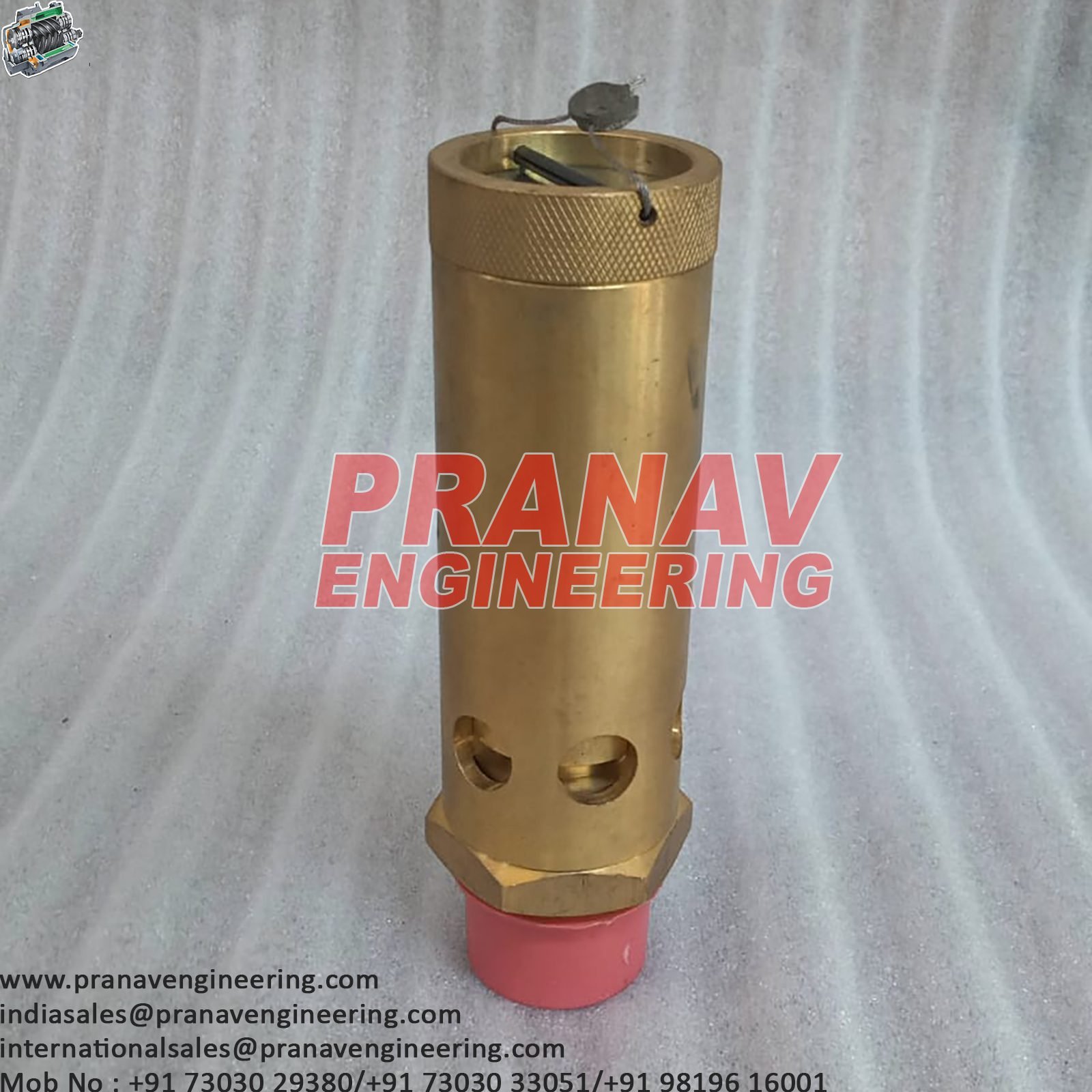
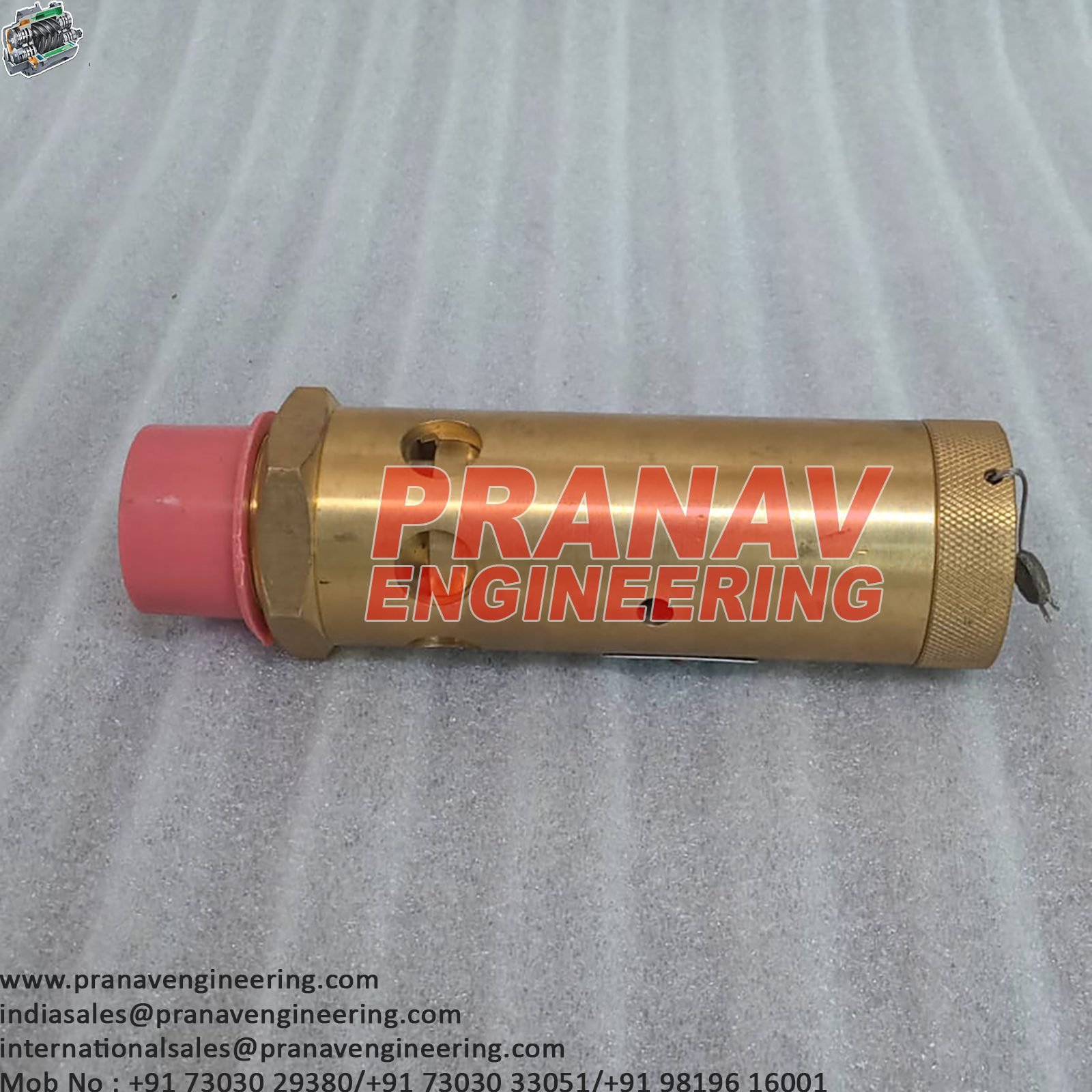
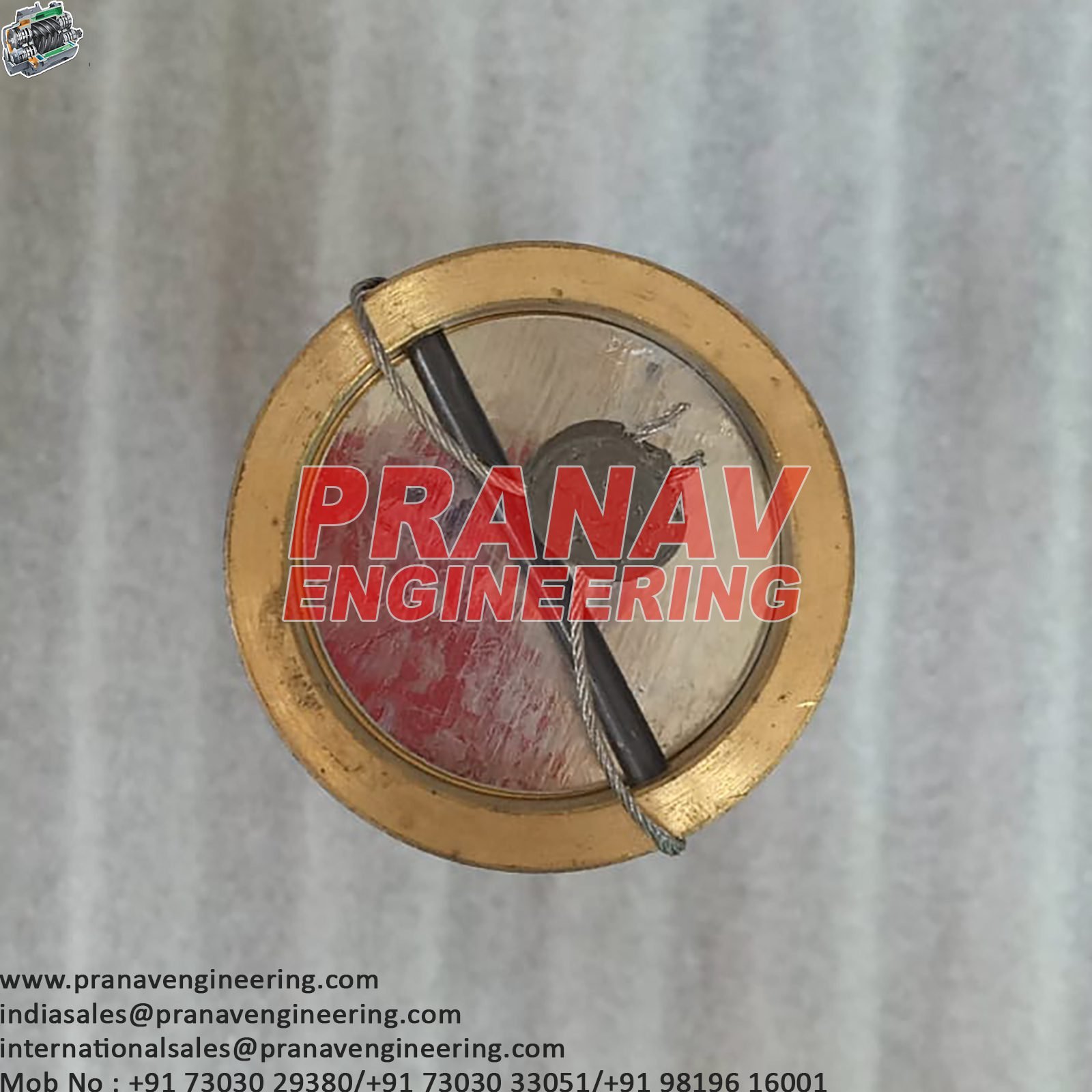
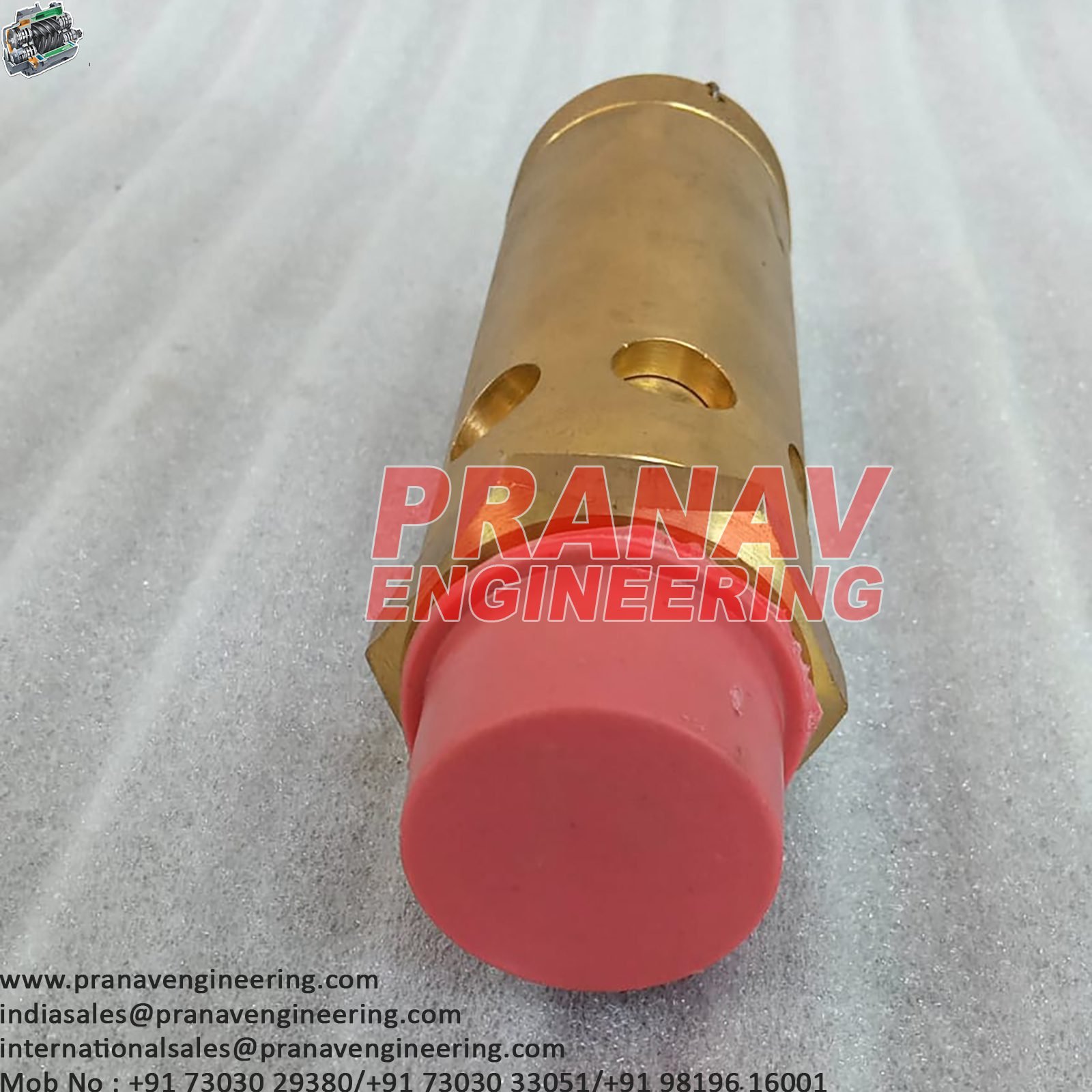
SAFETY VALVE-SC12-11-1
Periodic testing helps ensure the valve opens at the correct pressure and prevents unexpected system failures.
A safety valve in an air compressor is a critical protective component designed to maintain safe operating pressure inside the compressor system. It automatically releases excess compressed air whenever the internal pressure rises beyond the preset safety limit. This prevents damage to the compressor, air receiver tank, pipelines, and connected pneumatic equipment while also ensuring operator safety in industrial environments.
The safety valve works on a simple but highly reliable mechanism. Under normal operating conditions, the valve remains closed while the compressor maintains the required pressure level. When pressure inside the system exceeds the calibrated setting, the force of compressed air overcomes the spring tension inside the valve, causing it to open automatically. Excess air is then discharged into the atmosphere until the pressure returns to a safe operating range, after which the valve closes again.
Safety valves are commonly manufactured using durable materials such as brass, stainless steel, or high-grade alloy metals to withstand high pressure, heat, and corrosion. These valves are available in different pressure ratings and connection sizes to suit various compressor models and industrial applications. Proper selection of the safety valve is extremely important because incorrect pressure settings can lead to inefficient performance or dangerous operating conditions.
In industrial air compressor systems, safety valves are widely used in rotary screw compressors, reciprocating compressors, air dryers, receiver tanks, and pneumatic machinery. Industries such as manufacturing, automotive, textile, pharmaceutical, food processing, and construction rely heavily on safety valves for continuous and safe compressed air operations.
Regular inspection and maintenance of compressor safety valves are essential for reliable performance. Over time, dirt, oil residue, moisture, or corrosion may affect valve operation. Periodic testing helps ensure the valve opens at the correct pressure and prevents unexpected system failures. Replacing damaged or worn-out safety valves on time improves operational safety and protects expensive compressor components from overpressure damage.
A high-quality compressor safety valve offers several advantages including enhanced workplace safety, protection of equipment, reduced maintenance costs, improved system reliability, and compliance with industrial safety standards. It acts as the final line of defense against excessive pressure buildup and plays a vital role in maintaining efficient compressor operation.
Overall, the safety valve is one of the most important components in any compressed air system, ensuring both operational efficiency and maximum safety in demanding industrial applications.