
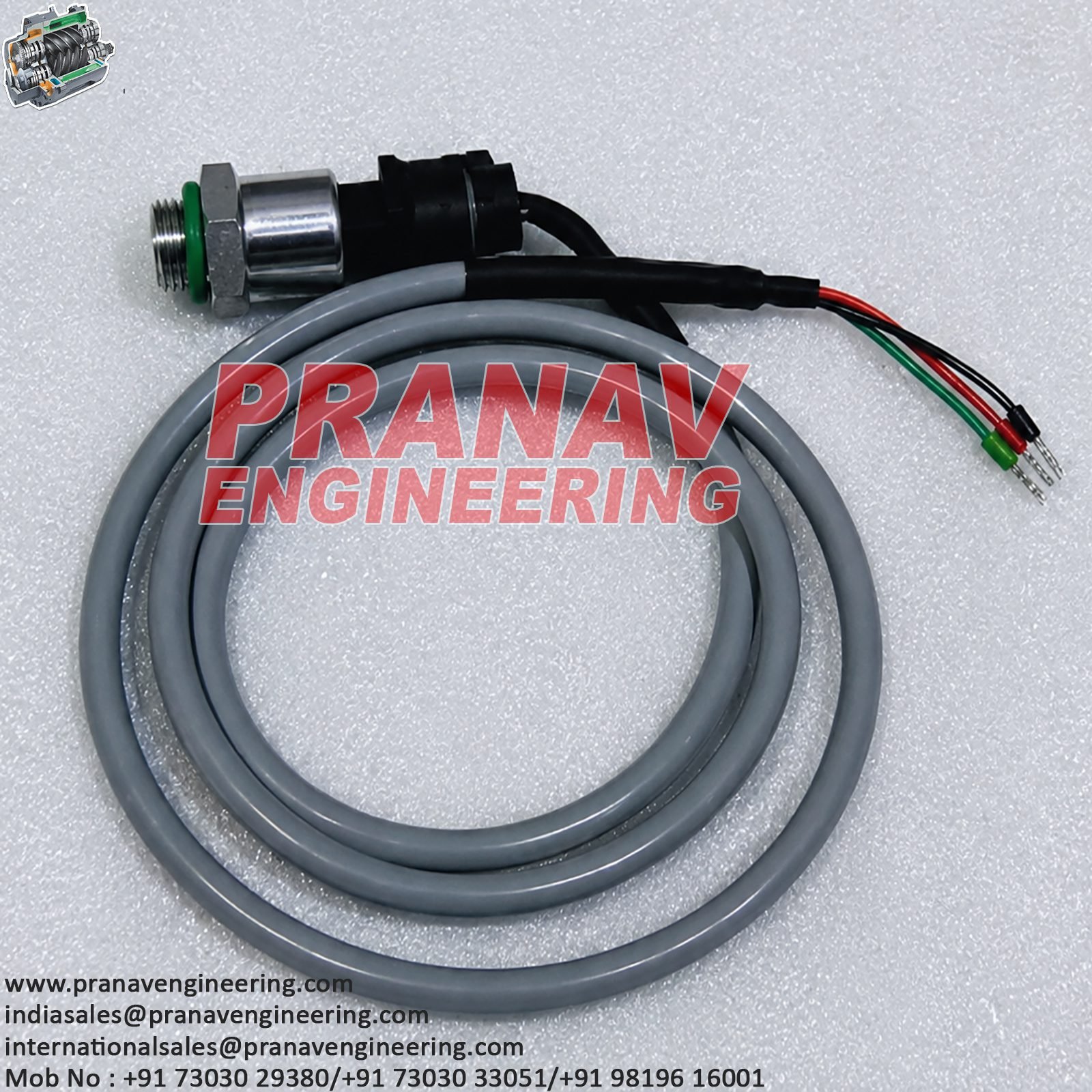


PRESSURE SENSOR – 1089049235
A pressure sensor in a compressor is a vital component used to monitor and control the pressure levels within the compressed air system. It plays a major role in ensuring safe, efficient, and reliable compressor operation across industrial, commercial, and manufacturing applications.
A pressure sensor in a compressor is a vital component used to monitor and control the pressure levels within the compressed air system. It plays a major role in ensuring safe, efficient, and reliable compressor operation across industrial, commercial, and manufacturing applications. Designed to detect variations in pressure, the sensor converts physical pressure into an electrical signal that can be interpreted by the compressor controller or monitoring system. This allows the compressor to maintain accurate pressure levels while protecting the system from damage caused by excessive or insufficient pressure. Pressure sensors are commonly installed in screw compressors, piston compressors, and other air compression systems where precise pressure monitoring is essential. These sensors help regulate the compressor’s loading and unloading cycles, improving overall energy efficiency and reducing unnecessary wear on components. By continuously monitoring pressure conditions, the sensor ensures the compressor delivers stable airflow according to operational requirements. Modern compressor pressure sensors are manufactured using durable materials such as stainless steel to withstand harsh industrial environments, vibration, temperature fluctuations, moisture, and oil exposure. They are engineered for high accuracy, fast response time, and long operational life. The compact design allows easy installation within various compressor models and systems. One of the key advantages of a pressure sensor is its contribution to equipment safety. If abnormal pressure conditions occur, the sensor sends signals to the controller, which can trigger alarms, shutdown procedures, or protective actions. This helps prevent compressor failure, pipeline damage, and costly downtime. In automated systems, pressure sensors also support real-time monitoring and remote diagnostics, making maintenance more efficient and reducing operational interruptions. Pressure sensors are available in different pressure ranges and output configurations to match specific industrial requirements. They are widely used in manufacturing plants, automotive industries, pneumatic systems, food processing units, pharmaceuticals, textiles, and heavy engineering sectors. Their versatility makes them suitable for both low-pressure and high-pressure compressor applications.