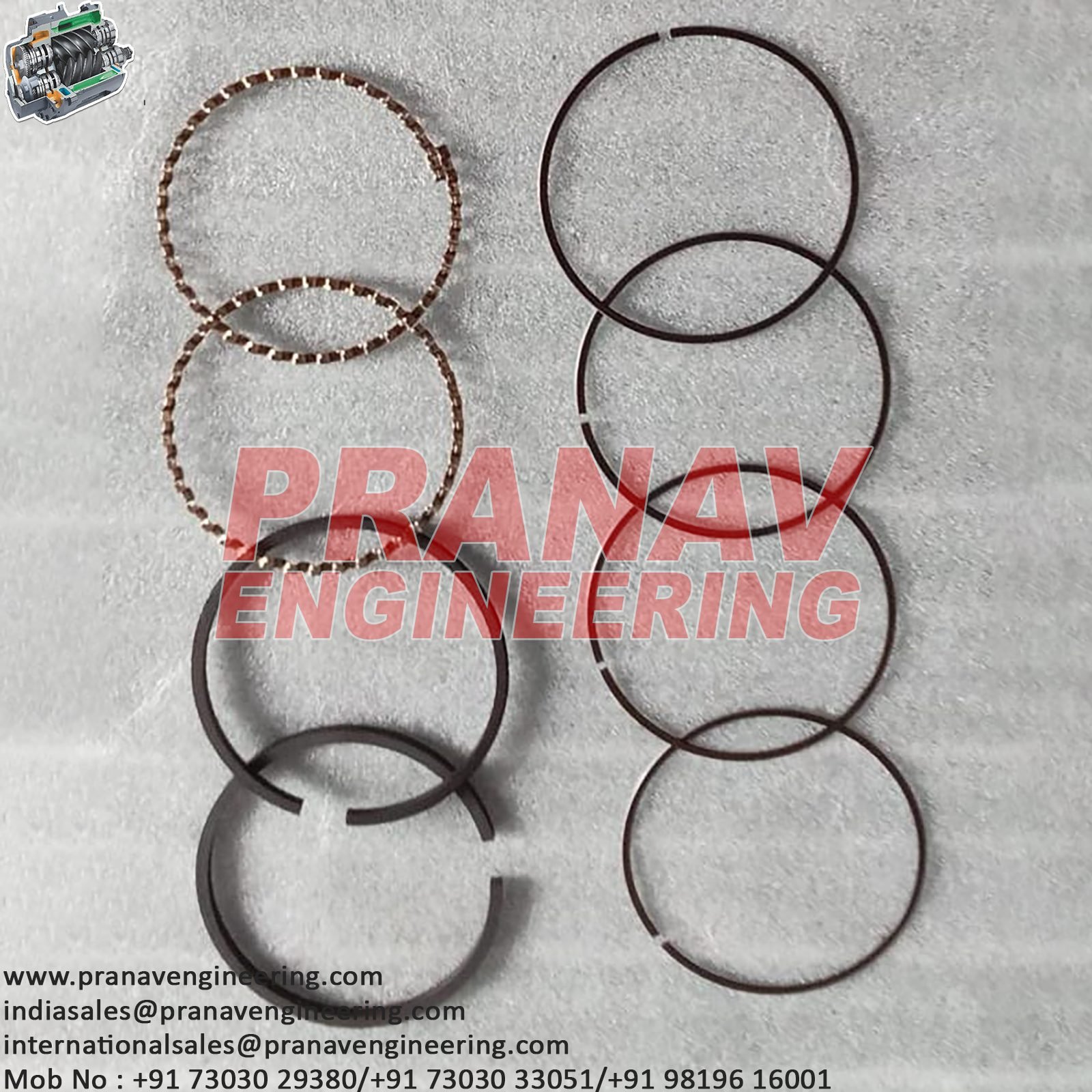
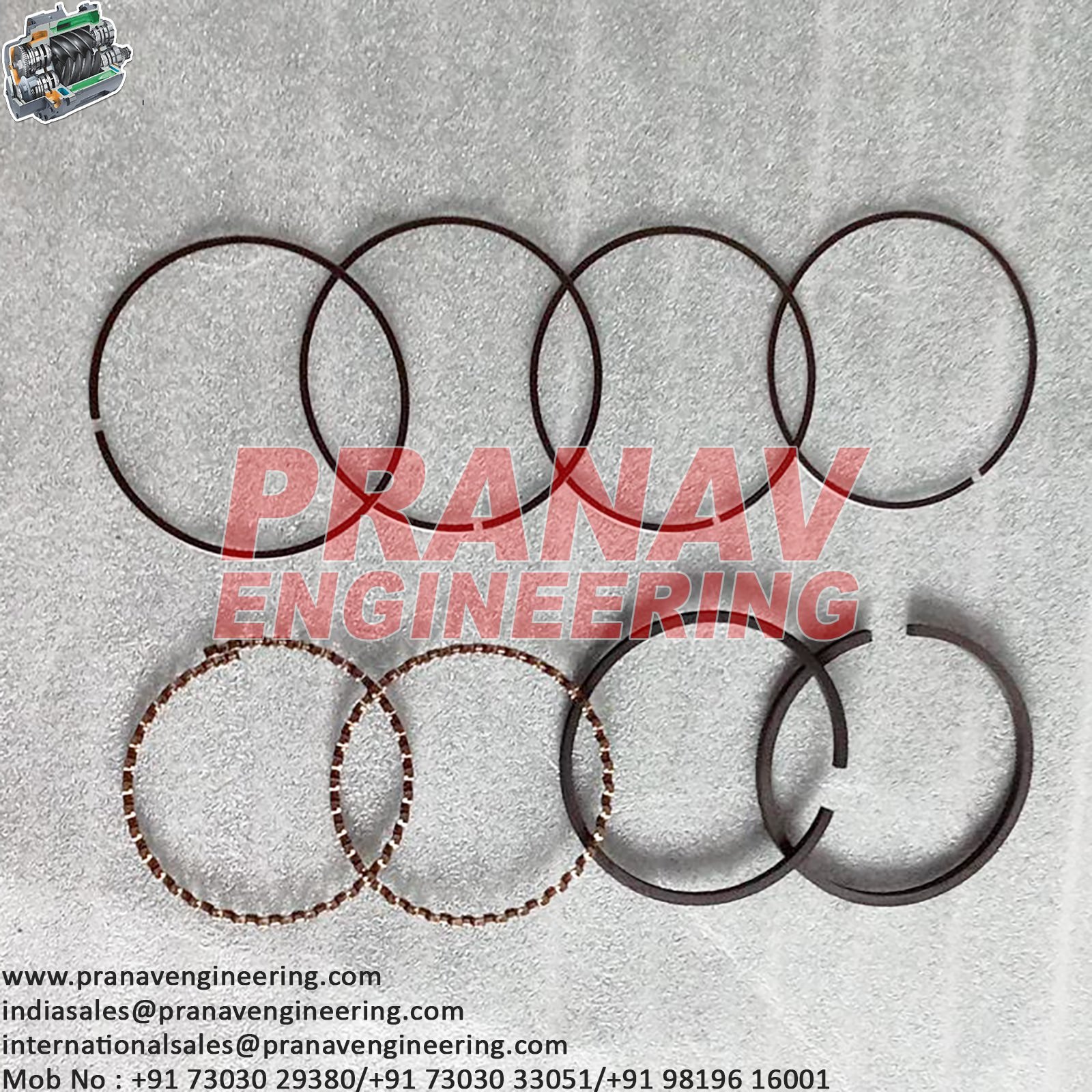
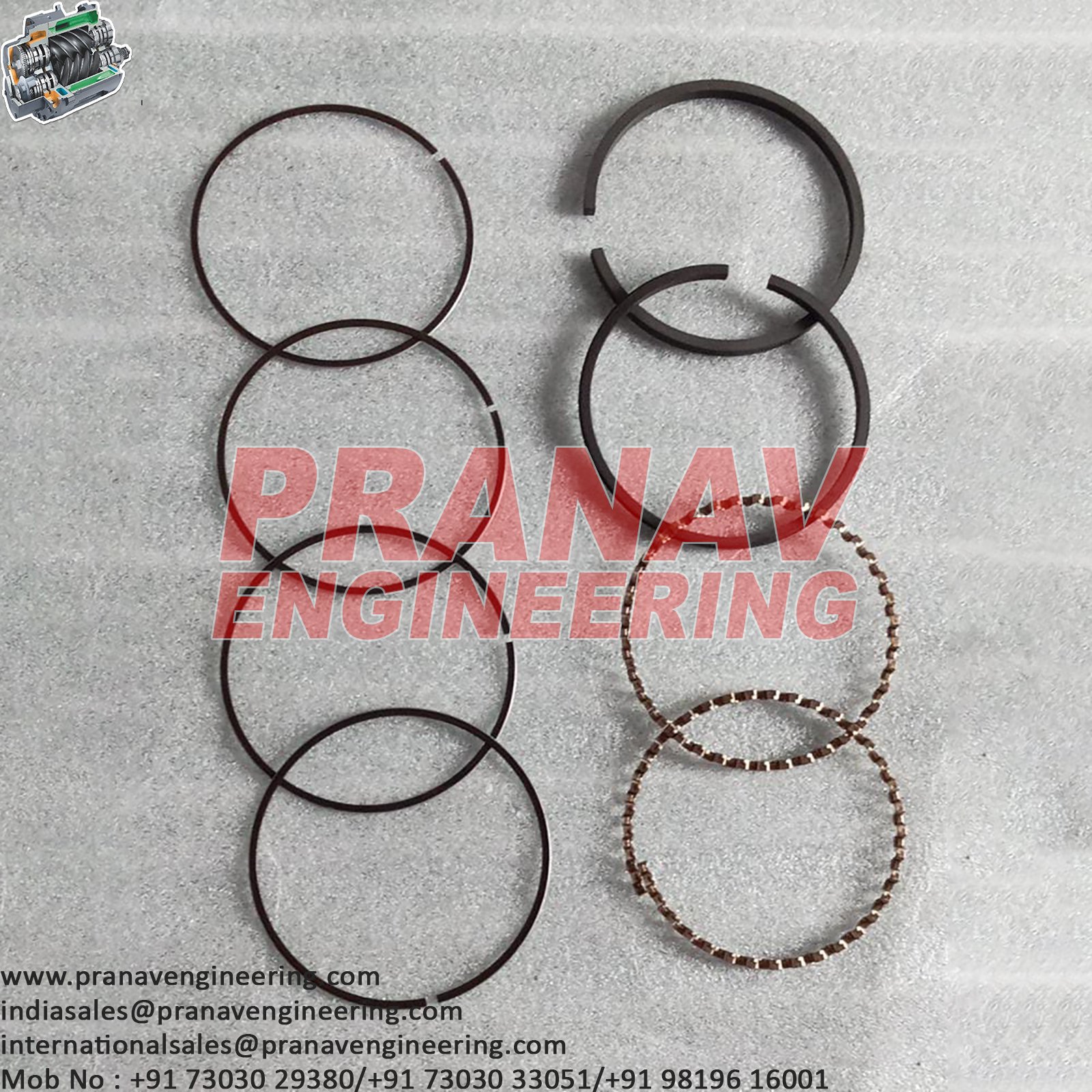
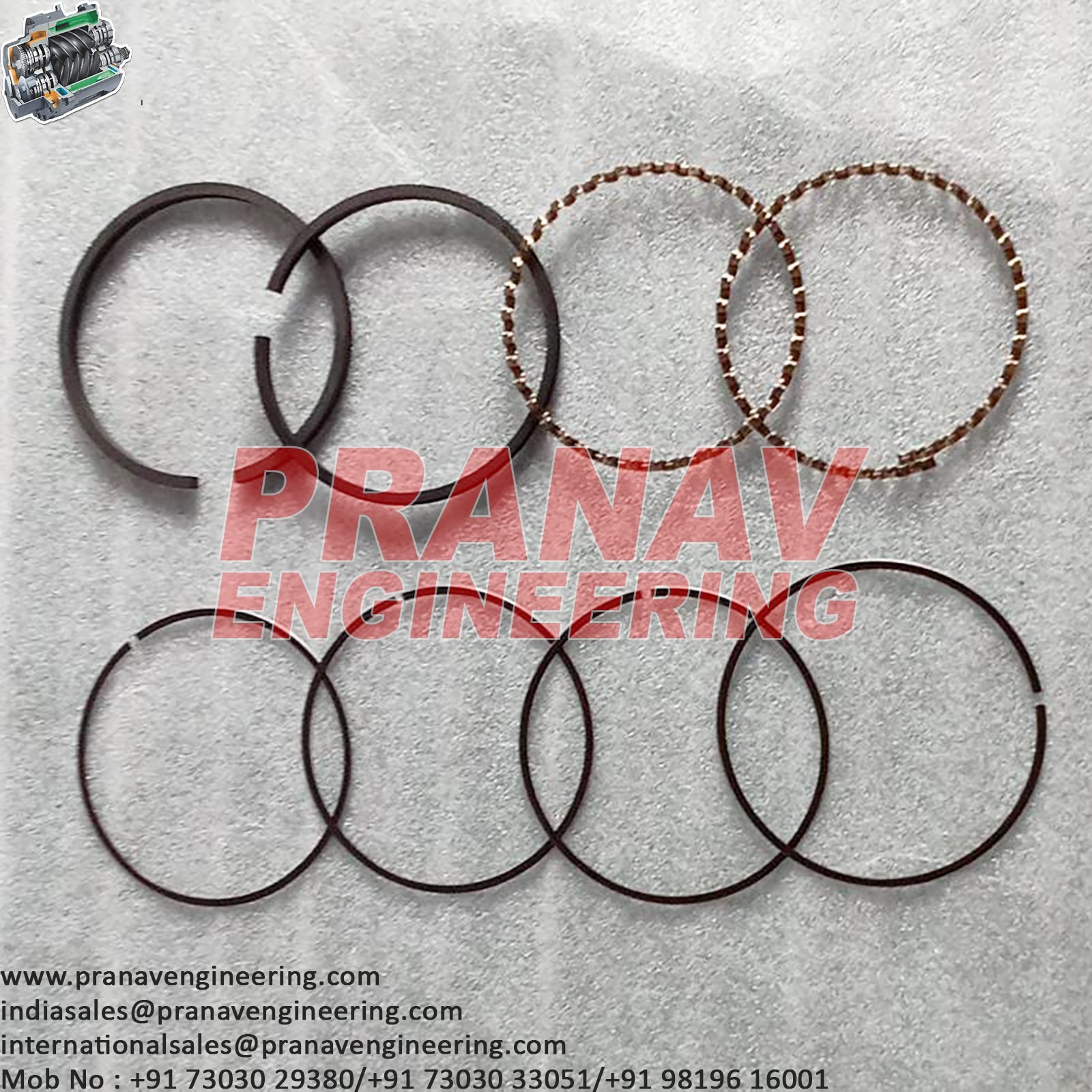
PISTON RING SET-32218182
An important feature of piston rings is the ring end gap. A small gap is provided where the ends of the ring meet.
A piston ring set is an important component of a reciprocating compressor. It is fitted into grooves provided around the outer circumference of the piston. The main purpose of the piston ring set is to provide an effective seal between the piston and the cylinder wall during the compression process. It helps maintain compression pressure, reduce gas leakage, control lubrication, and improve the overall efficiency and performance of the compressor.
A typical compressor piston ring set consists of compression rings, oil-control rings, and, depending on the design, additional sealing or scraper rings. The number, shape, and material of the rings depend on the compressor type, operating pressure, temperature, and manufacturer specifications.
Compression rings are primarily responsible for sealing the compressed gas. They are installed in the upper grooves of the piston and maintain close contact with the cylinder wall. During operation, gas pressure acts behind the ring and helps press it against the cylinder surface. This reduces blow-by, which is the unwanted movement of compressed gas from the cylinder into the crankcase or other areas.
Oil-control or scraper rings are used mainly in oil-lubricated compressors. Their function is to control the amount of lubricating oil present on the cylinder wall. They remove excess oil and help maintain an appropriate lubrication film between the piston and cylinder. In some compressor designs, oil-control arrangements may differ because of the use of special lubrication systems or oil-free operation.
Piston rings are generally manufactured from cast iron, alloy materials, or specially treated materials selected according to the operating conditions. The ring material must have good wear resistance, suitable strength, and the ability to operate reliably under pressure and temperature variations. Some rings may have special surface coatings or treatments to improve wear resistance and reduce friction.
An important feature of piston rings is the ring end gap. A small gap is provided where the ends of the ring meet. This gap allows the ring to expand when heated during operation. If the gap is too small, the ring may expand excessively and become stuck in the groove. If it is too large, excessive gas leakage can occur.
Worn or damaged piston rings can cause several problems, including reduced compressor capacity, loss of compression pressure, increased gas leakage, excessive oil consumption, higher operating temperature, and reduced efficiency. Signs of ring wear may include abnormal noise, reduced discharge pressure, increased crankcase pressure, or poor compressor performance.
Regular inspection and correct installation of the piston ring set are therefore essential. The piston grooves and cylinder surface should be clean and free from excessive wear before new rings are installed. Correct ring orientation, end gap, clearance, and lubrication should always follow the compressor manufacturer’s specifications.
In conclusion, the piston ring set plays a vital role in maintaining proper sealing, controlling lubrication, reducing wear, and ensuring efficient operation of a reciprocating compressor. Proper maintenance and timely replacement of worn rings help extend compressor life and prevent unexpected breakdowns.