
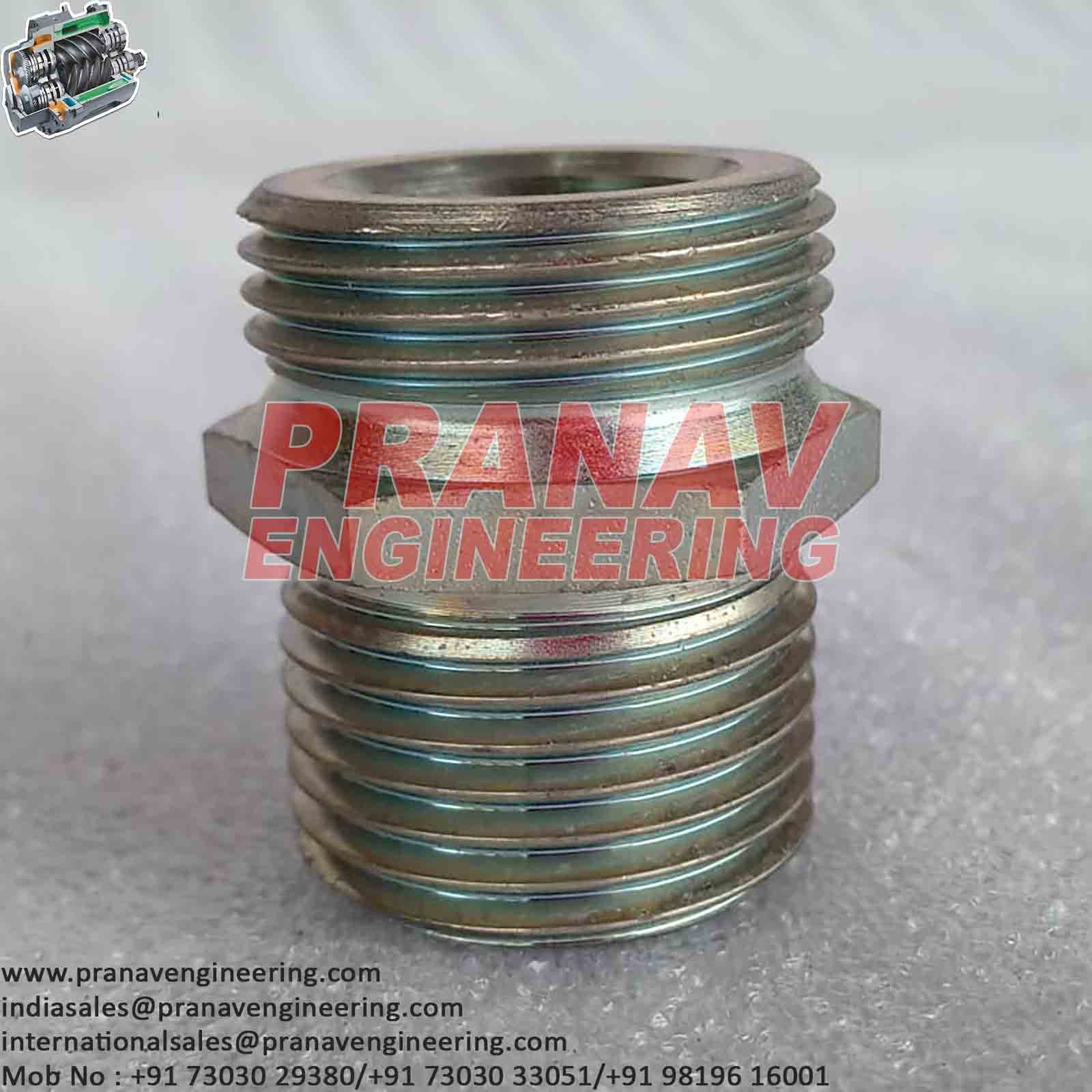
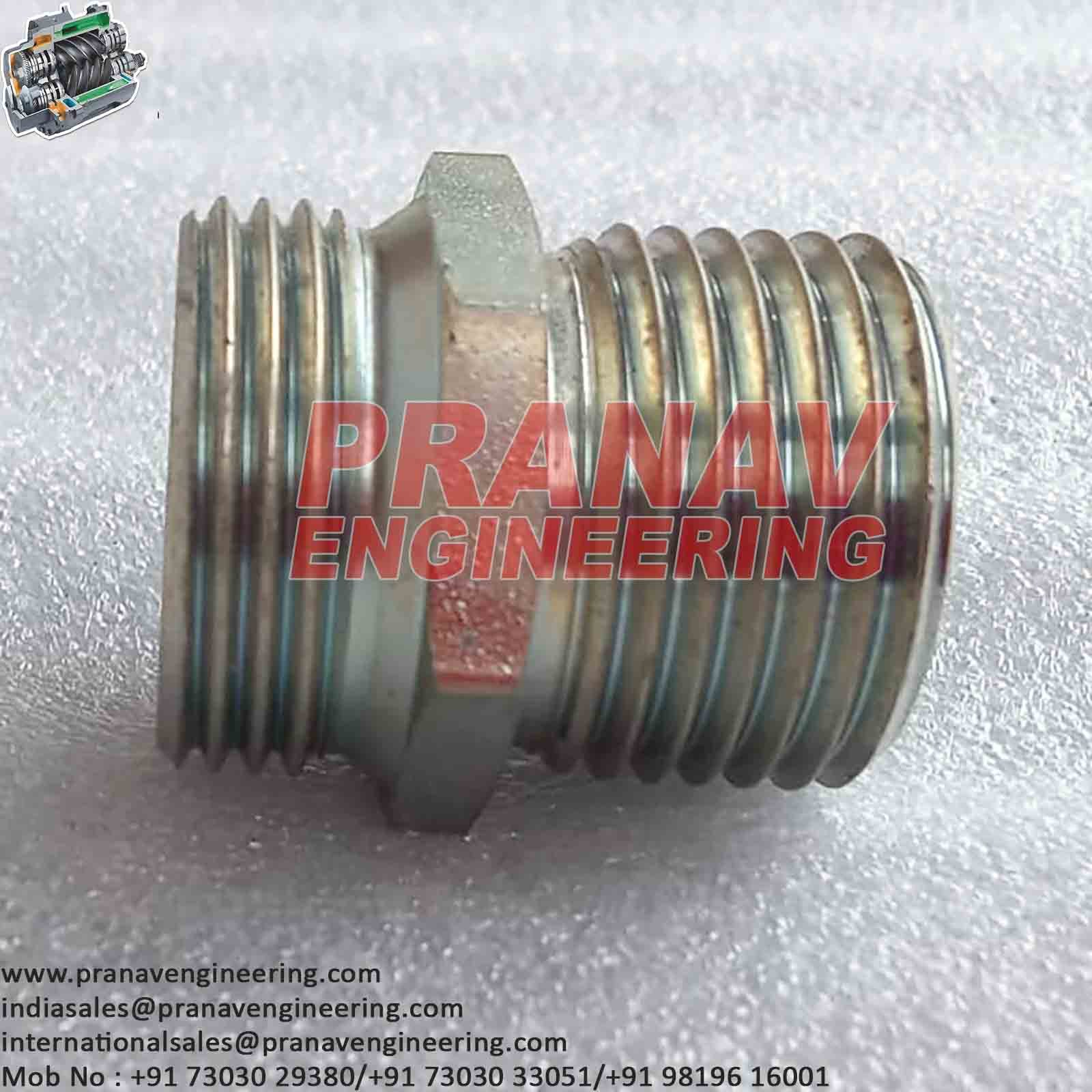
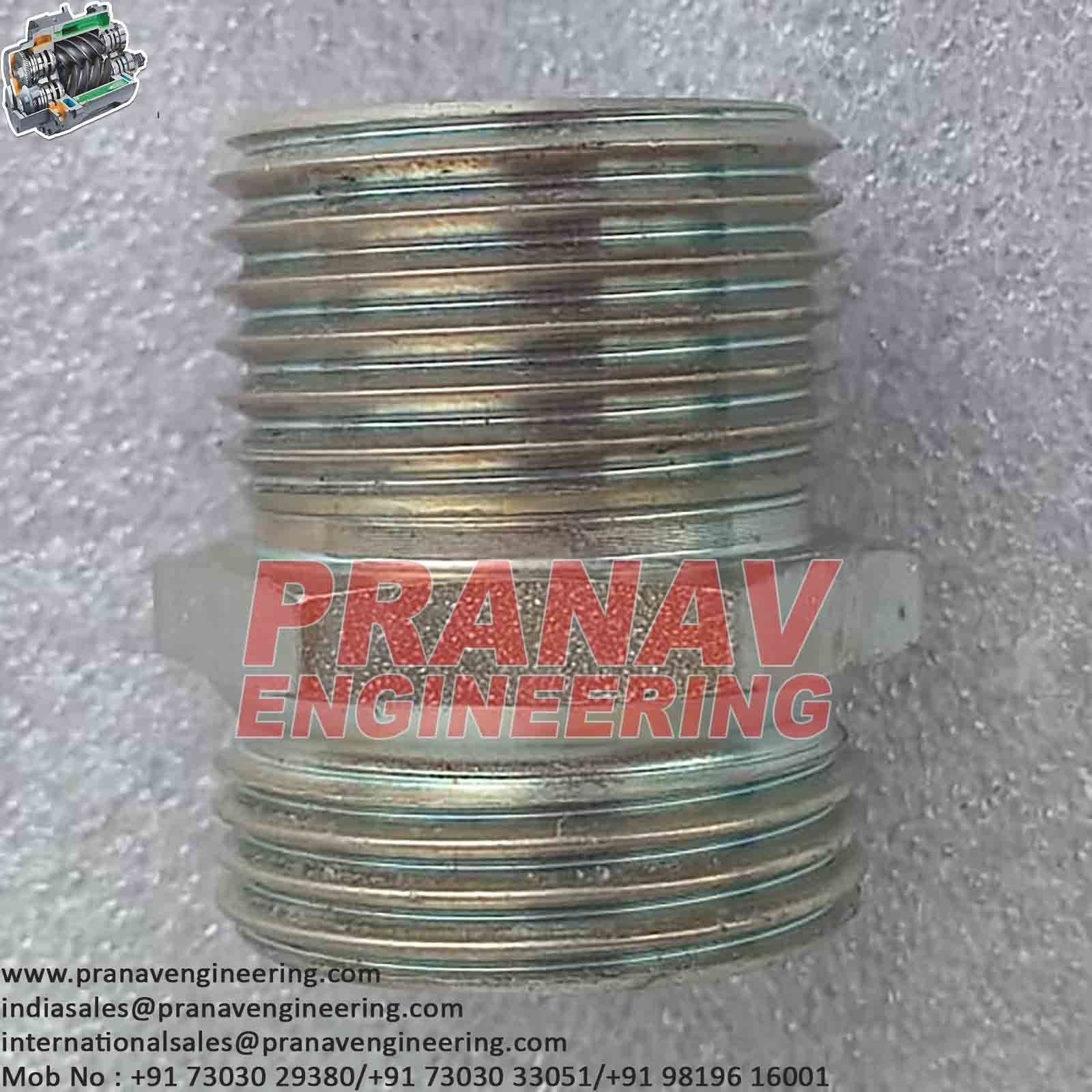
NIPPLE OLEO-2204-1809-00
The Nipple Oleo Compressor plays an important role in maintaining the integrity of the compressor lubrication system.
A Nipple Oleo Compressor is a specialized component or assembly used in compressor systems for connecting, directing, and controlling the flow of lubricating oil within an oleo or oil-circulation arrangement. The nipple provides a secure connection between oil lines, fittings, valves, manifolds, and other lubrication-system components. It is designed to maintain a reliable oil passage while withstanding the pressure, temperature, vibration, and mechanical conditions associated with compressor operation.
The primary function of the Nipple Oleo Compressor is to provide a leak-resistant connection between sections of the lubrication circuit. Lubricating oil is essential for reducing friction, controlling component temperature, and protecting moving parts from premature wear. A properly installed nipple ensures continuous and reliable oil flow to the required locations and helps prevent oil leakage that could affect compressor performance.
The nipple is generally manufactured from materials suitable for the operating environment, such as carbon steel, stainless steel, alloy steel, or other compatible engineering materials. The selection of material depends on the compressor design, oil characteristics, operating pressure, temperature, and corrosion requirements. The component may be supplied with threaded, tapered, or other specialized connection ends according to the piping and fitting arrangement.
A typical Nipple Oleo Compressor consists of a cylindrical body with connection threads or end fittings designed to match the associated oil-line components. Depending on the application, sealing arrangements such as O-rings, sealing washers, thread sealants, or compatible gasket materials may be used. The nipple dimensions, thread specifications, wall thickness, and pressure rating are selected according to the system requirements.
During installation, the nipple is positioned between the designated oil-line components and tightened to the specified torque. Correct alignment is important to avoid excessive mechanical stress on the connected piping. After installation, the connection should be inspected for proper seating, thread engagement, and leakage. The oil system can then be tested at the specified operating pressure to confirm reliable performance.
The Nipple Oleo Compressor plays an important role in maintaining the integrity of the compressor lubrication system. A properly designed and installed nipple helps maintain uninterrupted oil circulation and reduces the possibility of leakage, pressure loss, contamination, and connection failure. It also simplifies maintenance by allowing oil-line components to be connected or removed when required.
The major advantages of the Nipple Oleo Compressor include secure oil-line connection, reliable sealing, good pressure resistance, compact construction, easy installation, and improved maintenance accessibility. Its robust construction allows it to operate reliably under demanding industrial conditions.
Overall, the Nipple Oleo Compressor is an important fitting used in compressor lubrication and oil-circulation systems. By providing a dependable connection between oil-line components, it contributes to efficient lubrication, reduced equipment wear, improved operational reliability, and longer service life of the compressor system.