

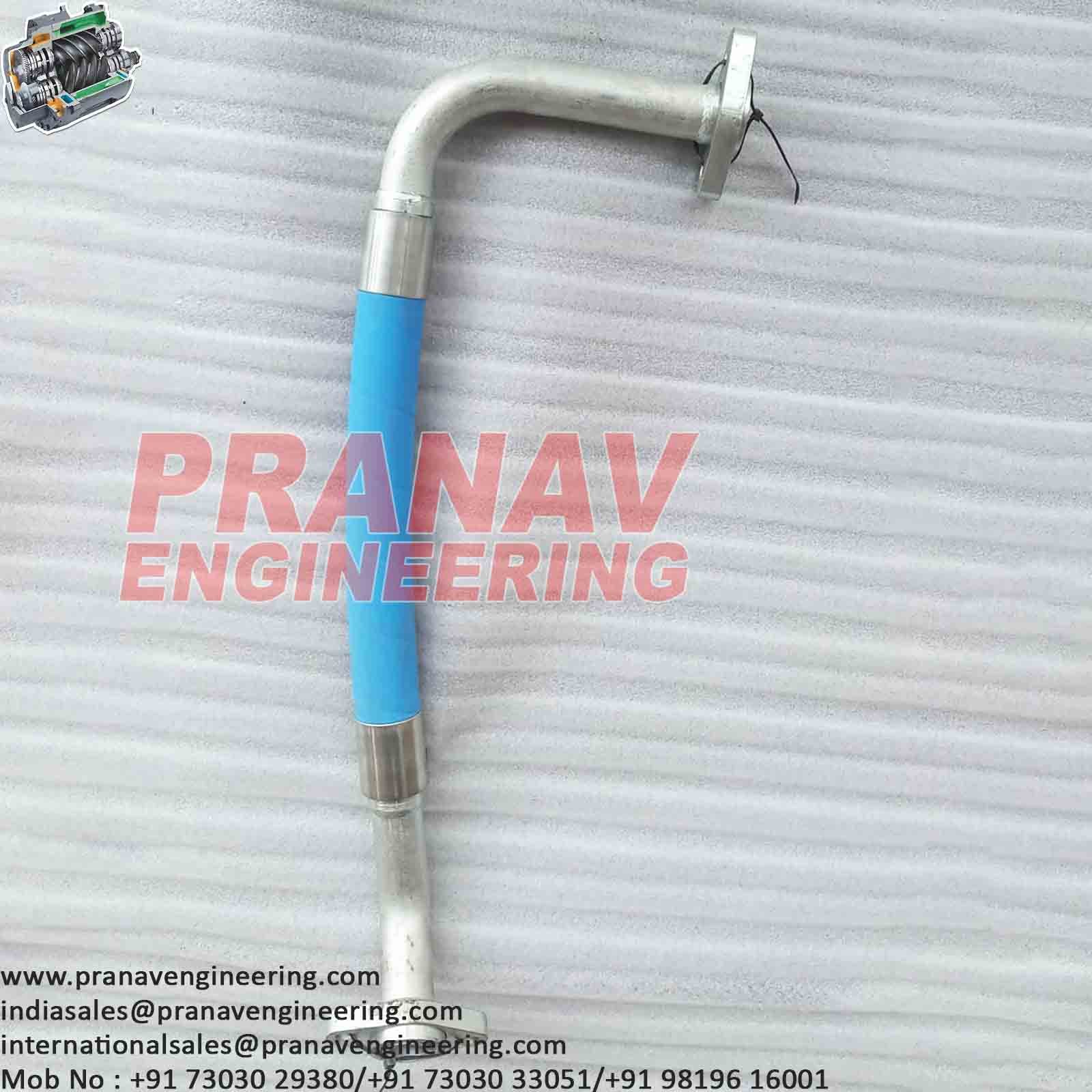
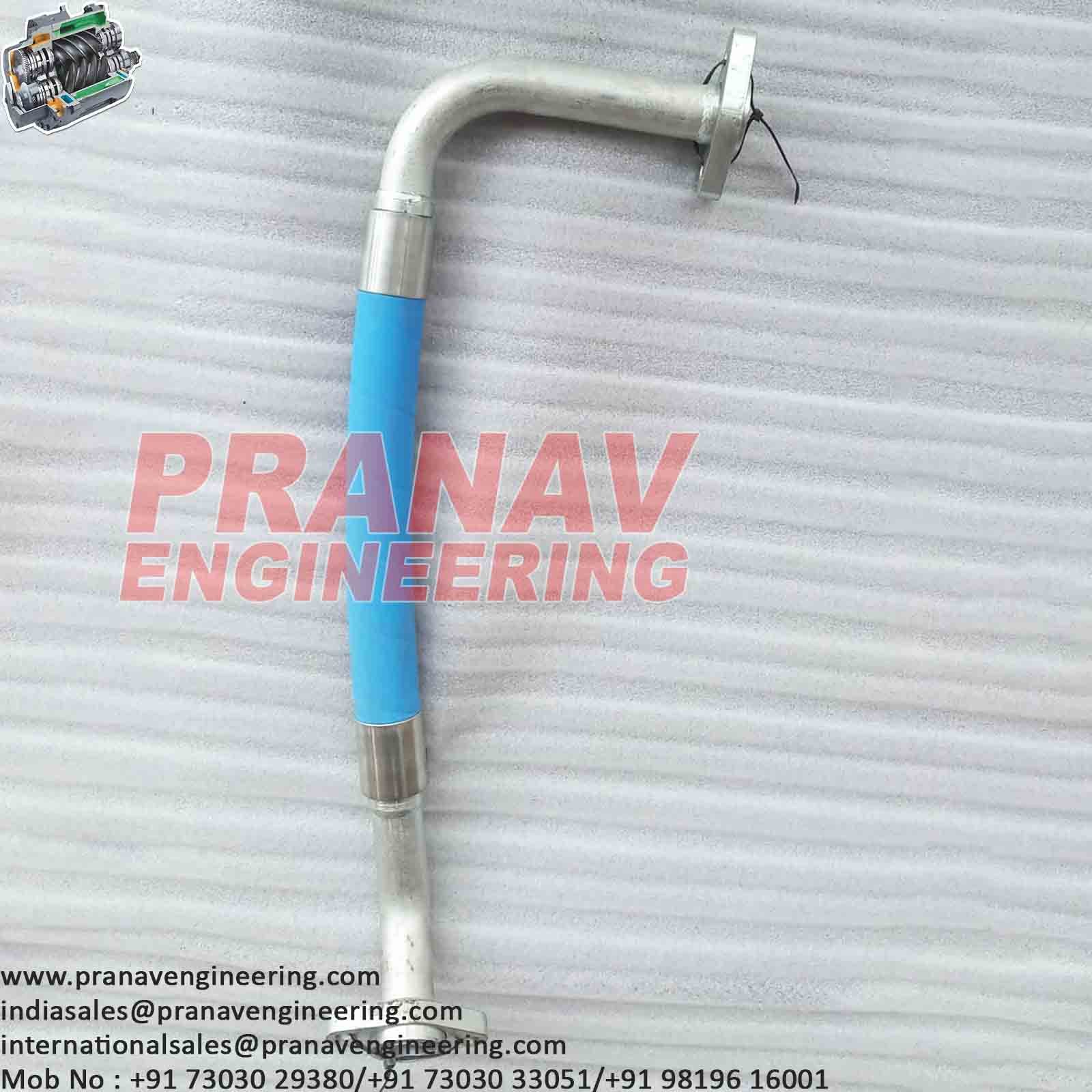
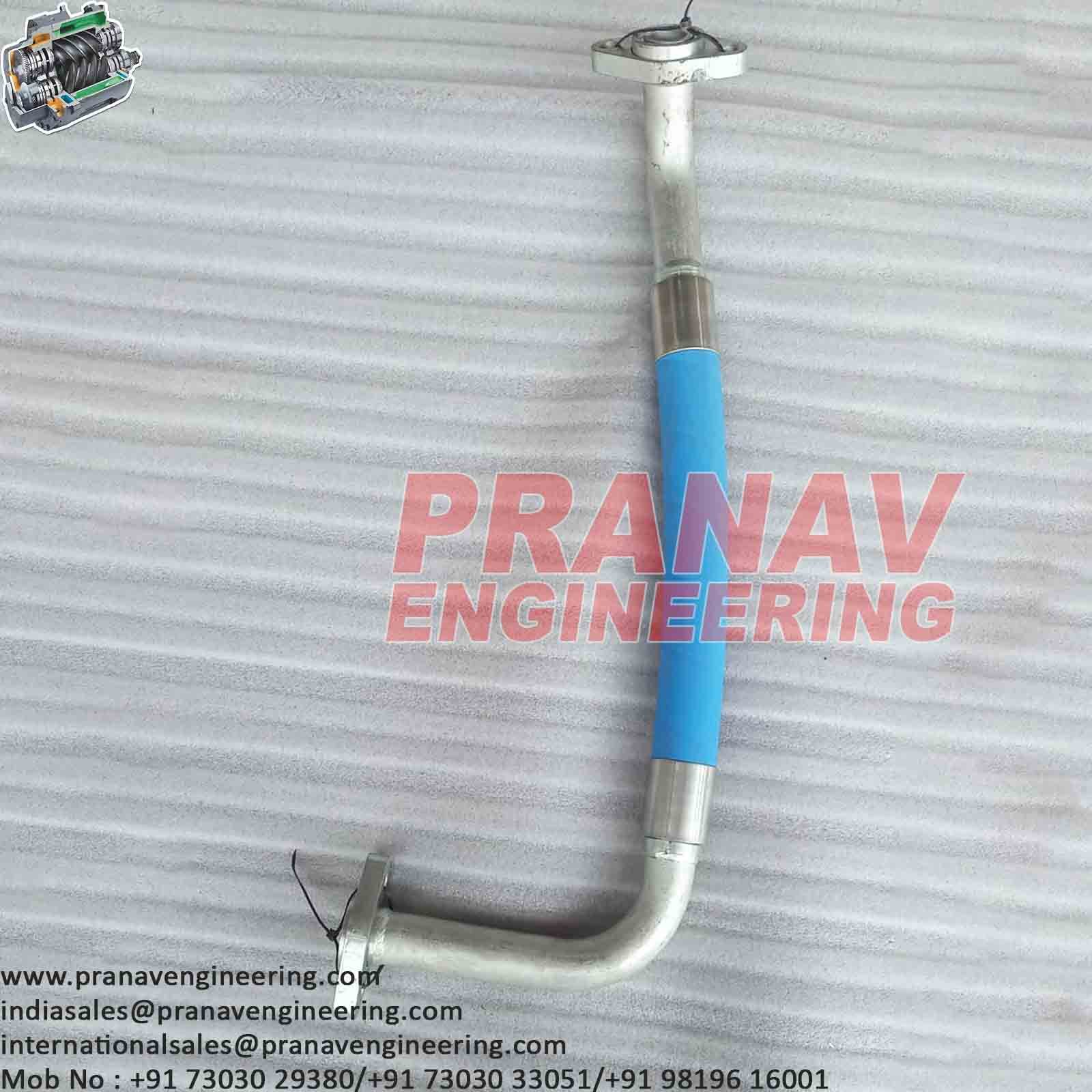
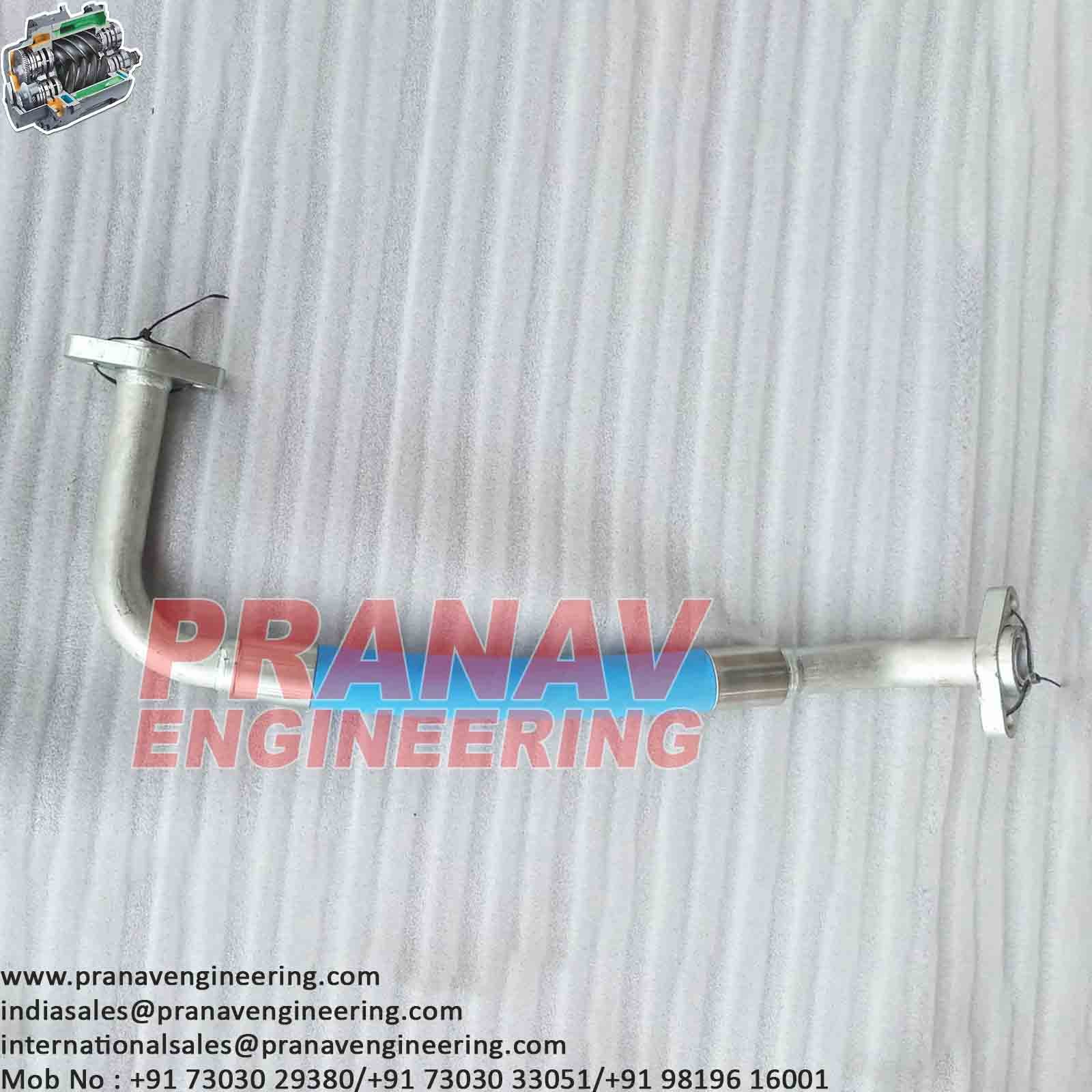
HOSE PIPE-2205178531
During installation, the hose pipe should be routed correctly without excessive twisting, stretching, crushing, or sharp bending.
A Hose Pipe used in a compressor system is a flexible piping component designed to transfer air, gas, lubricating oil, coolant, condensate, or other process fluids between various compressor components and connected equipment. It provides a flexible alternative to rigid piping and is particularly useful in areas where vibration, movement, thermal expansion, or minor misalignment occurs during compressor operation. The hose pipe helps maintain a reliable fluid connection while reducing mechanical stress on the compressor and its associated piping system.
The primary function of a compressor hose pipe is to provide a safe and continuous flow path for the operating medium while withstanding the required pressure and temperature. Compressors, especially reciprocating and rotary types, generate vibration and pressure pulsations during operation. A flexible hose pipe can absorb these movements and reduce the transmission of vibration to rigid pipes, fittings, valves, and other connected components. This helps reduce fatigue and improves the service life of the complete piping arrangement.
A typical hose pipe consists of an inner tube, reinforcement layer, and outer protective cover. The inner tube is manufactured from rubber, thermoplastic, PTFE, or another material compatible with the fluid being transported. The reinforcement layer may consist of textile fibers, braided wire, or spiral wire to provide the required pressure resistance. The outer cover protects the hose from abrasion, oil, moisture, heat, chemicals, and other environmental conditions.
pipes are available in different diameters, lengths, pressure ratings, temperature ranges, and connection Hose types. Proper selection is important and should be based on the compressor’s operating pressure, temperature, fluid type, flow rate, vibration level, installation space, and required bend radius. The end fittings must also be compatible with the compressor connections and should provide a secure and leak-resistant joint.
During installation, the hose pipe should be routed correctly without excessive twisting, stretching, crushing, or sharp bending. The recommended minimum bend radius should always be maintained. The hose should not be installed under unnecessary tension, and suitable supports or clamps should be used where required. Connections should be tightened correctly to prevent leakage without applying excessive force that could damage the fittings.
Regular inspection and preventive maintenance are essential for safe operation. The hose pipe should be checked for cracks, cuts, abrasion, swelling, hardening, softening, leakage, corrosion of fittings, and other signs of deterioration. Any hose showing significant damage or aging should be replaced promptly. Periodic inspection also helps identify loose connections and potential leakage before they cause equipment failure.
The major advantages of a compressor hose pipe include flexibility, vibration absorption, reliable fluid transfer, pressure resistance, easy installation, reduced mechanical stress, and simplified maintenance.
Overall, the Hose Pipe is an important component of a compressor system. Proper selection, installation, inspection, and timely replacement help maintain efficient fluid flow, prevent leakage, reduce vibration-related failures, protect connected components, and ensure safe, reliable, and continuous compressor operation.