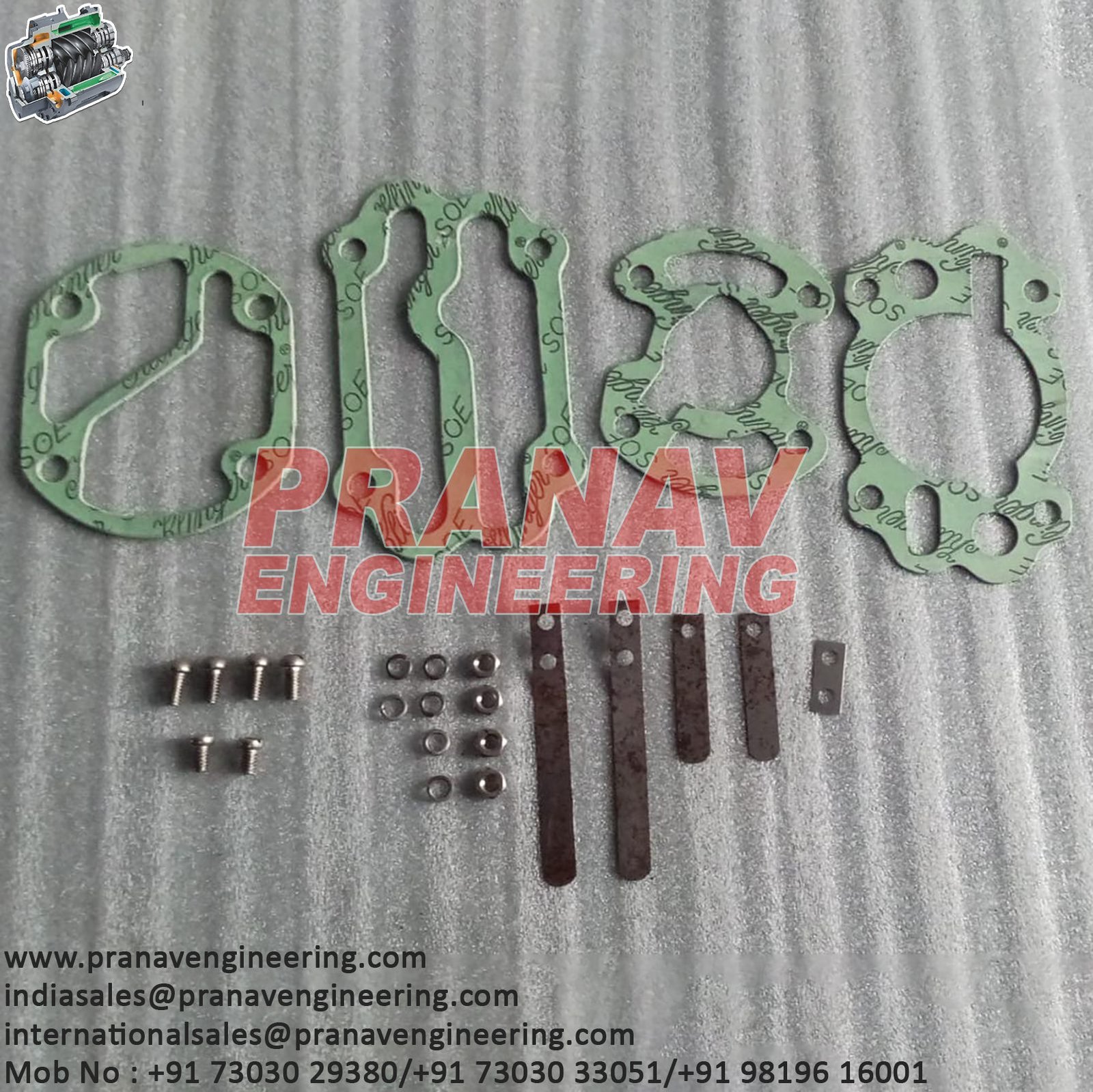
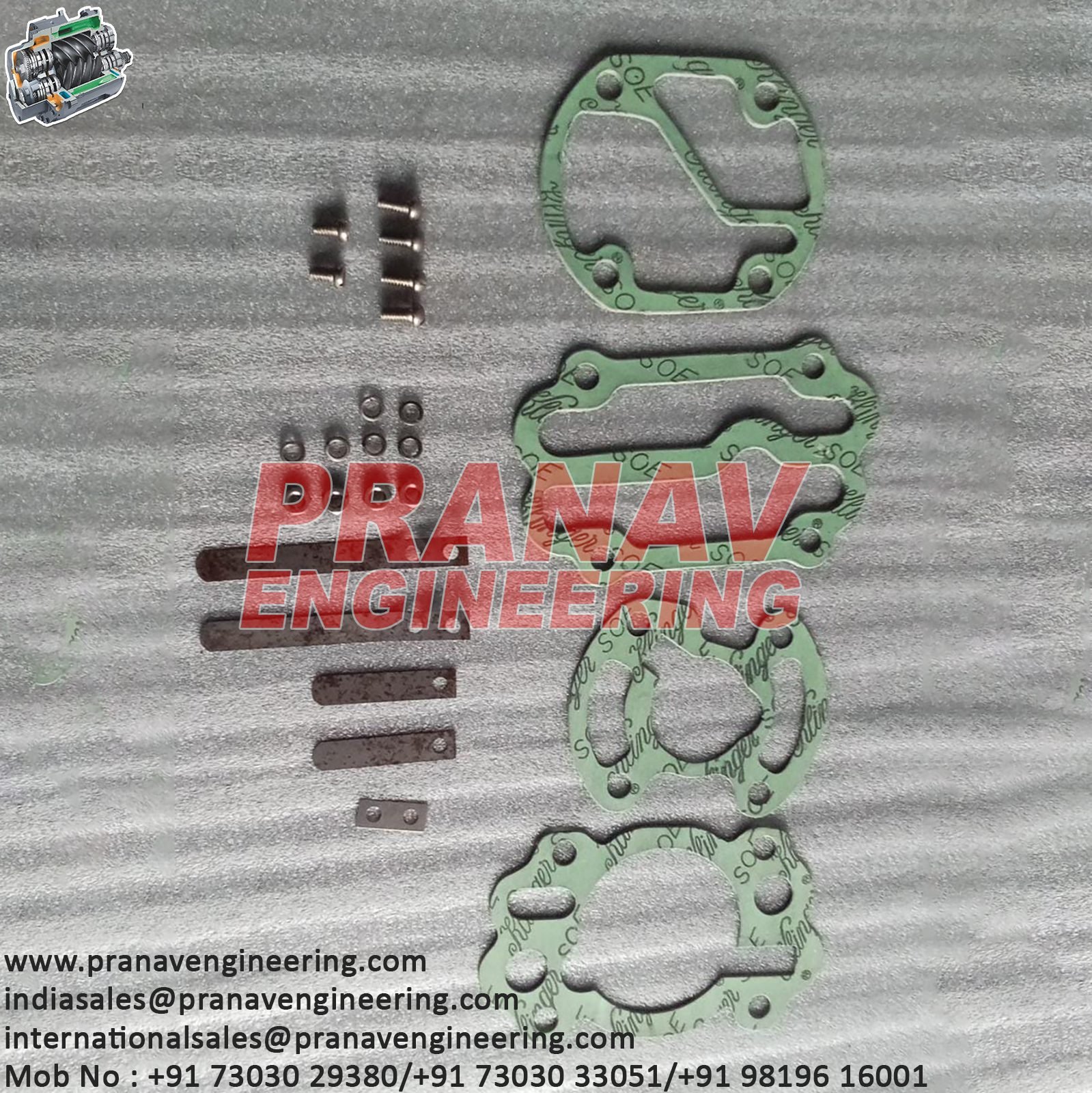
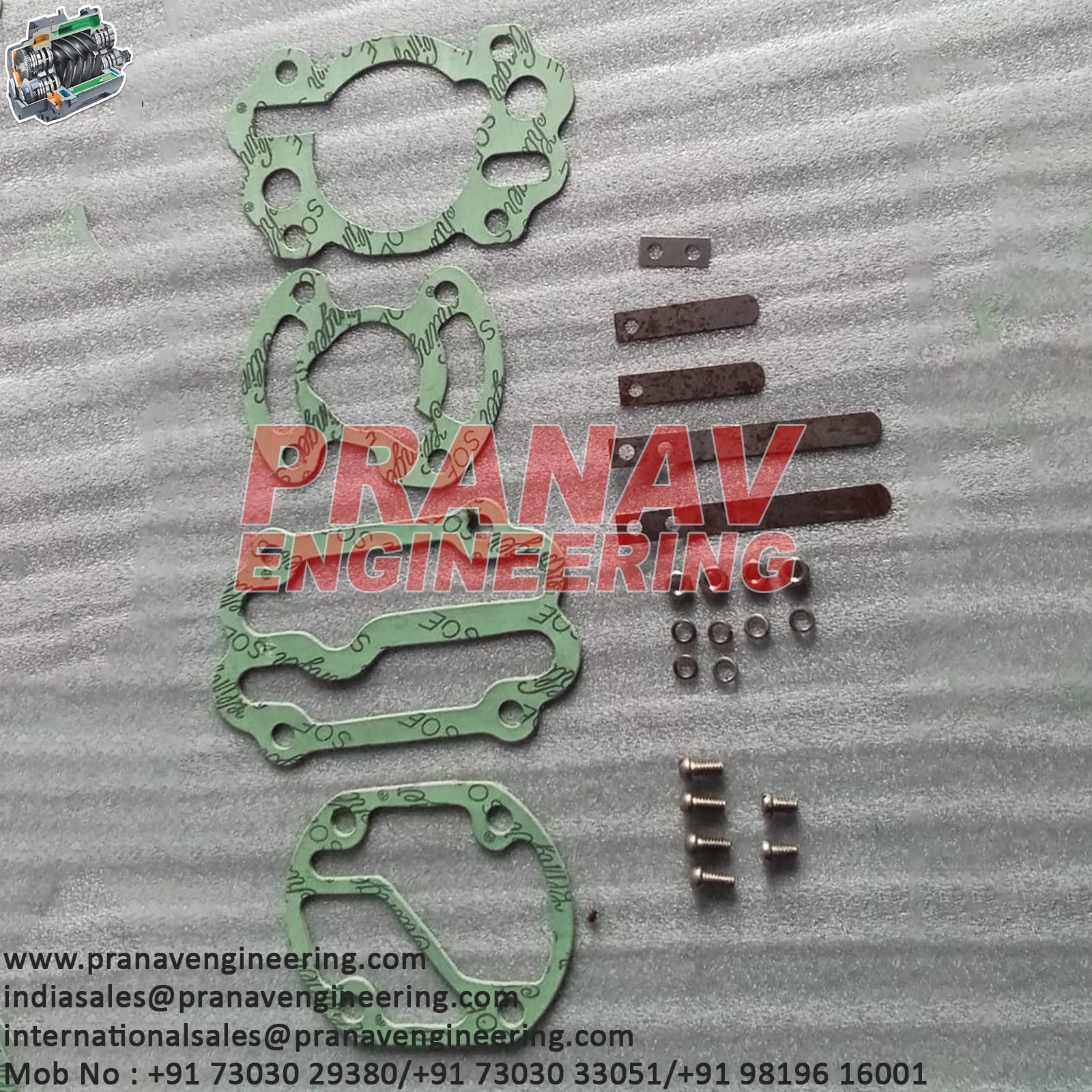
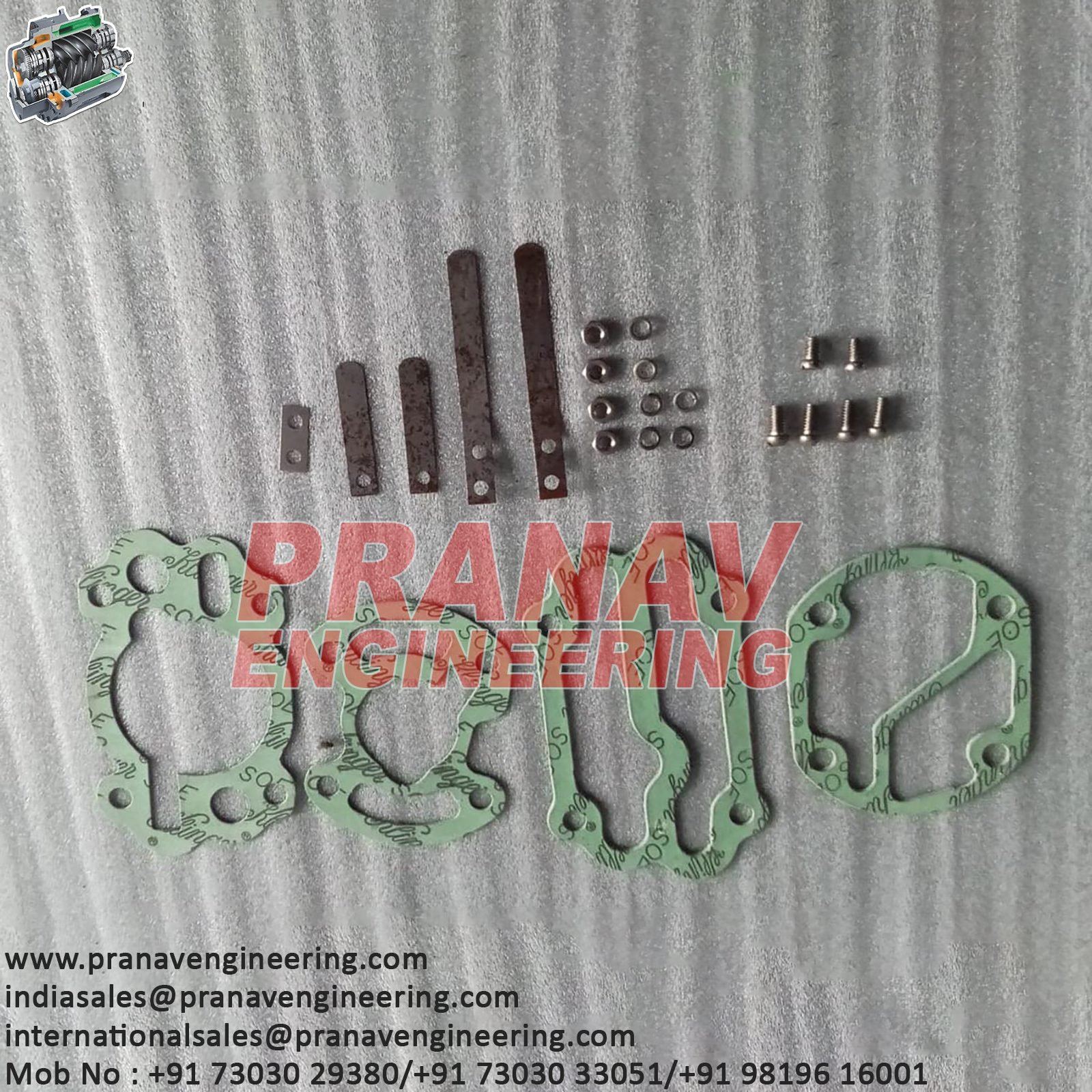
GASKET VALVE KIT-32159337
The main purpose of the gasket valve kit is to prevent leakage between the valve assembly and its mating surfaces.
The gasket valve kit is an important maintenance and sealing assembly used in reciprocating compressors to ensure proper sealing and efficient operation of the compressor valve system. It normally consists of specially designed gaskets, sealing rings, O-rings, and other sealing elements required for servicing the suction and discharge valve assemblies. The exact components included in the kit depend on the compressor model, valve design, operating pressure, temperature, and manufacturer’s specifications.
The main purpose of the gasket valve kit is to prevent leakage between the valve assembly and its mating surfaces. During compressor operation, the suction and discharge valves are continuously exposed to pressure fluctuations, temperature changes, vibration, and repeated mechanical movement. A properly fitted gasket provides a tight seal and helps maintain the required pressure inside the cylinder. This prevents compressed gas from escaping through joints and supports efficient compressor performance.
The gasket components may be manufactured from materials such as graphite, fiber, rubber, PTFE, copper, stainless steel, or specialized composite materials. Material selection depends on the operating temperature, pressure, gas characteristics, lubrication conditions, and application requirements. A suitable gasket material must maintain its sealing properties without excessive deformation, cracking, hardening, or chemical deterioration during service.
During compressor maintenance or overhaul, the valve assembly is removed for inspection and cleaning. Existing gaskets may become compressed, brittle, worn, or damaged after extended operation. Reusing such gaskets can result in gas leakage, loss of compression pressure, reduced capacity, increased power consumption, and possible damage to valve components. For this reason, new sealing components from the correct gasket valve kit are normally installed during valve servicing.
Before installation, all gasket contact surfaces should be cleaned thoroughly and checked for scratches, corrosion, burrs, distortion, or foreign material. The correct gasket should be identified according to its size, material, shape, and installation location. It must be positioned correctly without folding, twisting, stretching, or damaging the sealing surface. Valve bolts and fasteners should be tightened uniformly according to the manufacturer’s recommended torque values and tightening sequence.
A properly installed gasket valve kit helps maintain the pressure integrity of the compressor valve chamber. It reduces unwanted gas leakage and ensures that suction and discharge processes occur efficiently. Effective sealing also contributes to stable compressor capacity, reduced energy losses, and improved reliability of the complete compressor system.
Regular inspection of valve gaskets is an important part of preventive maintenance. Possible indications of gasket failure include gas leakage, reduced discharge pressure, abnormal temperature, unusual operating noise, pressure fluctuations, or declining compressor performance.
In conclusion, the gasket valve kit is a critical maintenance component that supports reliable sealing and efficient operation of a compressor valve assembly. Correct selection, installation, inspection, and replacement of the kit help prevent leakage, protect internal components, maintain compression efficiency, and extend the service life of the compressor. Using the correct manufacturer-approved gasket valve kit is essential for safe and dependable compressor operation.