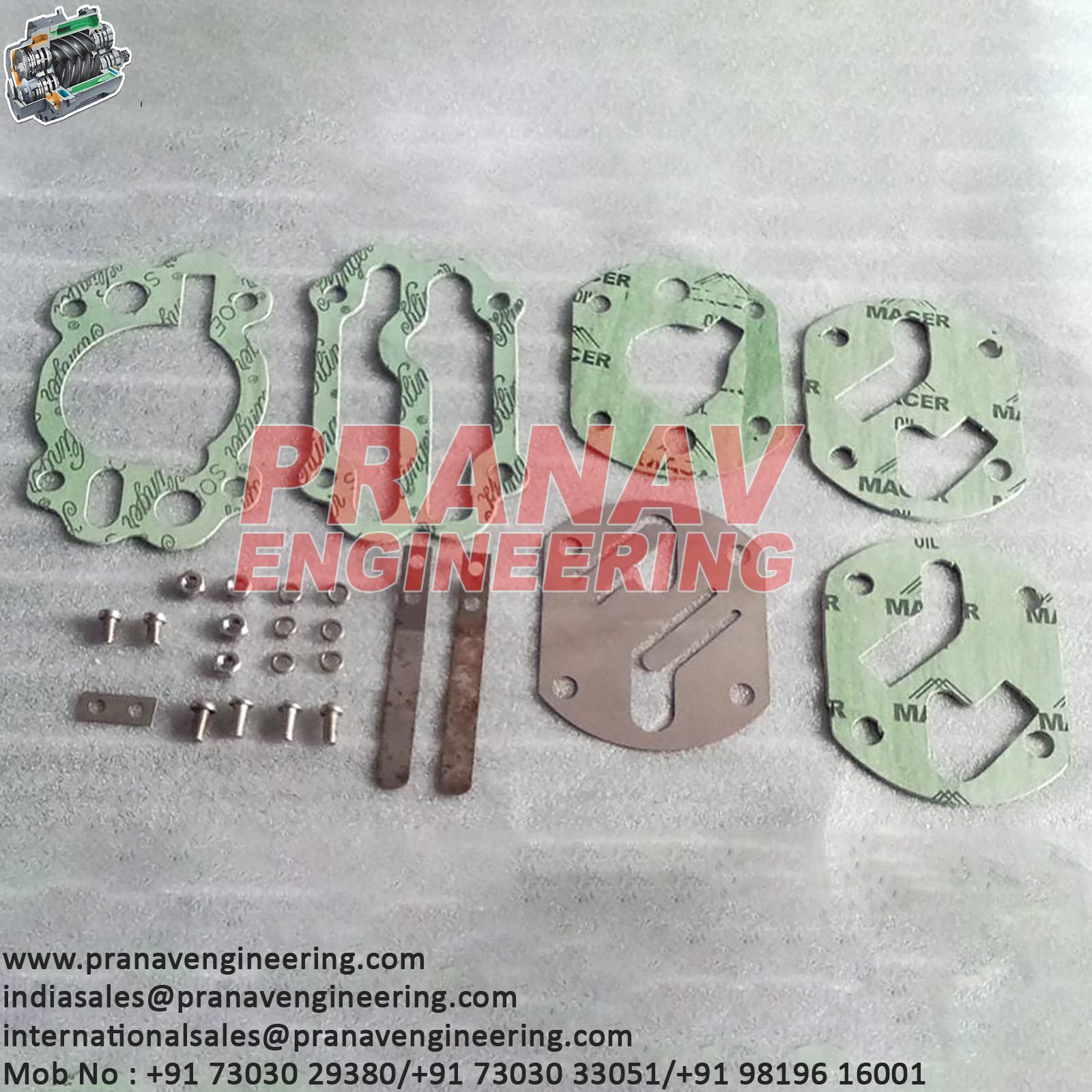
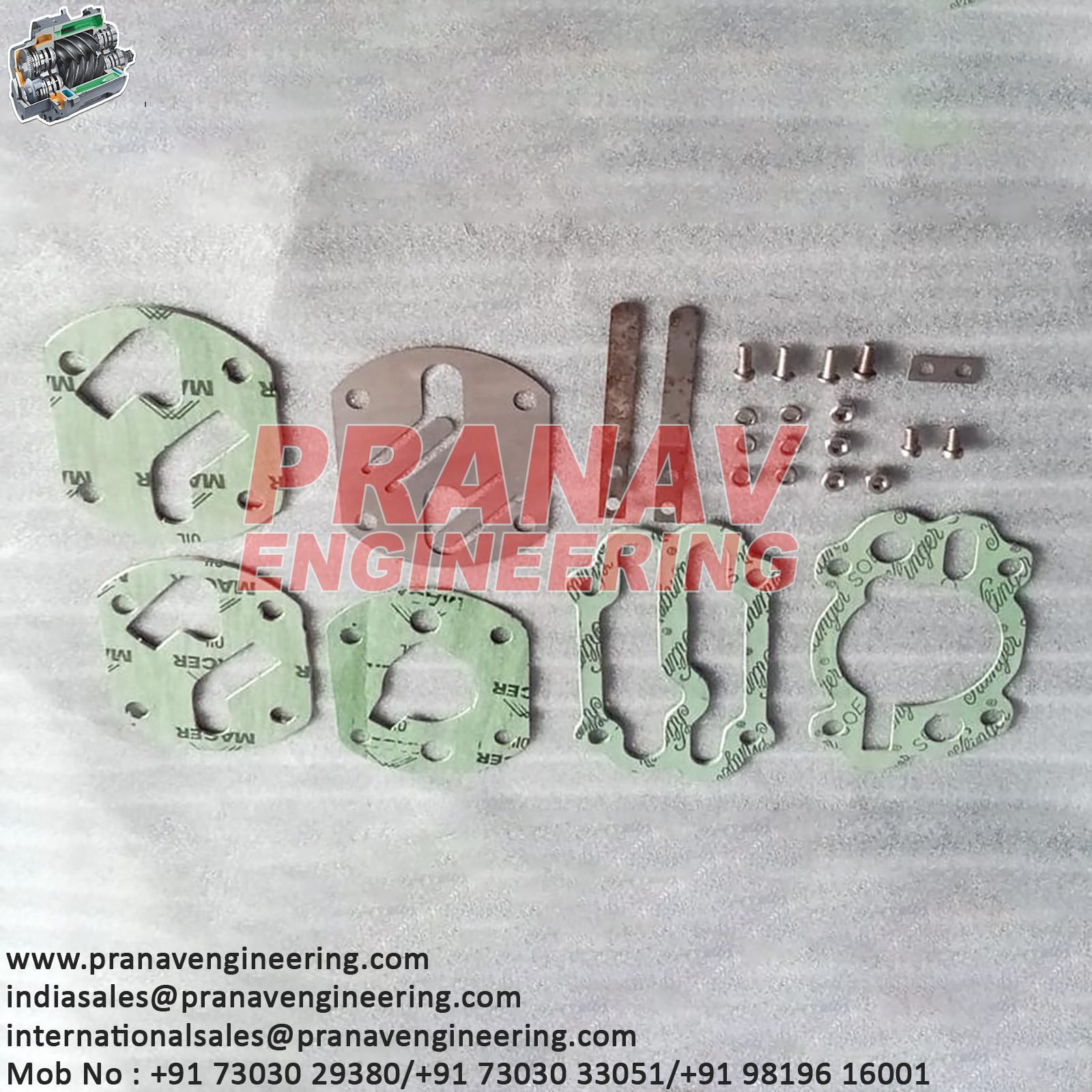
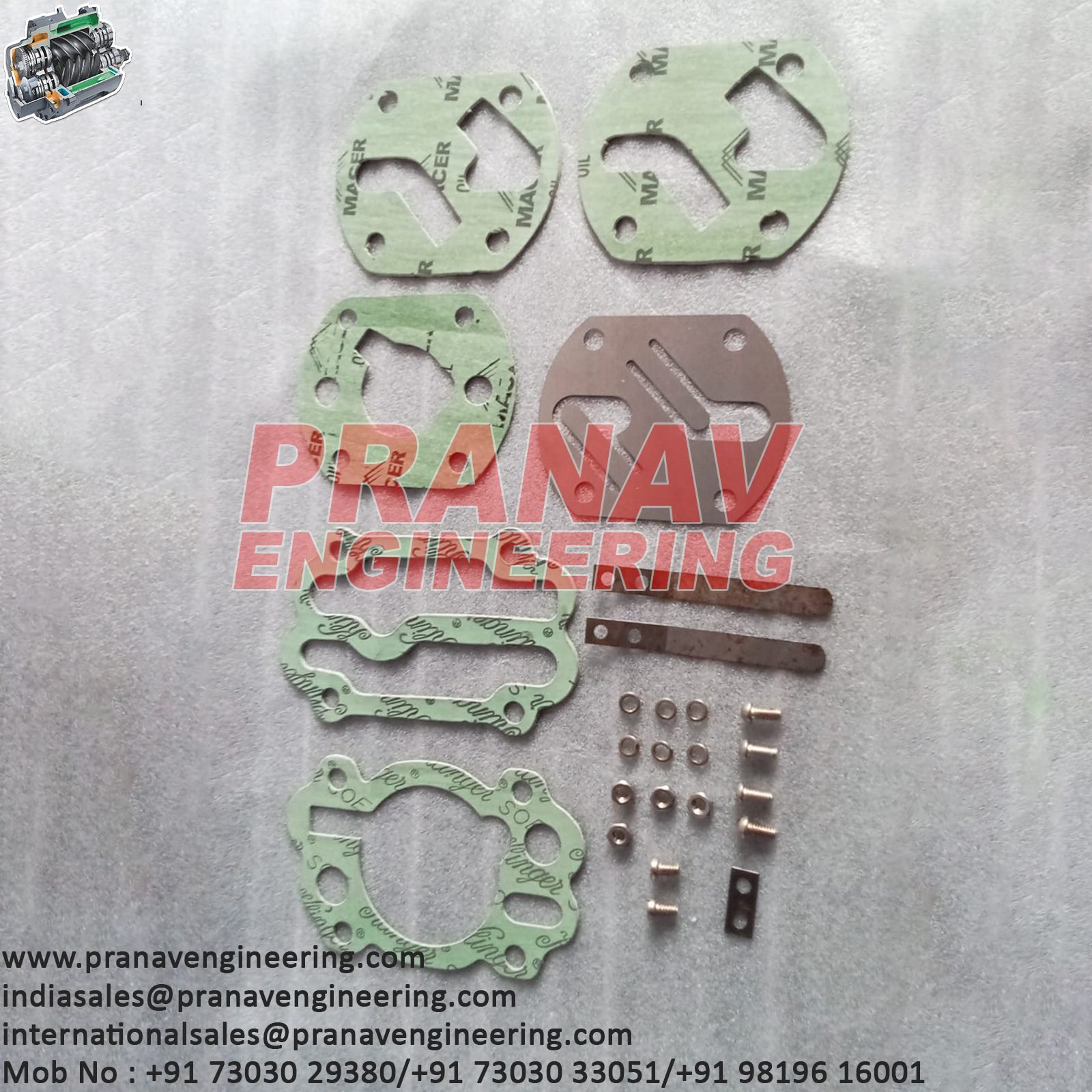
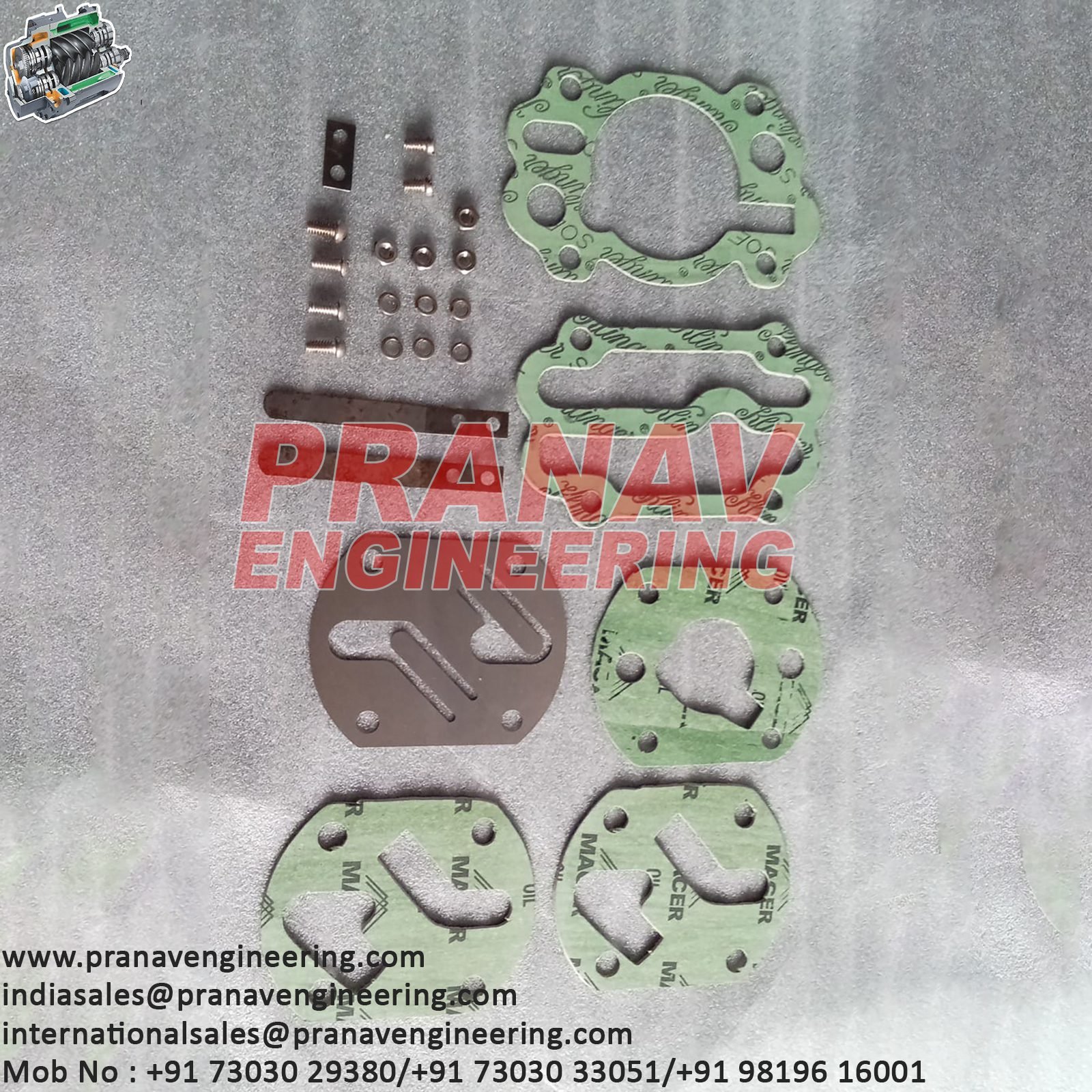
GASKET VALVE KIT-32127339
The piston ring set also helps control the distribution of lubricating oil on the cylinder surface.
Piston Ring Set of a Compressor
The piston ring set is a critical component of a reciprocating compressor and is installed in the grooves provided around the piston. Its main purpose is to maintain an effective seal between the piston and the cylinder wall while allowing the piston to move smoothly during compression. The piston ring set plays an important role in maintaining compression efficiency, controlling lubrication, and reducing the leakage of compressed gas past the piston.
A typical compressor piston ring set consists of several rings designed for specific functions. These may include compression rings, sealing rings, and oil-control or rider rings, depending on the compressor design and application. The number, shape, material, and arrangement of the rings vary according to the compressor manufacturer’s specifications, operating pressure, gas composition, cylinder dimensions, and service conditions.
During compressor operation, the piston moves continuously in a reciprocating motion inside the cylinder. The piston rings maintain contact with the cylinder wall and form a sealing barrier. This prevents excessive compressed gas from passing into the crankcase or the opposite side of the piston. Effective sealing allows the compressor to achieve the required discharge pressure and capacity while minimizing energy losses.
Piston rings are manufactured from wear-resistant materials such as cast iron, alloy materials, or specialized polymer and composite materials. Material selection depends on operating temperature, pressure, gas properties, lubrication conditions, and cylinder material. In certain applications, non-metallic rings may be used to provide low friction and improved resistance to specific operating conditions.
The piston ring set also helps control the distribution of lubricating oil on the cylinder surface. Proper lubrication reduces friction between the piston and cylinder, minimizes wear, and helps maintain reliable operation. Excessive oil, however, can affect compressor performance or contaminate the compressed gas, so correct ring design and installation are important.
During maintenance or compressor overhaul, the piston rings should be inspected for wear, cracking, breakage, excessive clearance, surface damage, and loss of tension. The piston ring grooves and cylinder surface should also be checked for scoring, deposits, or abnormal wear. Ring end gaps and side clearances must be measured and maintained within the manufacturer’s specified limits. Incorrect clearances can cause gas leakage, overheating, ring breakage, or cylinder damage.
When replacing piston rings, the correct ring type, size, orientation, and installation position must be confirmed. Rings should be installed carefully to avoid distortion or damage, and the ring gaps should be positioned according to the manufacturer’s instructions.
In conclusion, the piston ring set is essential for maintaining compressor sealing efficiency, controlling lubrication, reducing friction, and protecting the piston-cylinder assembly. Proper selection, installation, inspection, and timely replacement of piston rings help ensure efficient, reliable, and long-lasting compressor performance.