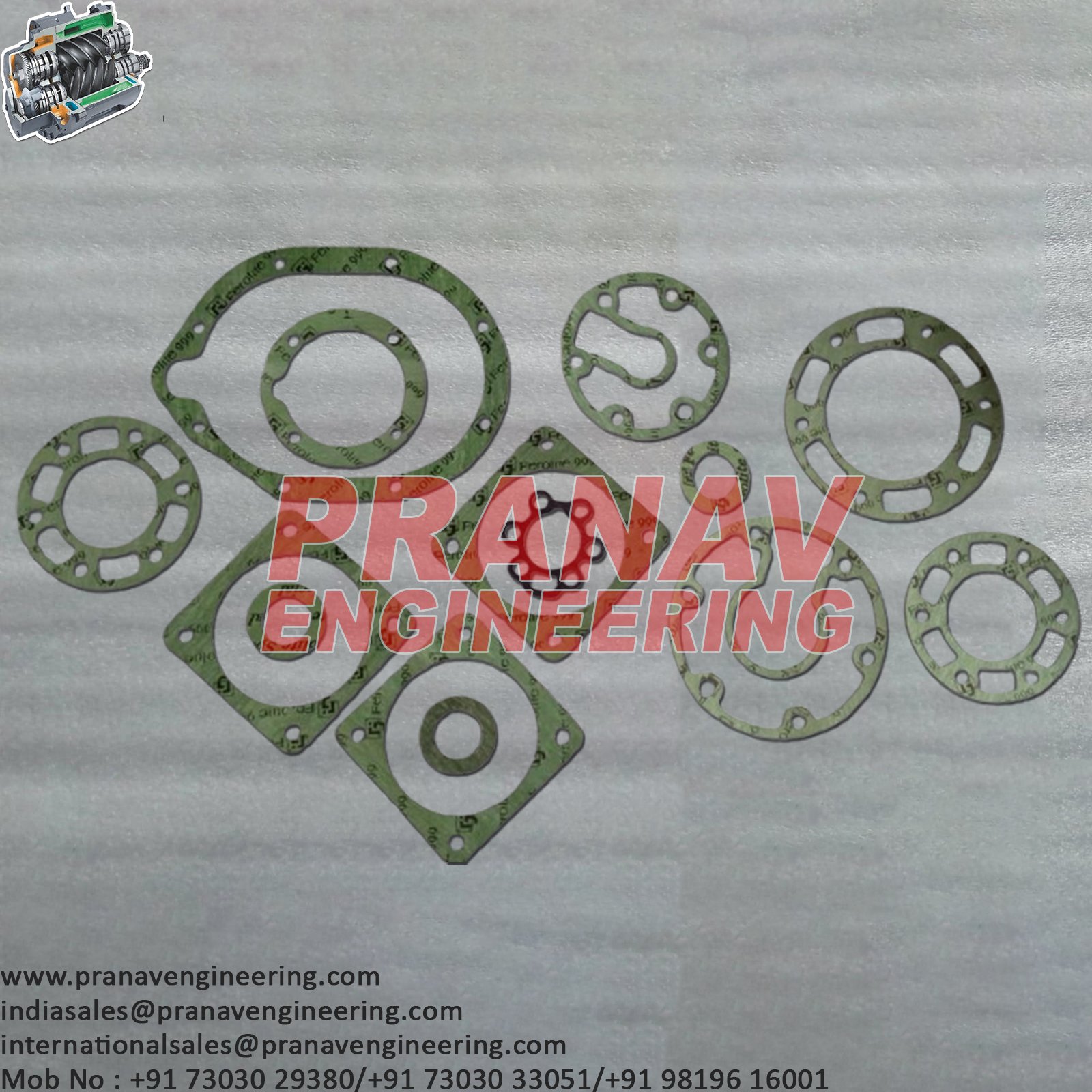
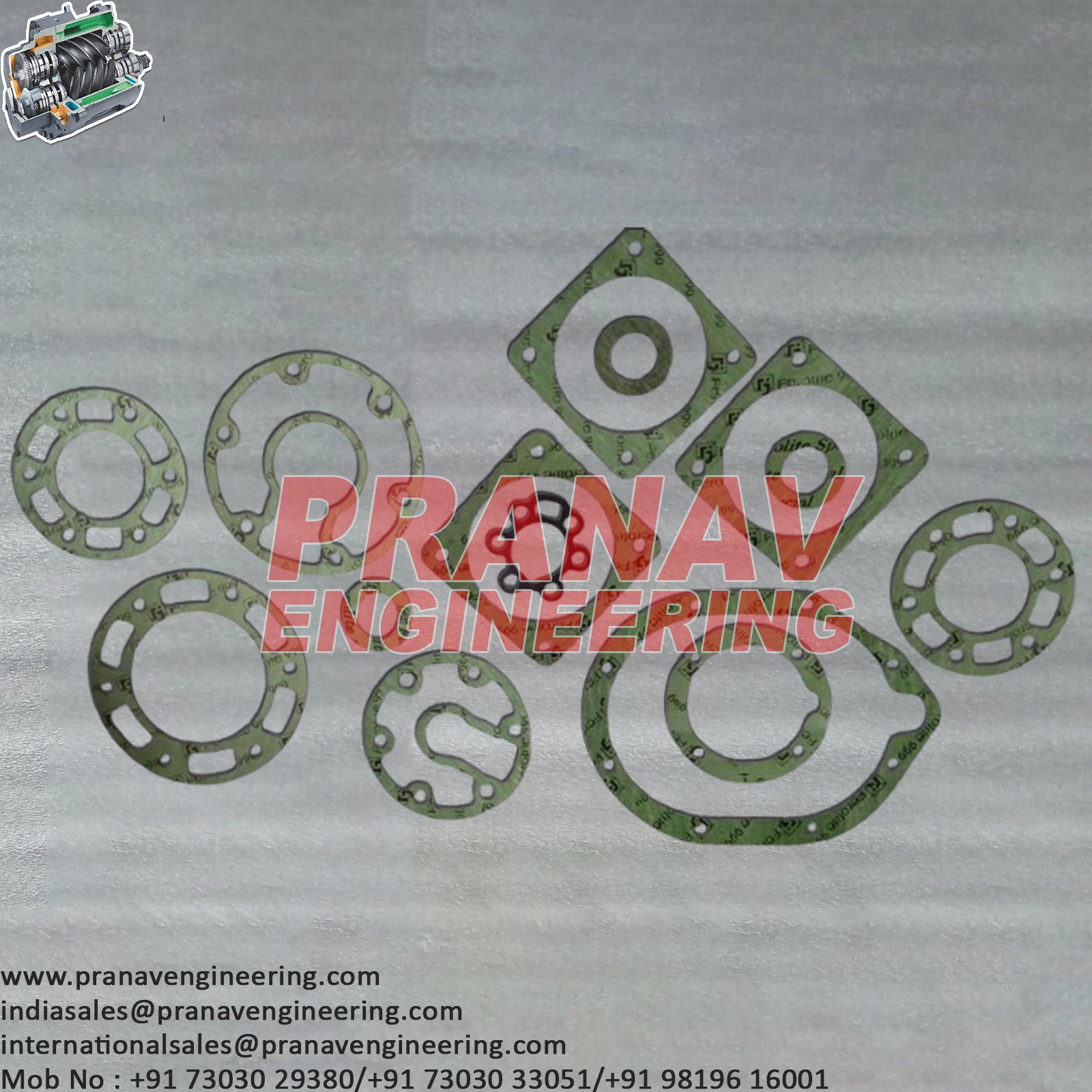
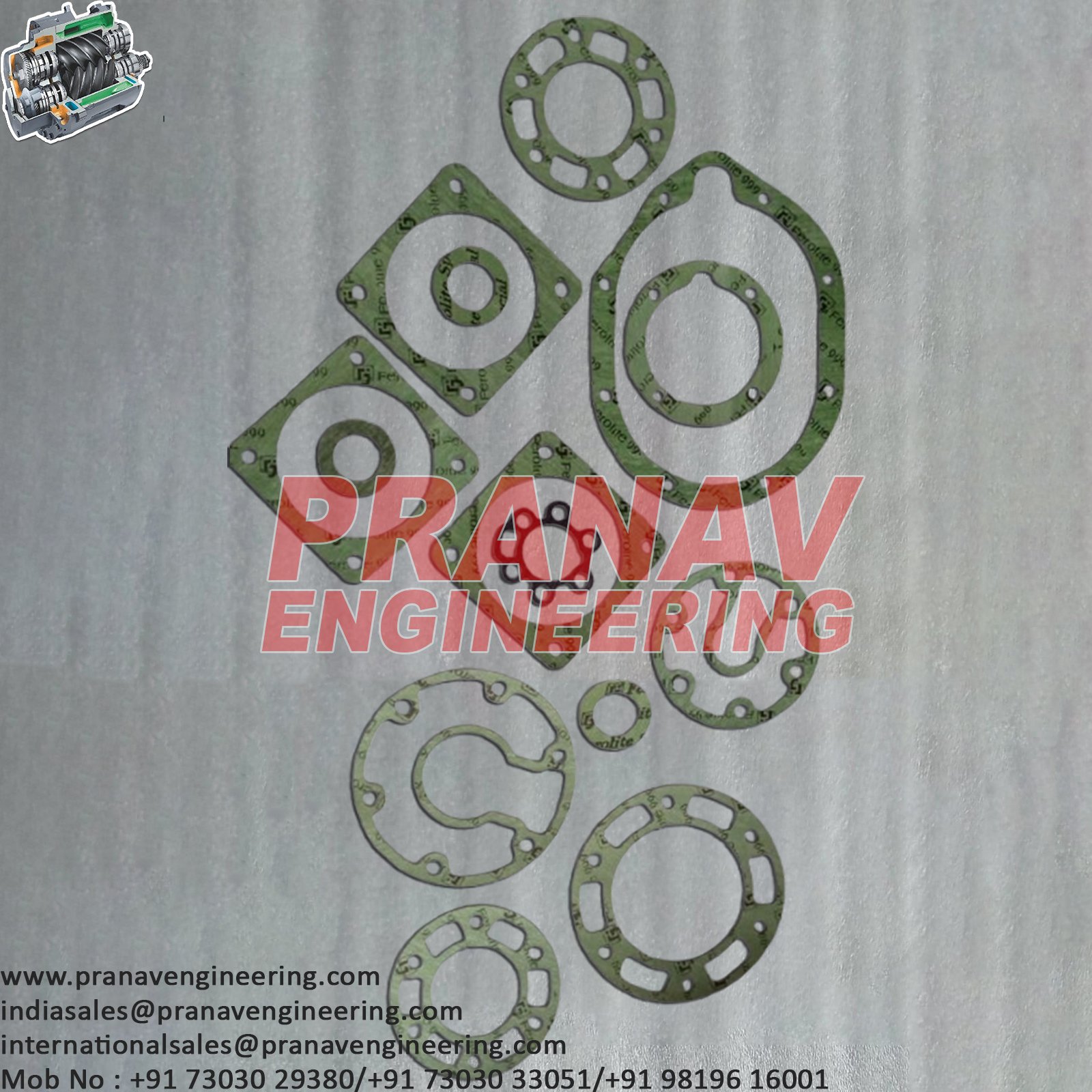
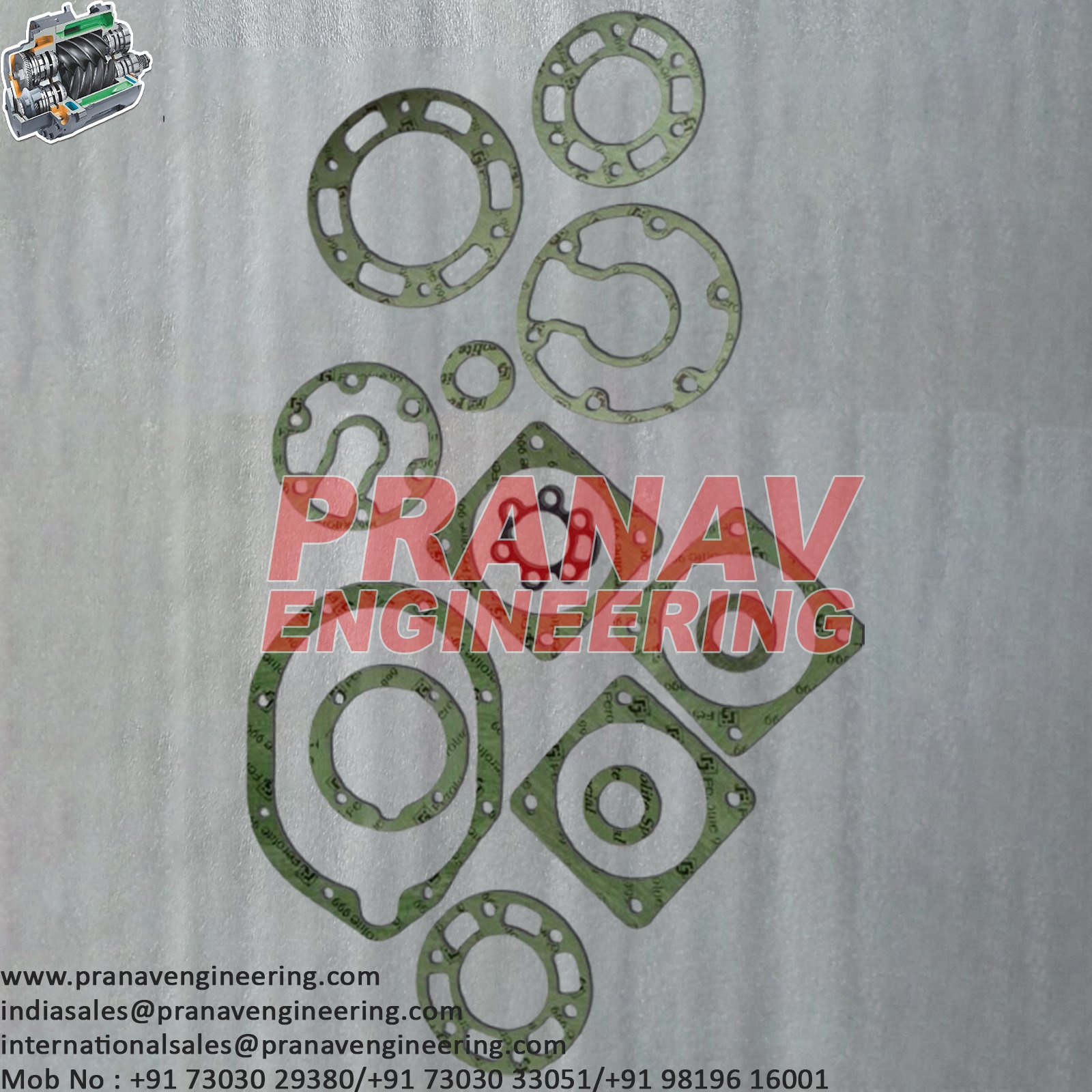
GASKET SET-X1453T57
A gasket set is an important sealing component used in a compressor to prevent leakage of gases, air, oil, coolant, and other fluids between mating surfaces.
A gasket set is an important sealing component used in a compressor to prevent leakage of gases, air, oil, coolant, and other fluids between mating surfaces. It consists of different types and sizes of gaskets required for sealing various joints and connections during compressor assembly, maintenance, or overhauling. A properly selected gasket set helps maintain the pressure and efficiency of the compressor while preventing contamination and fluid leakage.
In a reciprocating compressor, gaskets are commonly installed between components such as the cylinder head, cylinder, valve plate, crankcase, covers, flanges, discharge and suction connections, and other pressure-containing joints. Each gasket is designed according to the dimensions, pressure, temperature, and operating conditions of its particular location. The gasket fills small irregularities and surface imperfections between two mating surfaces, creating a tight seal when the components are properly bolted together.
Gasket materials vary depending on the application. Common materials include compressed fiber, rubber-based materials, graphite, PTFE, copper, stainless steel, and other metallic or composite materials. The material must be compatible with the compressed gas, lubricant, temperature, pressure, and surrounding environment. Selecting the correct gasket material is essential because an unsuitable gasket can deteriorate, become brittle, swell, burn, or lose its sealing capability during operation.
During compressor operation, internal pressure and temperature can be significant. The gasket must withstand these conditions without excessive deformation or leakage. Correct bolt tightening is also important because insufficient tightening can result in leakage, while excessive tightening may damage the gasket or distort the mating surfaces. Therefore, bolts should be tightened according to the manufacturer’s recommended torque and sequence.
A gasket set is particularly useful during compressor overhauling and preventive maintenance. When the compressor is dismantled, old gaskets are generally replaced rather than reused. Reusing a compressed or damaged gasket can lead to leakage and premature failure. Before installing new gaskets, the mating surfaces should be cleaned and inspected for scratches, corrosion, cracks, or distortion. The new gasket should be installed in the correct position and orientation without unnecessary sealant unless specified by the manufacturer.
Signs of gasket failure may include gas leakage, oil leakage, pressure loss, abnormal temperature, reduced compressor performance, or visible damage around a joint. Continued operation with a leaking gasket can reduce efficiency and may create safety or environmental concerns, depending on the compressed medium.
In conclusion, the gasket set is a vital maintenance item for a compressor. It provides reliable sealing between mating components, maintains system pressure, prevents leakage, and protects the compressor from contamination and operating problems. Using the correct gasket material and dimensions, along with proper installation and tightening procedures, ensures efficient, safe, and dependable compressor operation.