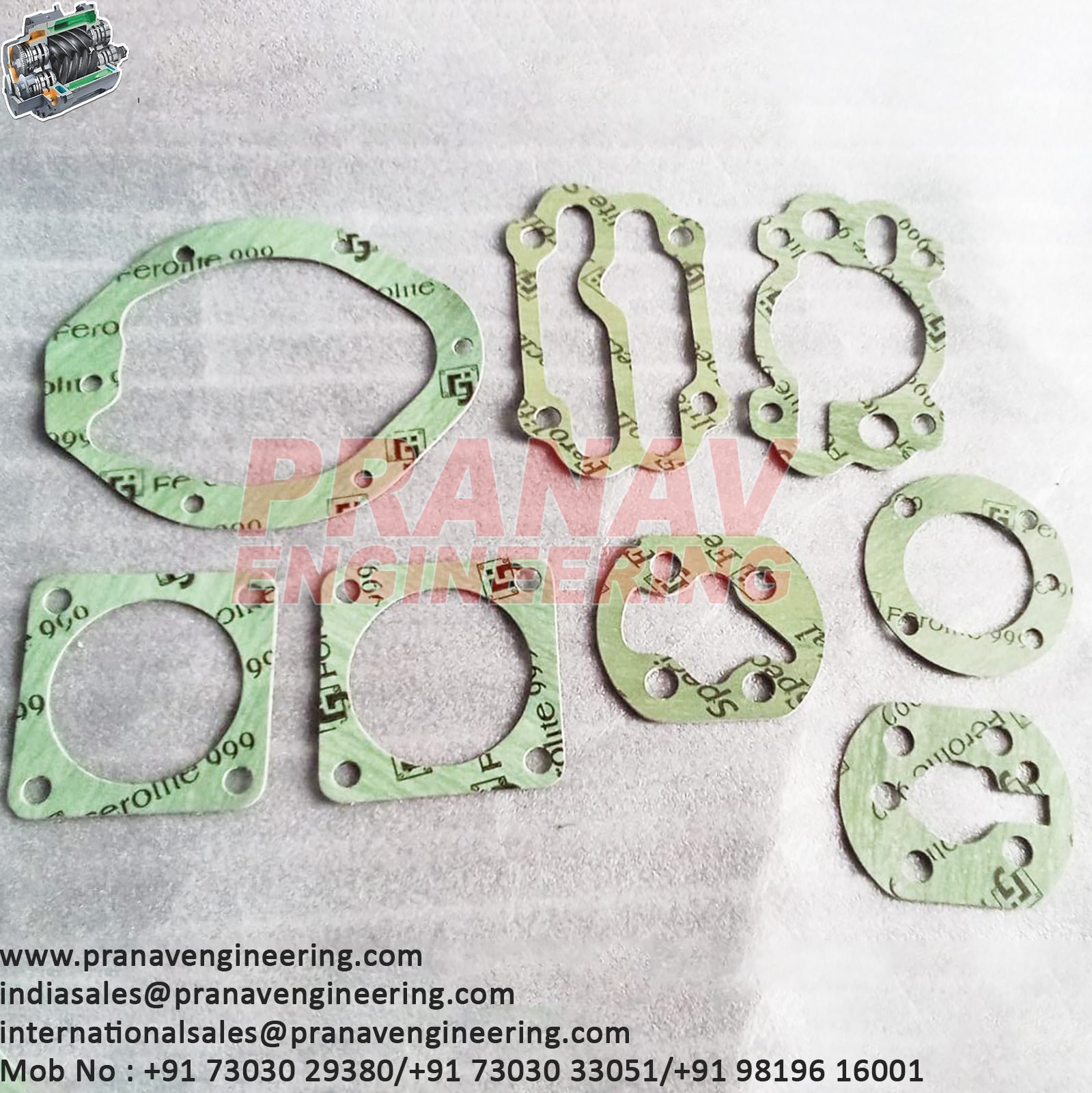
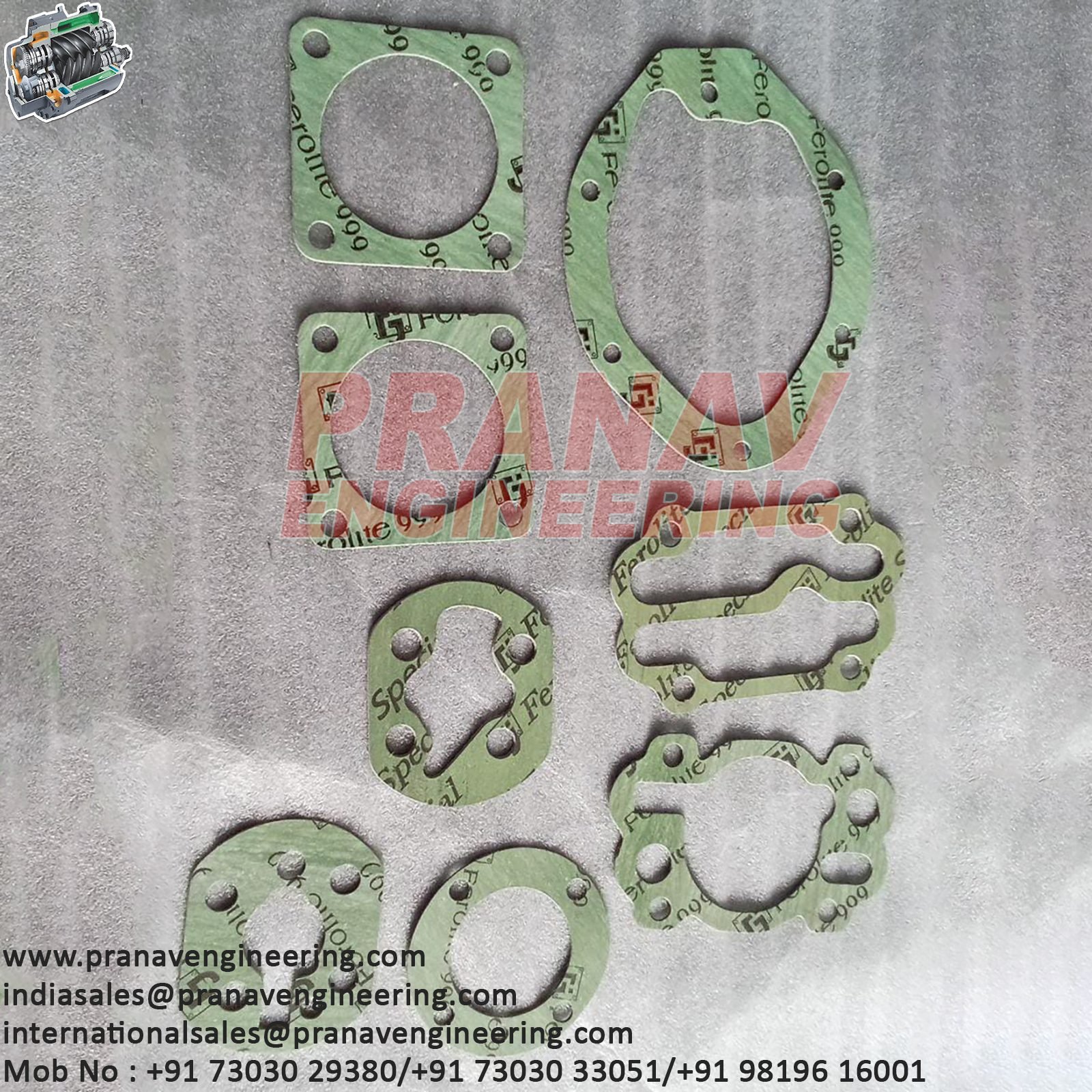
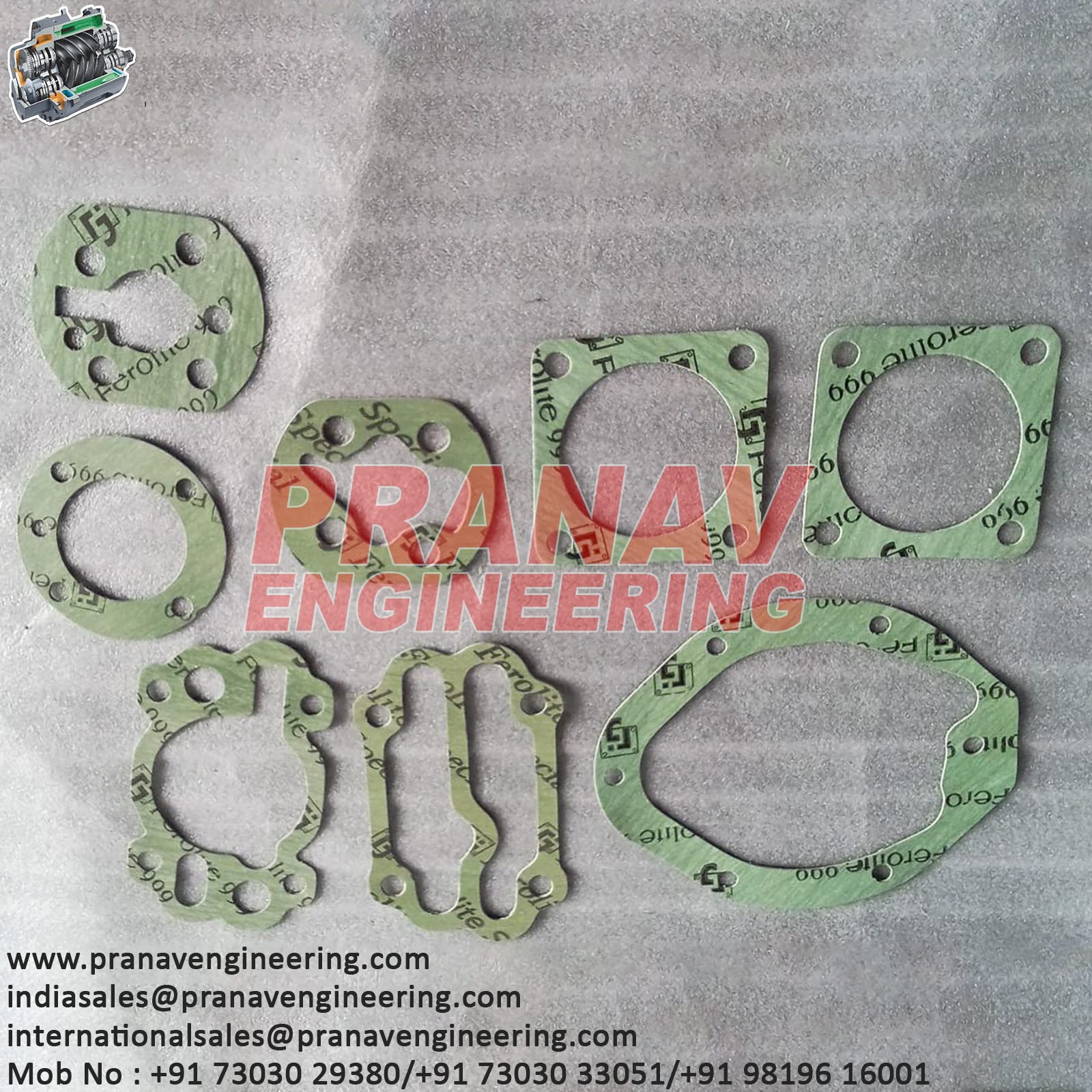
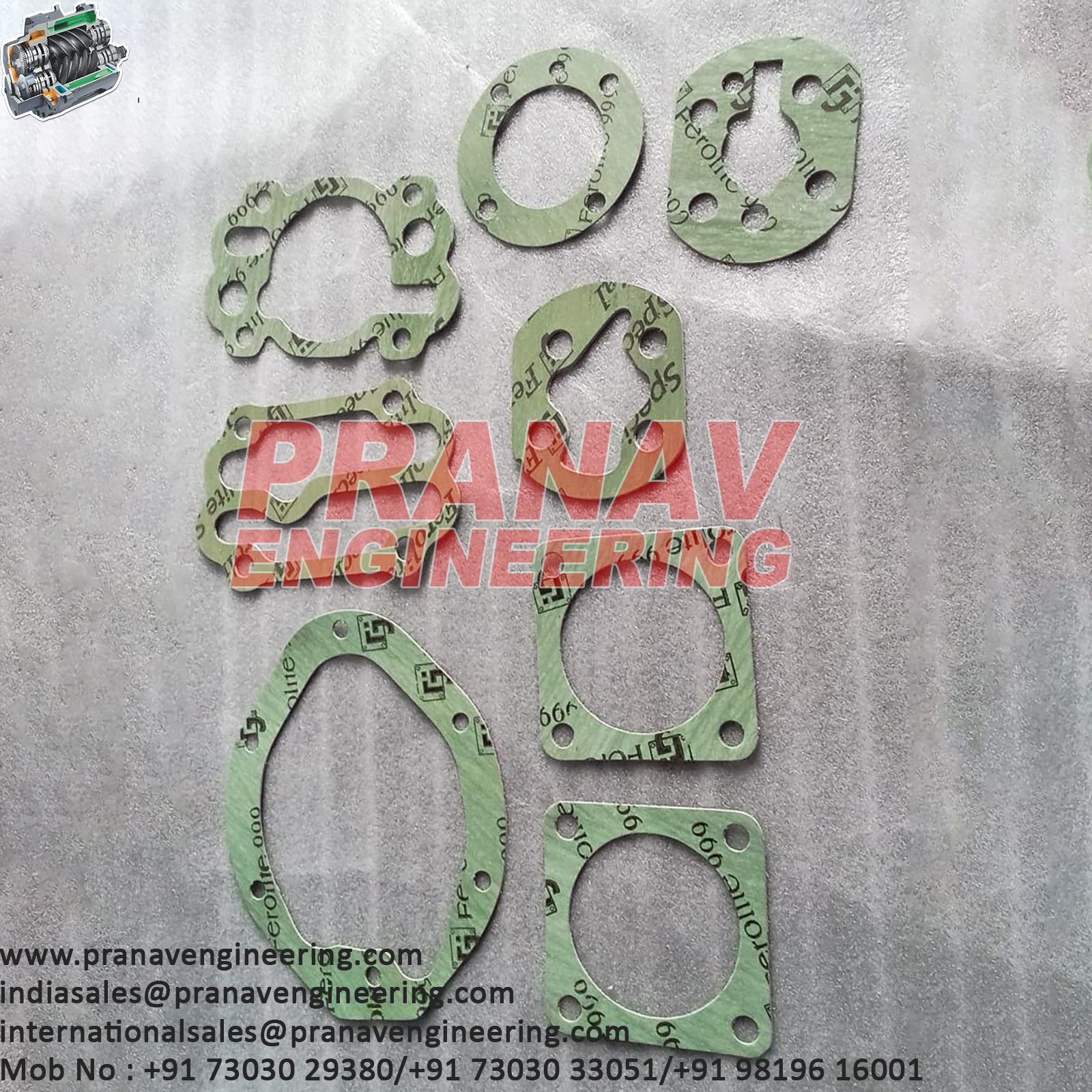
GASKET SET-30420343
The gasket set assembly plays a critical role during compressor overhaul and preventive maintenance
The gasket set assembly is an essential sealing component used in a compressor to prevent leakage between mating surfaces of various mechanical components. It consists of a collection of gaskets, seals, O-rings, and related sealing elements designed specifically for different joints and connections within the compressor. The gasket set is selected according to the compressor model, operating pressure, temperature, fluid characteristics, and manufacturer’s specifications.
The primary function of the gasket set assembly is to provide a reliable seal between stationary components. During compressor operation, internal pressure, temperature changes, vibration, and mechanical loads can create small gaps between mating surfaces. The gaskets fill these irregularities and prevent the escape of compressed gas, lubricating oil, or coolant. They also prevent the entry of air, dust, moisture, and other contaminants into the compressor system.
A typical compressor gasket set may include cylinder head gaskets, crankcase gaskets, valve plate gaskets, crankcase cover gaskets, oil seals, O-rings, flange gaskets, and other specialized sealing components. Each gasket is manufactured in a suitable material based on its specific application. Common materials include compressed fiber, graphite, rubber, elastomers, metal, and composite materials. The material must be capable of withstanding the required pressure, temperature, chemical exposure, and mechanical conditions.
Correct installation of the gasket set is important for compressor reliability. Before installation, the mating surfaces should be thoroughly cleaned and inspected for scratches, corrosion, deformation, or foreign material. The correct gasket should be positioned in the proper orientation without excessive bending or stretching. Fasteners should be tightened evenly and according to the recommended torque sequence and values. Improper installation or over-tightening may damage the gasket and result in leakage or component distortion.
Regular inspection of gasketed joints is necessary during compressor maintenance. Signs of gasket failure may include oil leakage, gas leakage, pressure loss, overheating, unusual operating conditions, or contamination of the lubricant. Damaged, hardened, compressed, or deteriorated gaskets should normally be replaced rather than reused, particularly after dismantling major joints.
The gasket set assembly plays a critical role during compressor overhaul and preventive maintenance. Using a complete and correct gasket set helps ensure that all opened joints are properly resealed and reduces the possibility of repeated leakage or premature component failure. It also improves maintenance efficiency by providing all required sealing components in one coordinated set.
In conclusion, the gasket set assembly is vital for maintaining the pressure integrity, lubrication containment, cleanliness, and overall efficiency of a compressor. Proper selection, installation, inspection, and timely replacement of gaskets help minimize leakage, protect internal components, reduce maintenance problems, and ensure safe and dependable compressor operation.