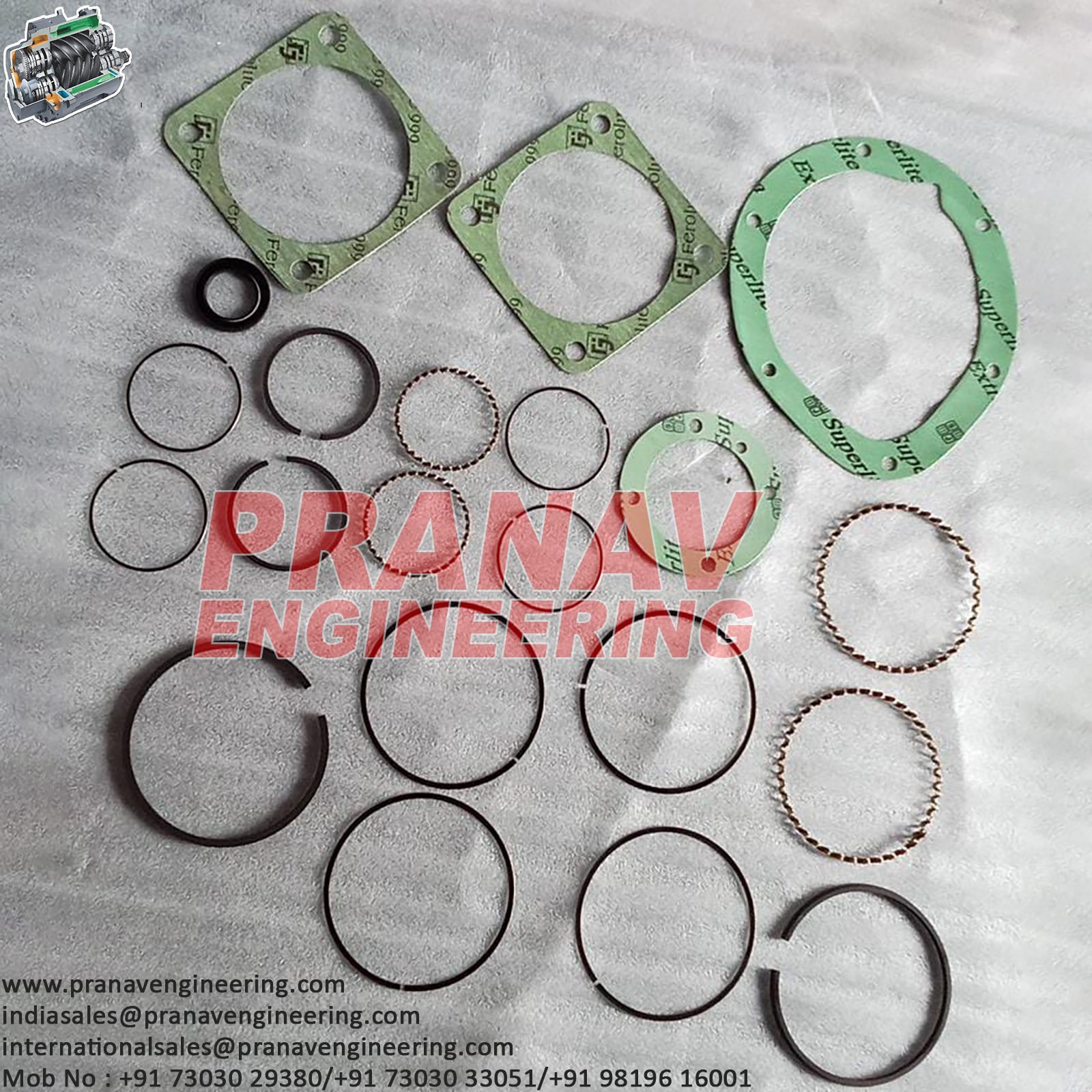
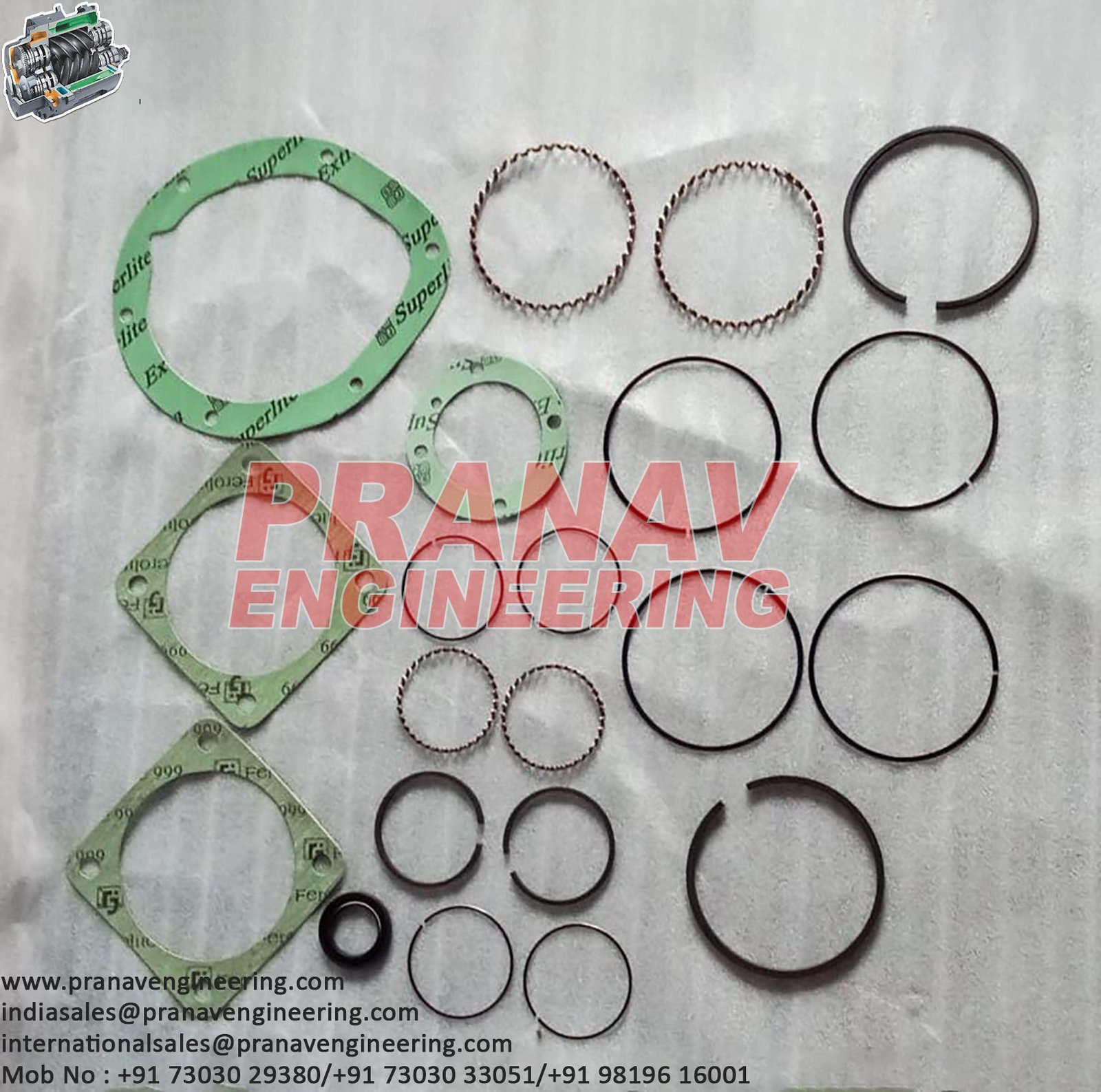
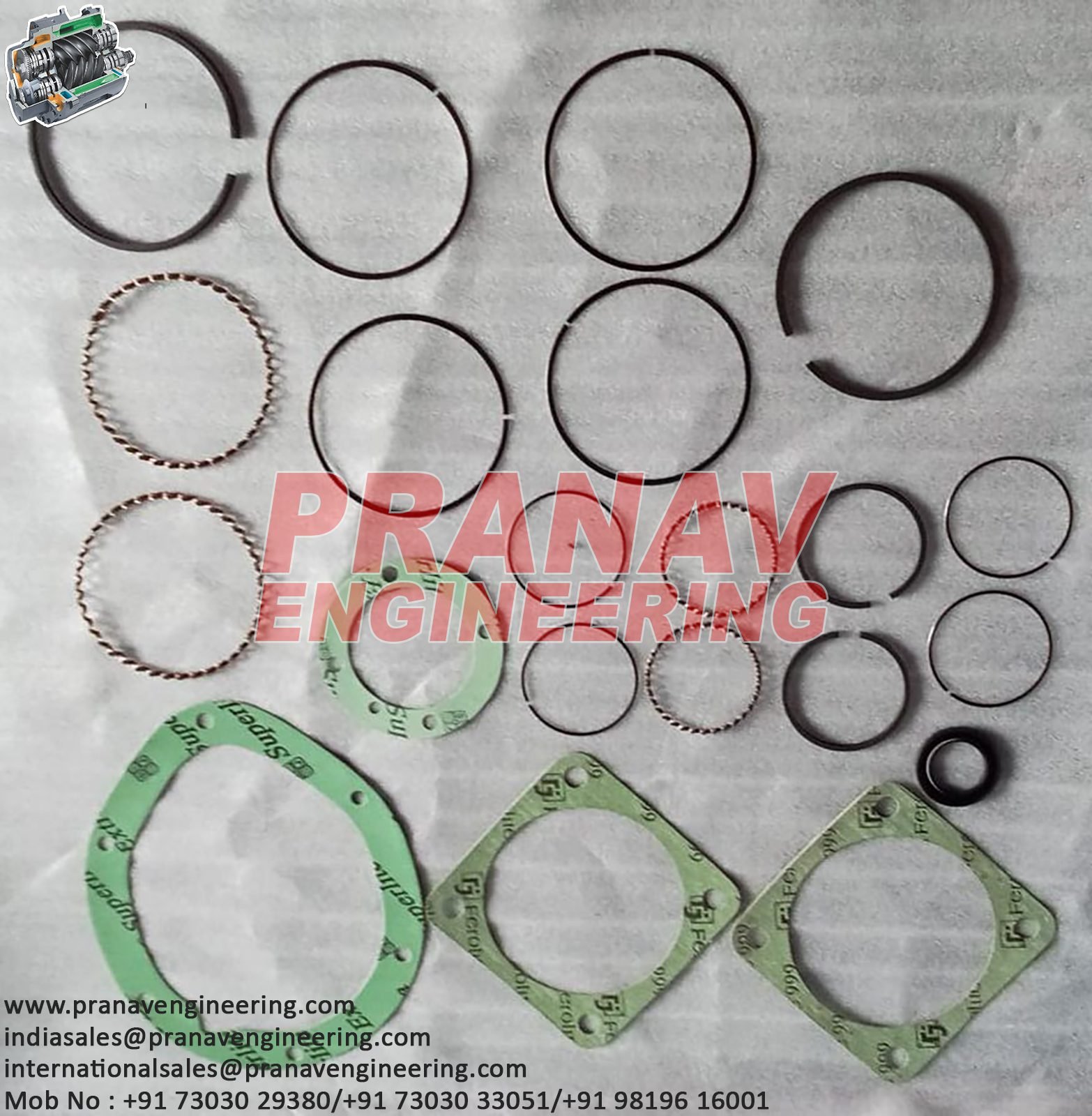
GASKET RING KIT-32198327
the gasket ring kit is a vital component for maintaining reliable sealing throughout a compressor.
The gasket ring kit is an essential sealing and maintenance component used in reciprocating compressors to prevent leakage and maintain the pressure integrity of different compressor assemblies. The kit generally contains a selection of gaskets, O-rings, sealing rings, and other related sealing elements required for servicing or overhauling compressor components. The exact contents, dimensions, materials, and quantities depend on the compressor model, design, operating pressure, temperature, and manufacturer’s specifications.
The primary function of the gasket ring kit is to provide an effective seal between mating surfaces and prevent the unwanted escape of compressed gas, lubricating oil, or other fluids. During compressor operation, components are exposed to pressure fluctuations, temperature variations, vibration, and mechanical loads. These conditions can create small gaps or irregularities between mating surfaces. Properly installed gasket rings fill these gaps and maintain a reliable seal under operating conditions.
Gasket rings may be used in various areas of a compressor, including cylinder assemblies, valve covers, crankcase connections, inspection covers, flange joints, oil passages, and other sealing locations. Depending on the application, sealing elements can be manufactured from materials such as nitrile rubber, Viton, PTFE, graphite, compressed fiber, copper, stainless steel, or specialized composite materials. Material selection is important because the gasket must withstand the compressor’s operating temperature, pressure, gas composition, and lubrication environment.
During routine maintenance or compressor overhaul, the gasket ring kit provides the replacement sealing components required after dismantling the equipment. Existing gasket rings may become hardened, flattened, cracked, worn, or chemically deteriorated after prolonged operation. Reusing damaged or deformed sealing elements can lead to gas leakage, oil leakage, pressure loss, contamination, reduced compressor efficiency, and premature component failure. Therefore, replacement with the correct gasket ring is an important part of compressor maintenance.
Before installation, all mating surfaces should be cleaned thoroughly and inspected for scratches, corrosion, burrs, deformation, or foreign material. The correct gasket ring must be selected according to its specified size, shape, material, and application. It should be installed carefully without twisting, cutting, overstretching, or damaging the sealing surface. Where required, the manufacturer’s recommended installation lubricant or procedure should be followed. Fasteners should be tightened evenly and to the specified torque.
A properly installed gasket ring kit helps maintain compressor pressure, prevents leakage, protects internal components, and supports stable operation. Regular inspection can identify early signs of sealing failure, such as oil seepage, gas leakage, pressure fluctuations, abnormal temperature, or reduced compressor performance.
In conclusion, the gasket ring kit is a vital component for maintaining reliable sealing throughout a compressor. Correct selection, installation, inspection, and timely replacement of gasket rings help minimize leakage, improve operating efficiency, protect compressor components, and extend equipment service life. Using a complete, correctly specified gasket ring kit during maintenance ensures dependable sealing and safe compressor operation.