

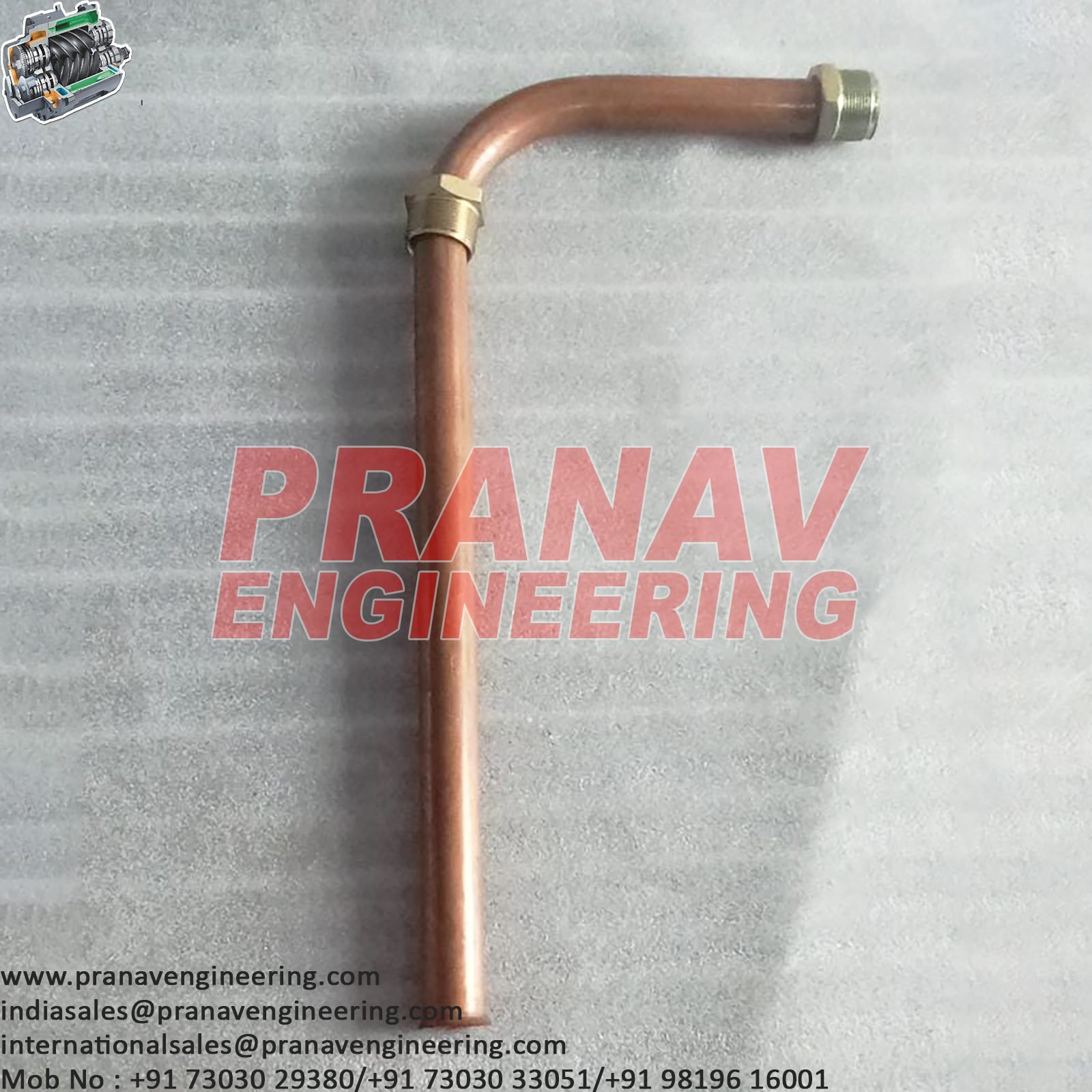
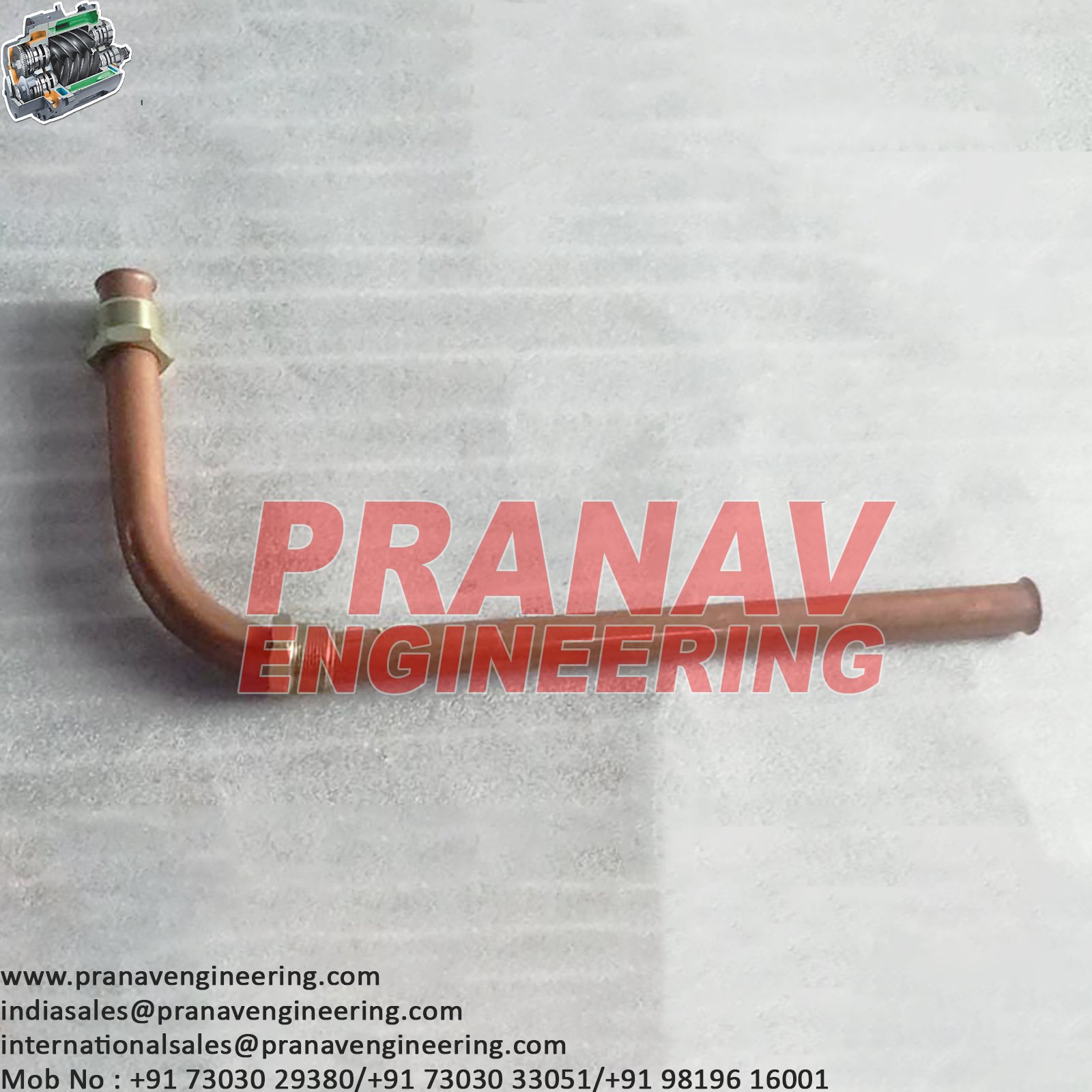
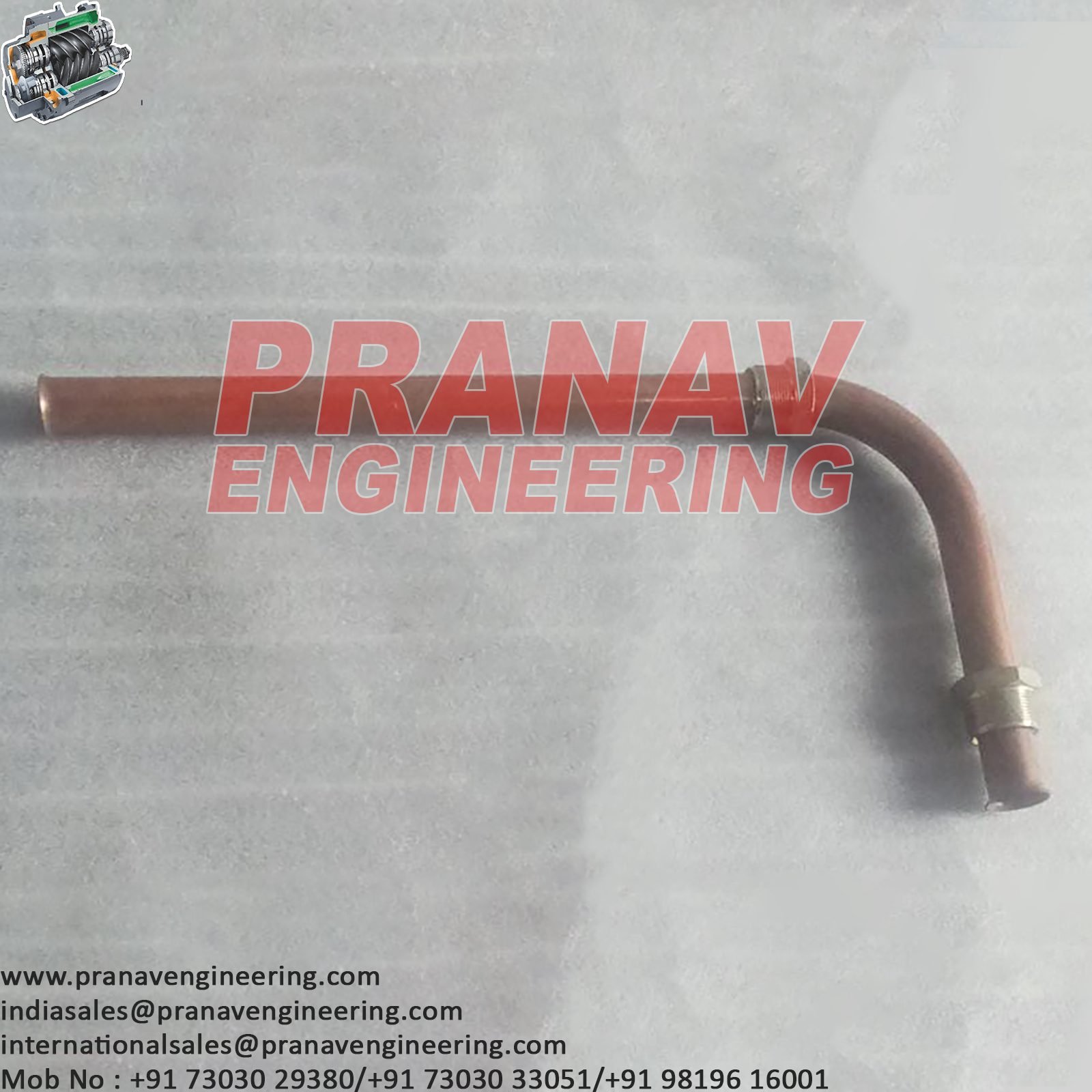
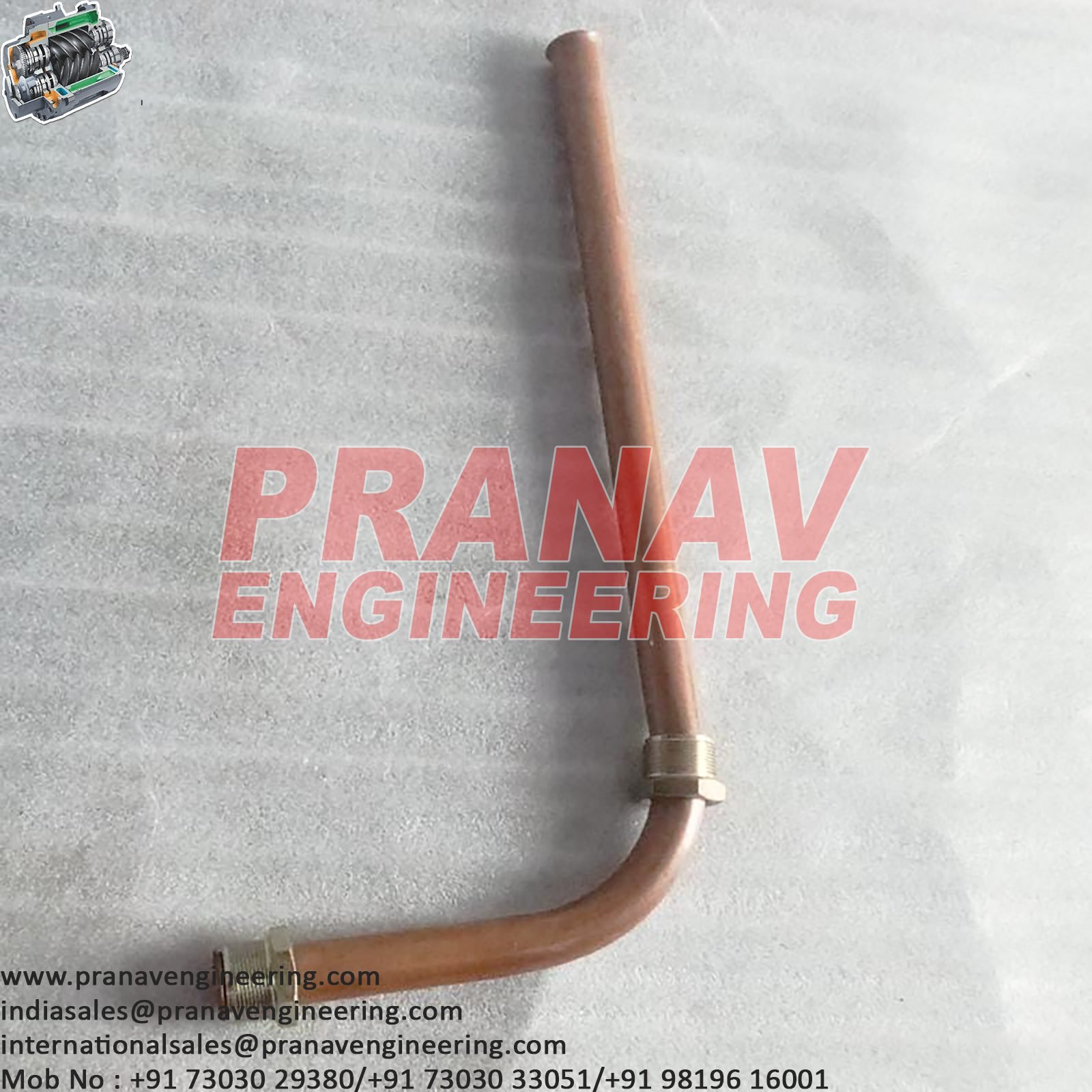
DISCHARGE TUBE-32296188
The discharge tube may also be exposed to high temperatures, particularly when the compressor operates at high pressure ratios.
The discharge tube is an important component of a reciprocating compressor system. Its primary function is to carry compressed gas from the compressor cylinder or discharge valve to the next stage of the system, such as an intercooler, separator, receiver, or process pipeline. The discharge tube is designed to safely withstand the pressure, temperature, vibration, and flow conditions produced during compressor operation.
The discharge tube is normally manufactured from carbon steel, stainless steel, alloy steel, copper, or other suitable materials, depending on the type of gas, operating pressure, temperature, and compressor application. Material selection is important because the tube must resist corrosion, erosion, vibration, and mechanical stress during continuous operation.
One end of the discharge tube is connected to the compressor discharge outlet or discharge valve assembly, while the other end is connected to the downstream equipment. Connections may be made using flanges, threaded fittings, compression fittings, welded joints, or other suitable arrangements. Proper sealing at each connection is necessary to prevent gas leakage.
During compressor operation, gas is compressed inside the cylinder and discharged through the discharge valve when the cylinder pressure becomes higher than the discharge-line pressure. The high-pressure gas then flows through the discharge tube toward the receiver or process system. The internal diameter and length of the tube are selected to provide suitable gas flow while minimizing pressure drop.
Because the discharge tube carries high-pressure gas, it is exposed to pressure pulsations and vibration. Reciprocating compressors produce pulsating gas flow, which can create mechanical vibration and cyclic stresses in the discharge piping. Proper supports, clamps, flexible connections, and suitable routing are therefore important. In some systems, pulsation dampeners or bottles may also be used to reduce pressure fluctuations.
The discharge tube may also be exposed to high temperatures, particularly when the compressor operates at high pressure ratios. Excessive temperature can affect seals, gaskets, fittings, and nearby components. Proper cooling and adequate ventilation should therefore be maintained.
Common problems associated with discharge tubes include gas leakage, corrosion, blockage, cracking, vibration-induced fatigue, loose connections, and excessive pressure drop. Leakage may be identified by abnormal pressure loss, unusual sound, or suitable leak-detection methods. Any damaged tube or fitting should be repaired or replaced according to the manufacturer’s specifications and applicable safety requirements.
Regular maintenance includes inspecting the tube for corrosion, cracks, deformation, loose supports, and leakage. Connections should be checked periodically, and the tube should be kept free from unnecessary mechanical loads.
In conclusion, the discharge tube plays a vital role in safely transporting compressed gas from the compressor to downstream equipment. Correct material selection, proper installation, adequate support, and regular inspection ensure efficient gas flow, minimize pressure losses, and improve the overall safety and reliability of the compressor system.