

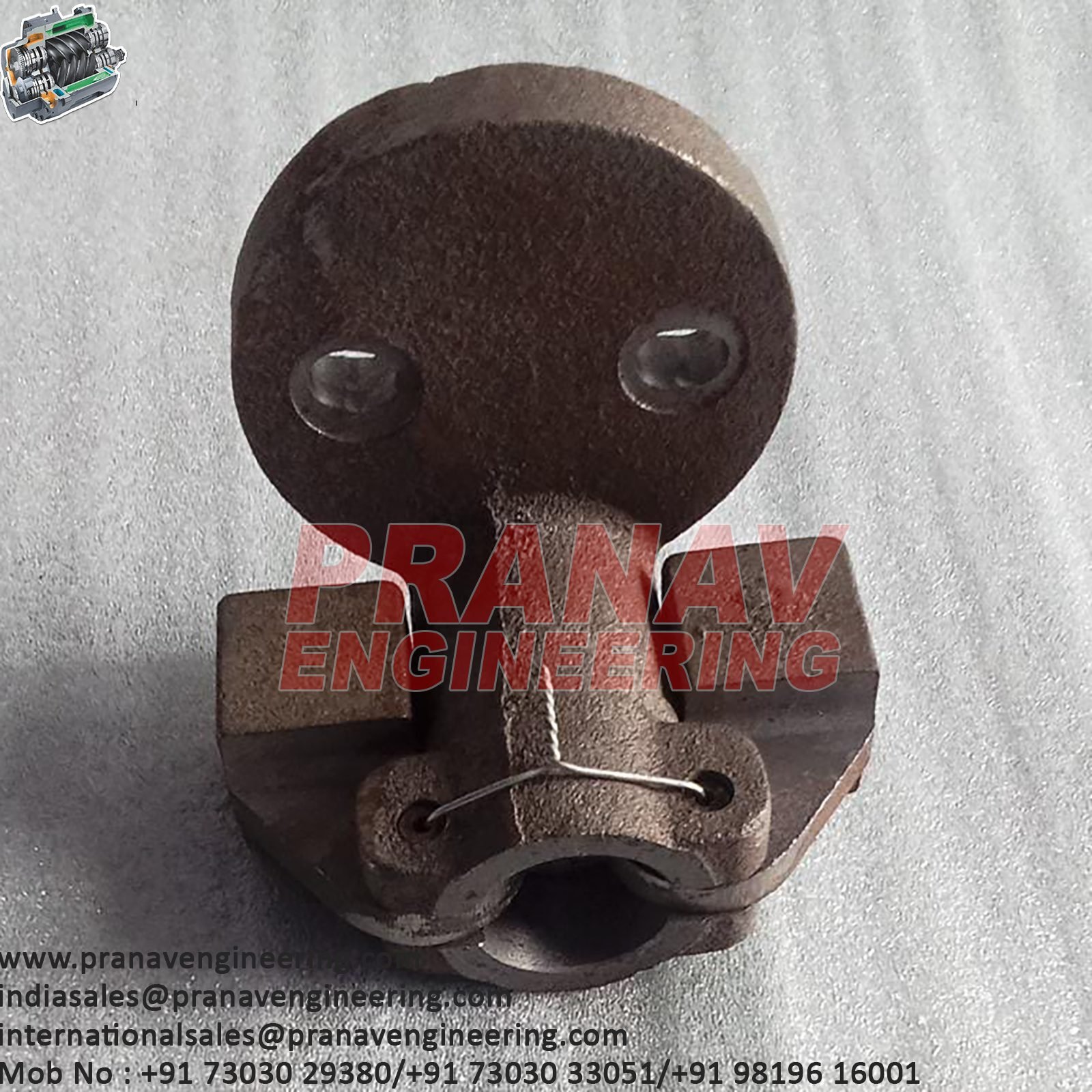
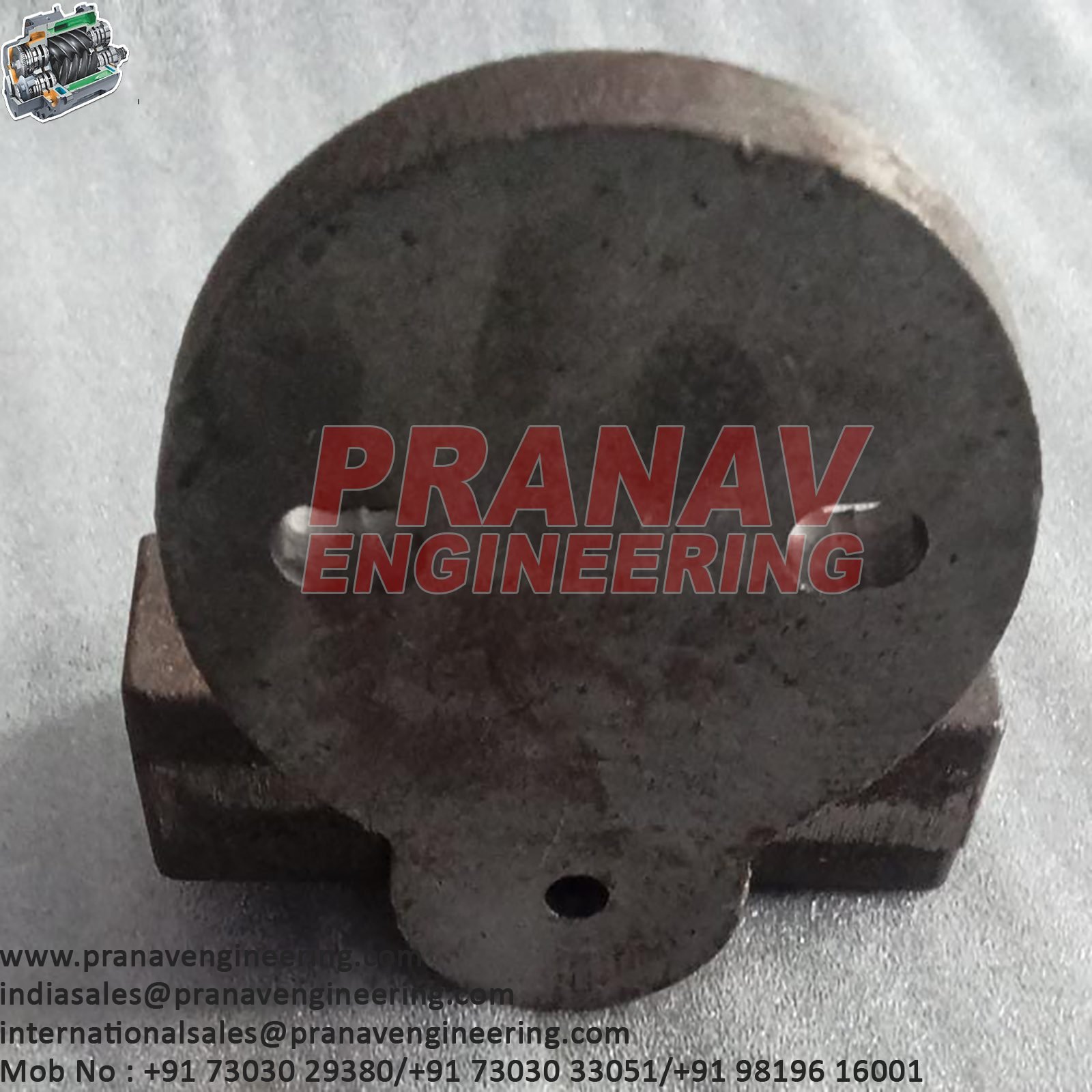
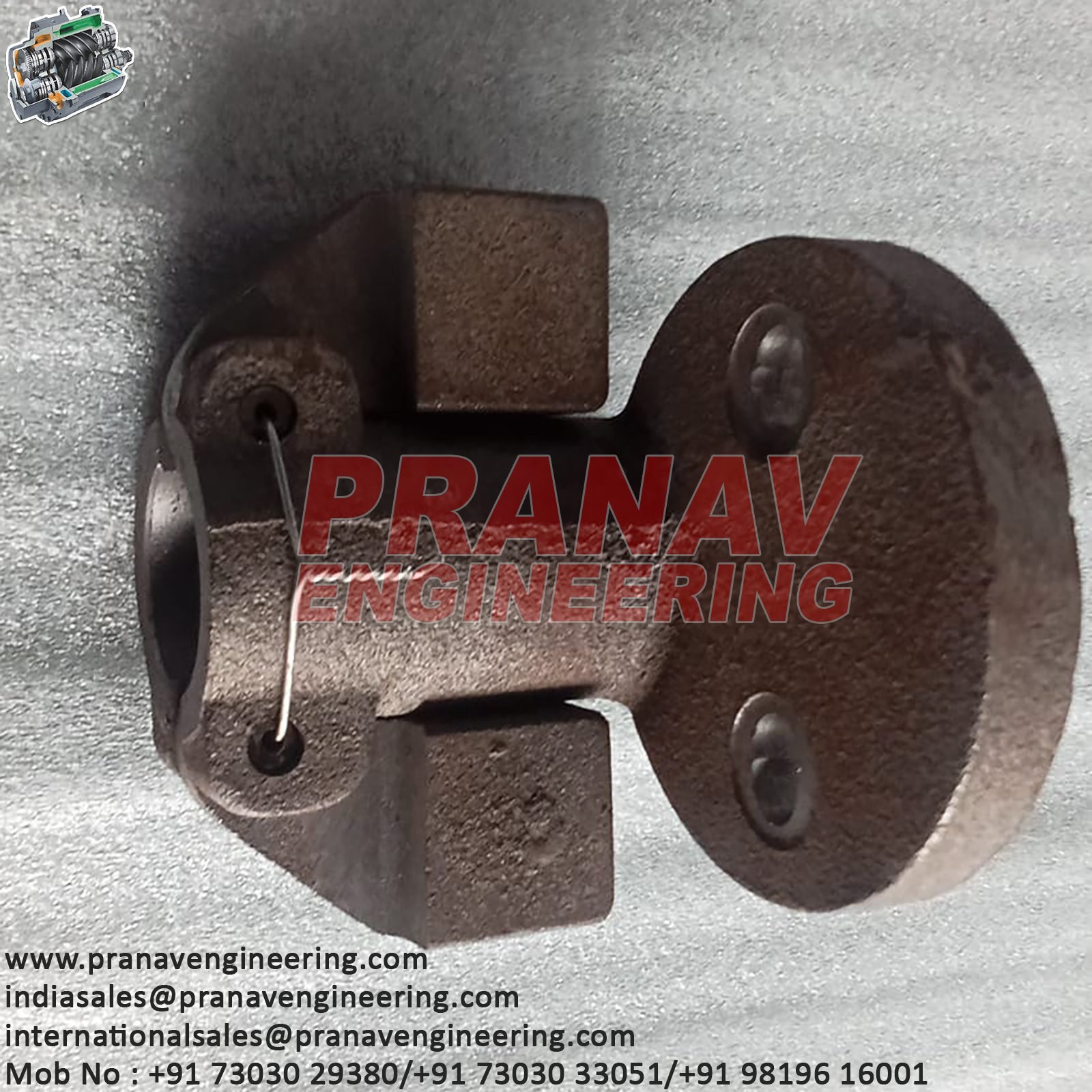
CRANK CAP ASSEMBLY-30290936
The crank cap assembly also contributes to the overall rigidity of the compressor structure
The crank cap assembly is an important mechanical component of a reciprocating compressor. It is generally fitted over the crankcase or crankshaft area and is designed to provide structural support, protection, and proper containment of the internal moving components. The assembly helps maintain the alignment and stability of the crankshaft and related parts during compressor operation.
The crank cap is typically manufactured from strong materials such as cast iron, ductile iron, or steel, depending on the compressor design and operating conditions. It is accurately machined to provide proper seating, alignment, and dimensional stability. The cap is securely fastened to the compressor crankcase using bolts, studs, or other suitable fastening arrangements. Proper tightening of these fasteners is essential to prevent vibration, leakage, or movement during operation.
One of the primary functions of the crank cap assembly is to protect the crankshaft, connecting rod, bearings, and other internal components from external contamination. It also helps retain lubricating oil within the crankcase and prevents the entry of dust, moisture, and foreign particles. Depending on the compressor design, the assembly may incorporate oil seals, gaskets, inspection covers, bearing housings, or other sealing elements.
The crank cap assembly also contributes to the overall rigidity of the compressor structure. During operation, the crankshaft and connecting rods generate considerable dynamic forces and vibrations. A properly designed and securely installed crank cap helps withstand these forces and maintains the required alignment of the rotating assembly. Accurate alignment is essential for reducing bearing wear, shaft deflection, vibration, and mechanical losses.
Routine inspection of the crank cap assembly is important for reliable compressor performance. Maintenance personnel should check for cracks, deformation, loose fasteners, gasket damage, oil leakage, abnormal vibration, and signs of wear around the bearing or sealing areas. Any damaged gasket or seal should be replaced, and bolts should be tightened according to the manufacturer’s specified torque requirements.
In summary, the crank cap assembly provides mechanical protection, structural support, lubrication containment, and alignment for the compressor’s crankshaft system. Its correct installation, inspection, and maintenance are essential for achieving safe, efficient, and long-lasting compressor operation.