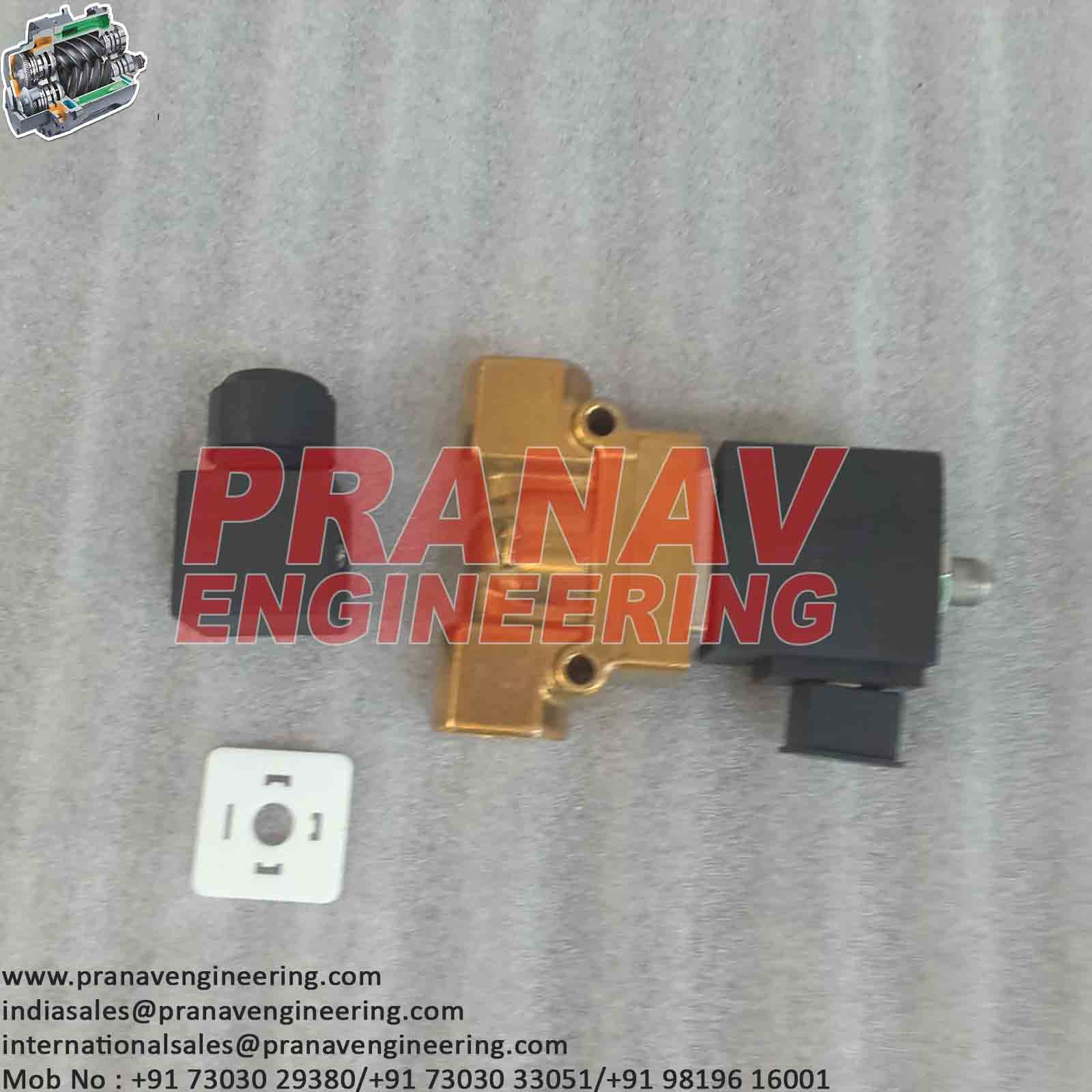
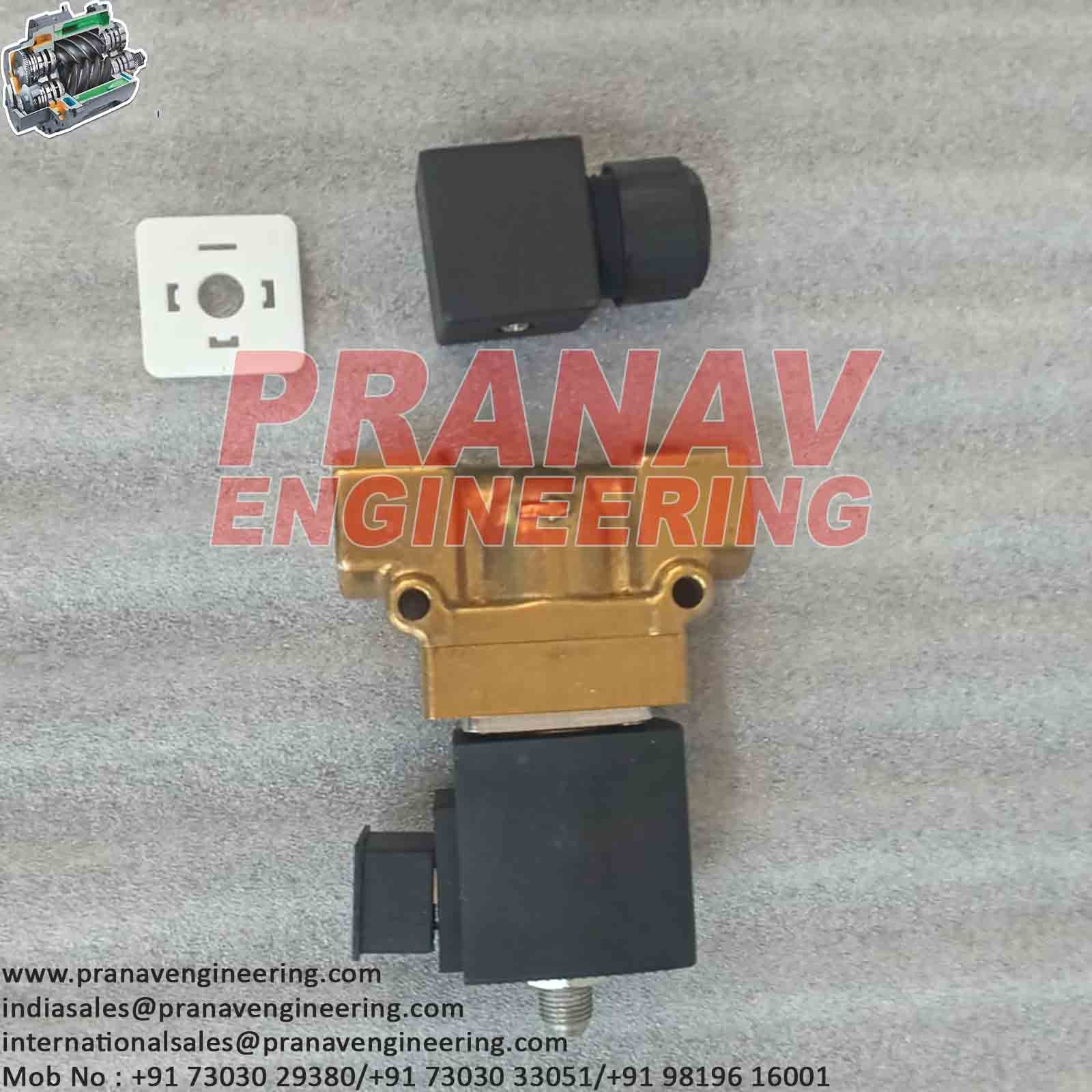
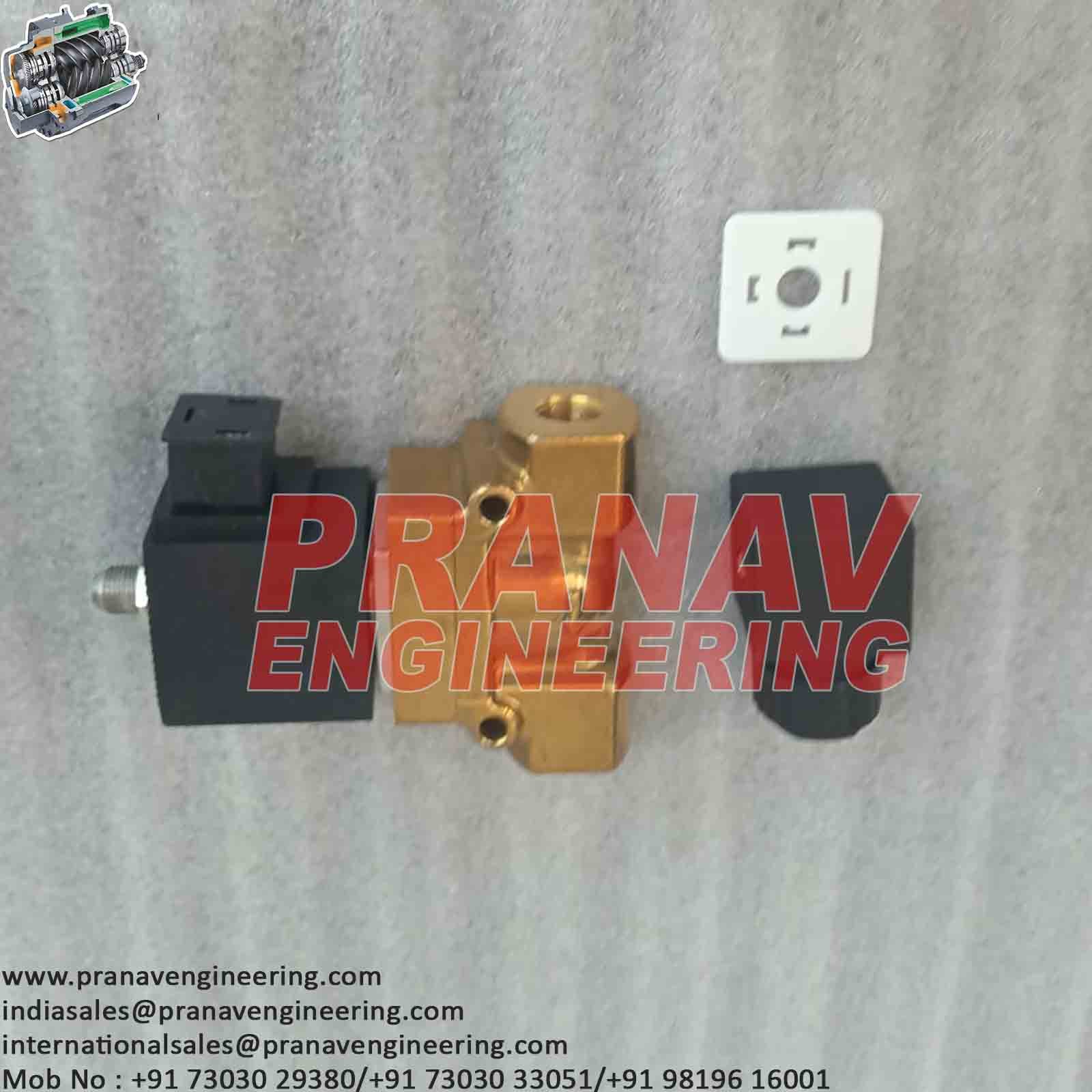
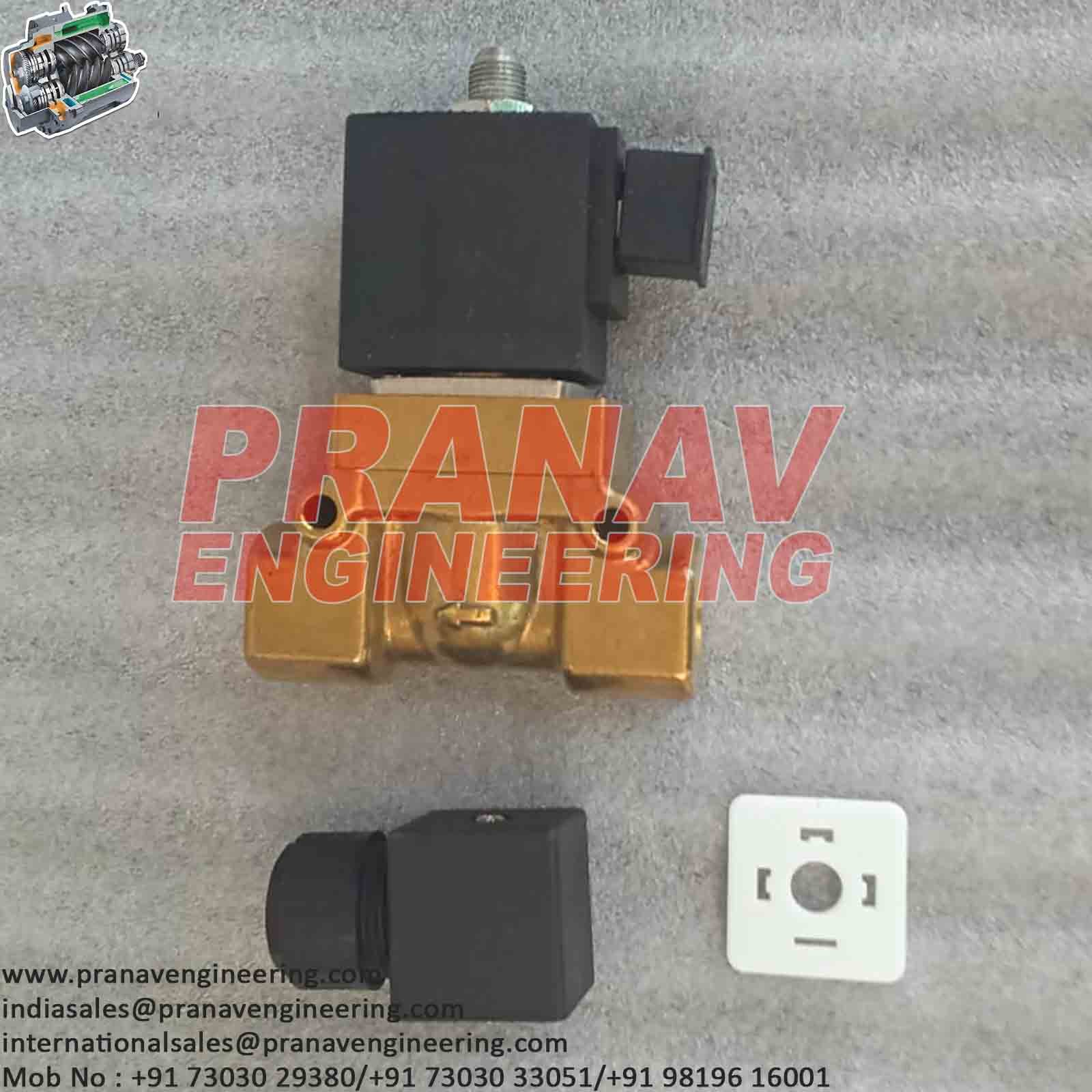
BLOW DOWN SOLENOID VALVE -48-1203-204
A blowdown solenoid valve is an essential control component installed in many compressed-air systems, especially in rotary screw compressors.
A blowdown solenoid valve is an essential control component installed in many compressed-air systems, especially in rotary screw compressors. Its main purpose is to release the compressed air trapped inside the compressor air/oil separator, discharge line, or compression system when the compressor is unloaded or stopped. This ensures that the internal pressure of the compressor is reduced before the next start, allowing the compressor motor to start without excessive load.
The blowdown solenoid valve operates through an electrical signal received from the compressor control panel. It normally consists of a solenoid coil, valve body, plunger, spring, seals, and inlet and outlet ports. When the compressor is running under load, the valve remains closed so that compressed air is retained within the system. When the compressor receives a stop or unload command, the control system changes the electrical condition of the solenoid. The valve then opens and allows the trapped compressed air to escape safely to the atmosphere or to the designated low-pressure side.
The blowdown process is important because residual pressure can remain inside the separator vessel and discharge piping after the compressor stops. If this pressure is not released, the compressor may experience high starting torque during the next start-up. This can cause excessive motor current, motor overload, increased mechanical stress, and possible starting failure. By reducing the internal pressure, the blowdown valve helps the compressor restart smoothly and safely.
The valve also contributes to proper compressor control and reliable operation. A malfunctioning blowdown solenoid valve can cause several problems. If the valve remains continuously open, compressed air may escape during normal operation, resulting in pressure loss, increased energy consumption, and reduced compressor efficiency. If the valve fails to open during shutdown, excessive residual pressure may remain in the compressor, causing starting difficulties and increased stress on the motor and compressor components.
Regular inspection and maintenance of the blowdown solenoid valve are therefore necessary. Maintenance activities include checking the solenoid coil, electrical connections, valve operation, seals, tubing, and air passages. The valve should be inspected for leakage, contamination, blockage, abnormal noise, and proper opening and closing action. Any damaged components should be replaced according to the manufacturer’s specifications.
In conclusion, the blowdown solenoid valve is a critical component for the safe and efficient operation of a compressor. It controls the release of residual compressed air during unloading and shutdown, reduces starting load, prevents unnecessary air loss, and protects the compressor and motor from excessive mechanical and electrical stress. Proper maintenance of this valve helps improve compressor reliability, efficiency, and service life.