
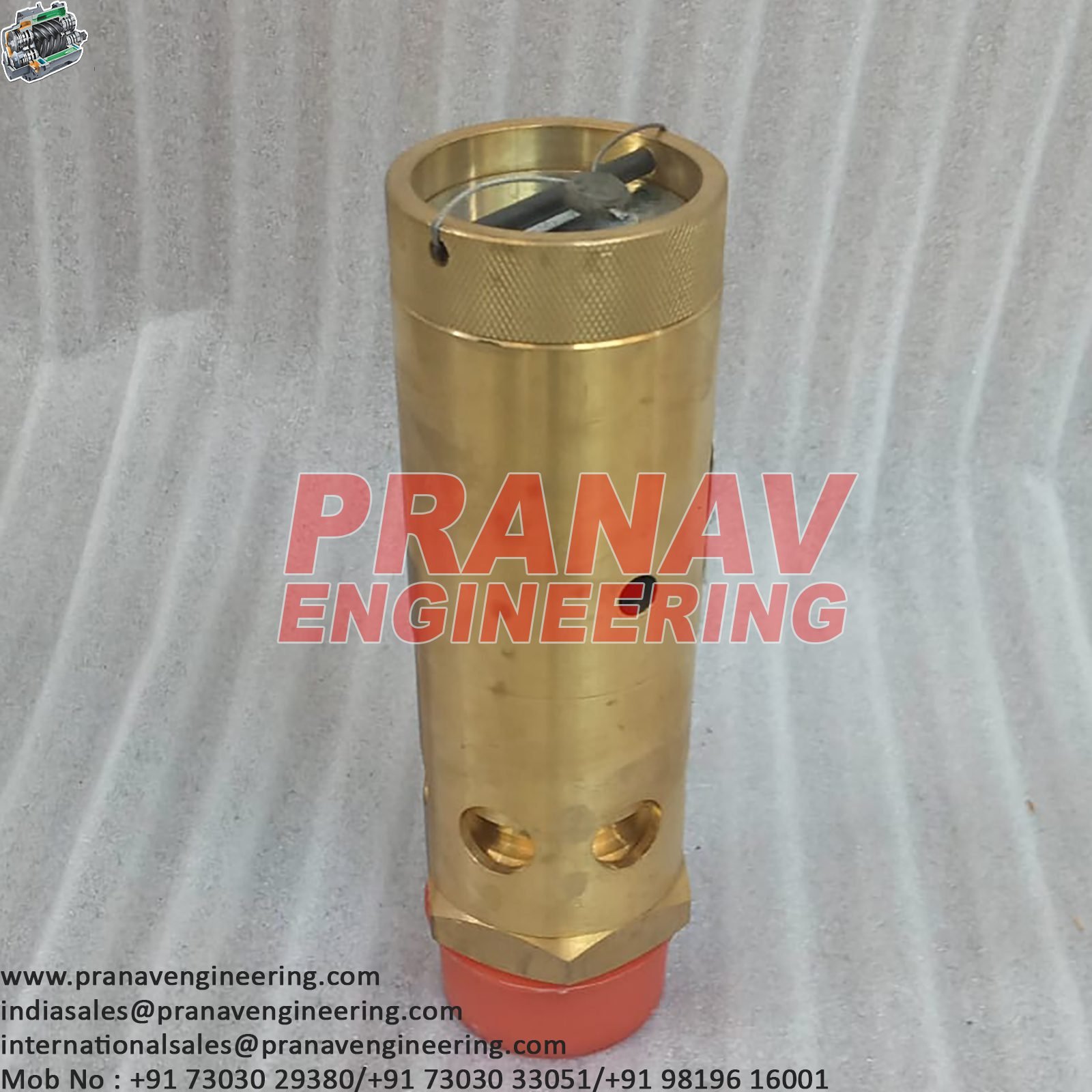
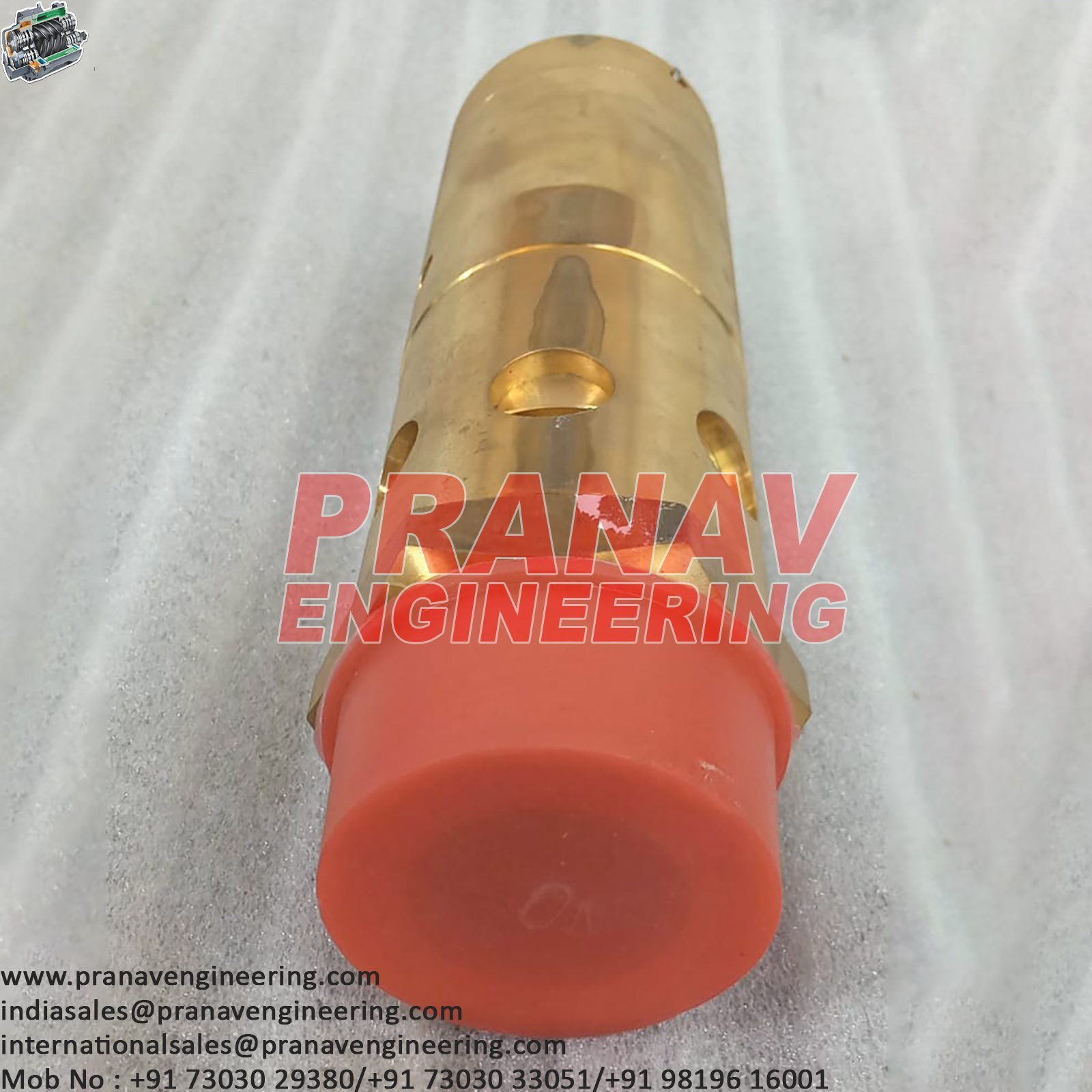
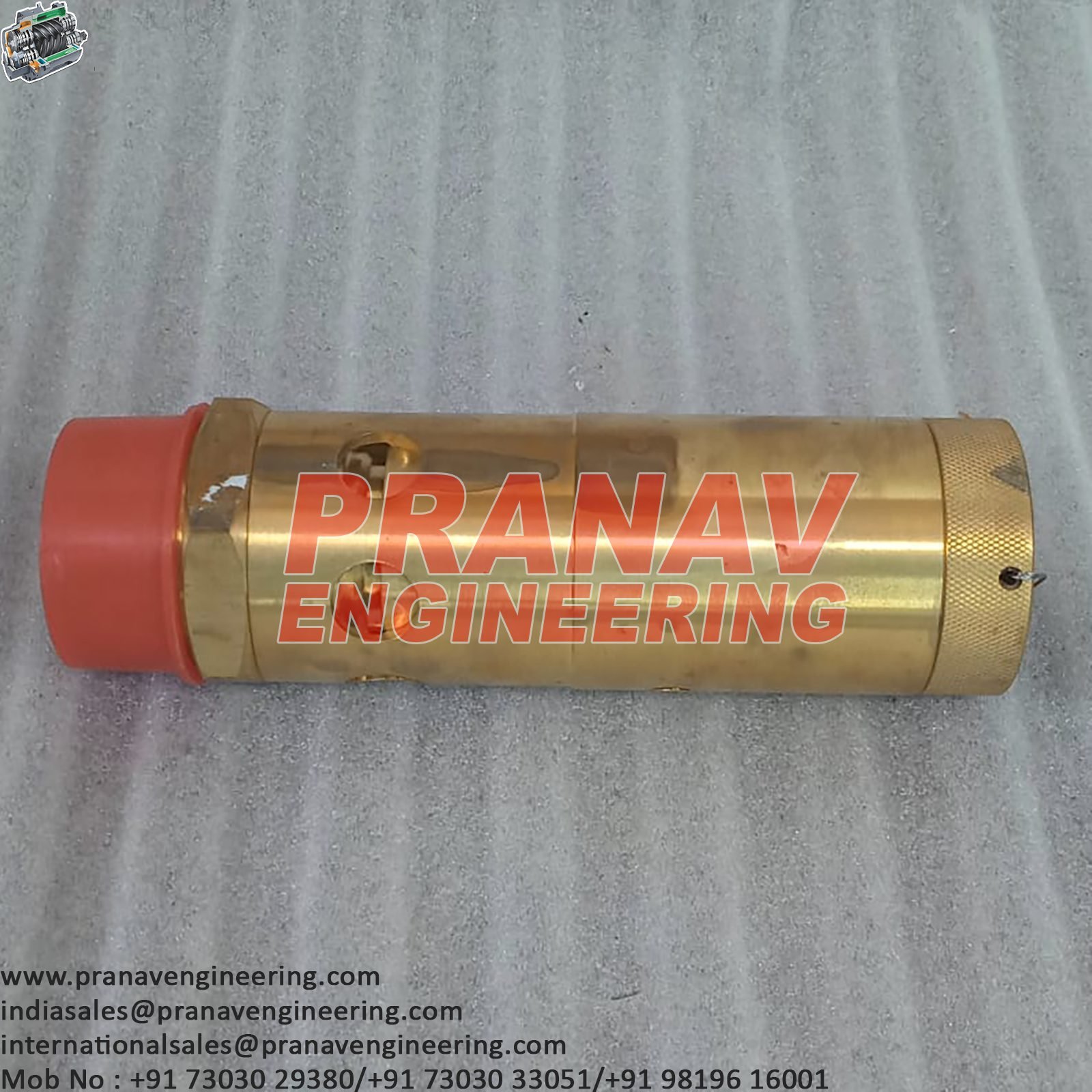
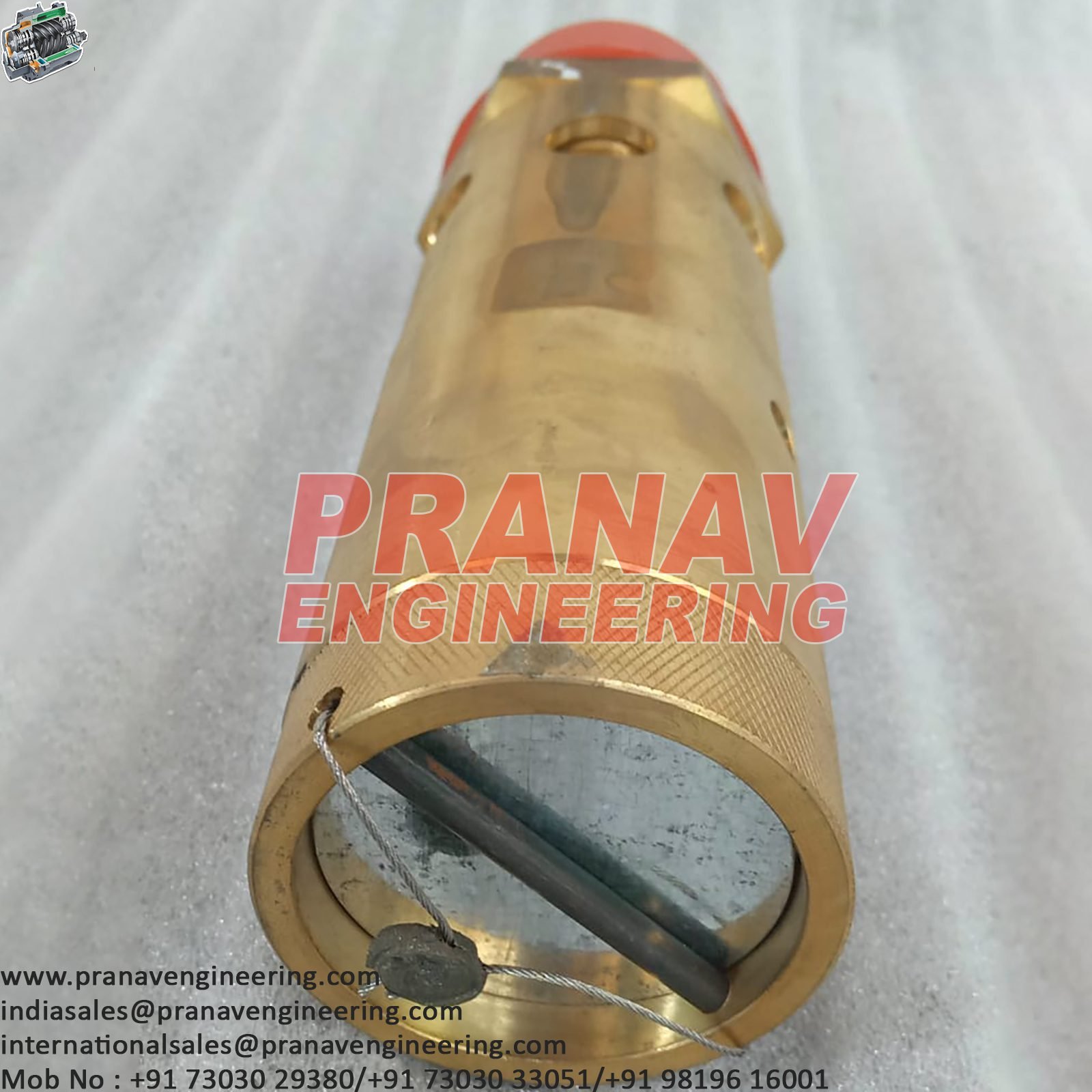
SAFETY VALVE-2205118270
A safety valve automatically releases the excess pressure and prevents damage to the compressor and connected equipment.
A safety valve is an essential safety device used in a compressor system to protect the equipment from excessive pressure. A compressor increases the pressure of air or gas and delivers it to a receiver, pipeline, or other equipment. During normal operation, the pressure is controlled within a specified safe range. However, if the pressure control system fails, the discharge line becomes blocked, or the compressor continues to operate abnormally, pressure may increase beyond the allowable limit. A safety valve automatically releases the excess pressure and prevents damage to the compressor and connected equipment.
The main purpose of a safety valve is to protect pressure-containing components such as the air receiver, compressor discharge system, pipelines, and storage vessels. Excessive pressure can cause leakage, deformation, equipment failure, or, in extreme cases, rupture of a pressure vessel. Therefore, the safety valve acts as a final protective device against dangerous overpressure conditions.
A typical safety valve consists of a valve body, valve seat, valve disc, spring, spindle, and adjusting mechanism. The spring keeps the valve closed during normal operating conditions. The valve is set to open at a predetermined pressure known as the set pressure. When the system pressure reaches or exceeds this value, the pressure acting on the valve disc overcomes the spring force. The disc lifts from the valve seat, allowing compressed air or gas to escape through the outlet. This reduces the system pressure. When the pressure falls to a safe level, the spring forces the disc back onto the seat and the valve closes automatically.
Safety valves are generally installed at suitable points in the compressor system, particularly on pressure vessels and discharge lines, according to the system design and applicable safety standards. The valve must be correctly selected and sized so that it can discharge sufficient air or gas to prevent the pressure from exceeding the permitted limit.
Regular inspection and maintenance of the safety valve are very important. The valve should be checked for corrosion, dirt, leakage, and mechanical damage. Its operation and set pressure should be tested periodically by qualified personnel. The safety valve should never be blocked, isolated, or adjusted without authorization, as this can create a serious safety hazard.
In conclusion, a safety valve is a vital component of a compressor system. It provides automatic protection against excessive pressure and helps prevent equipment damage, production losses, and accidents. Proper selection, installation, inspection, testing, and maintenance ensure that the compressor operates safely and reliably.