

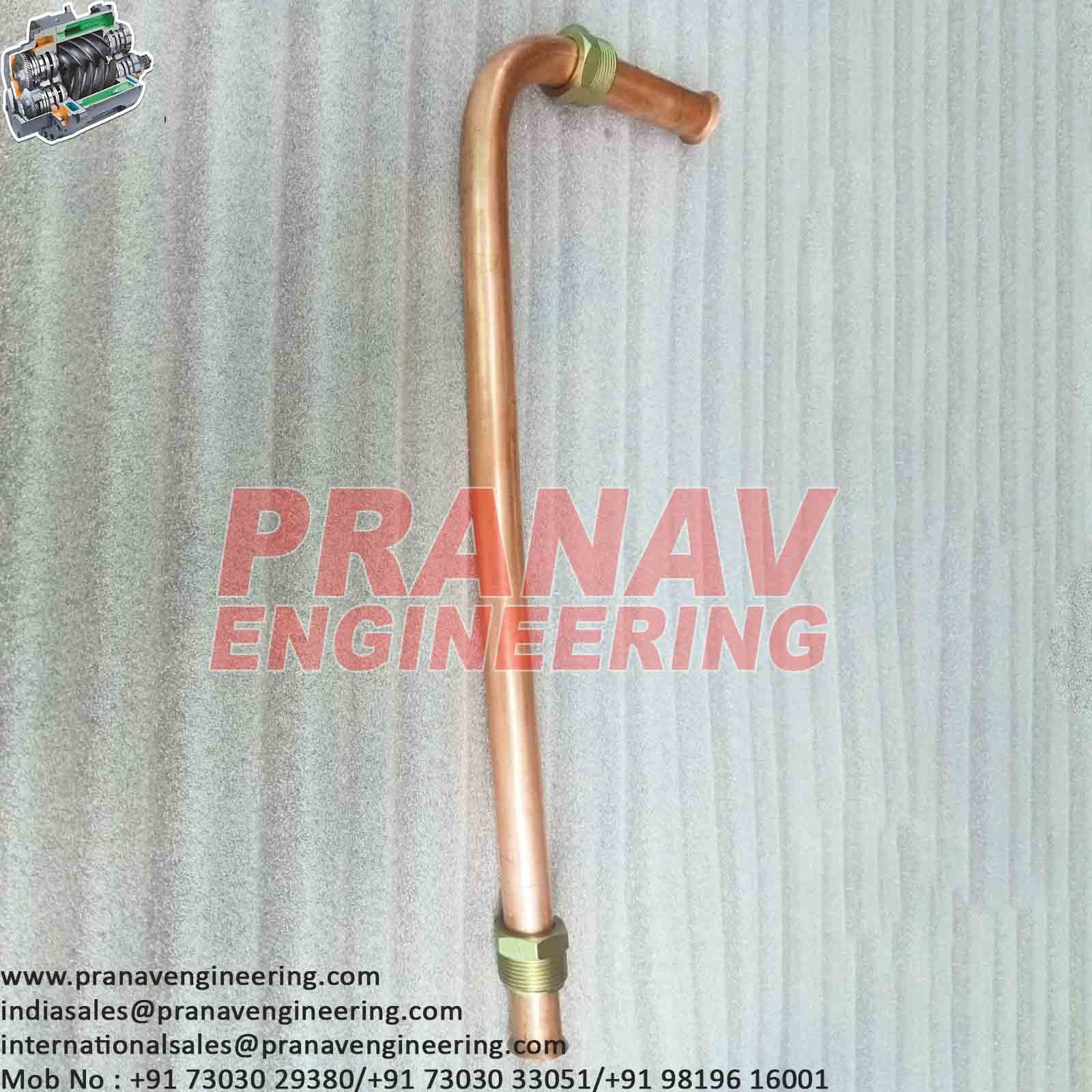
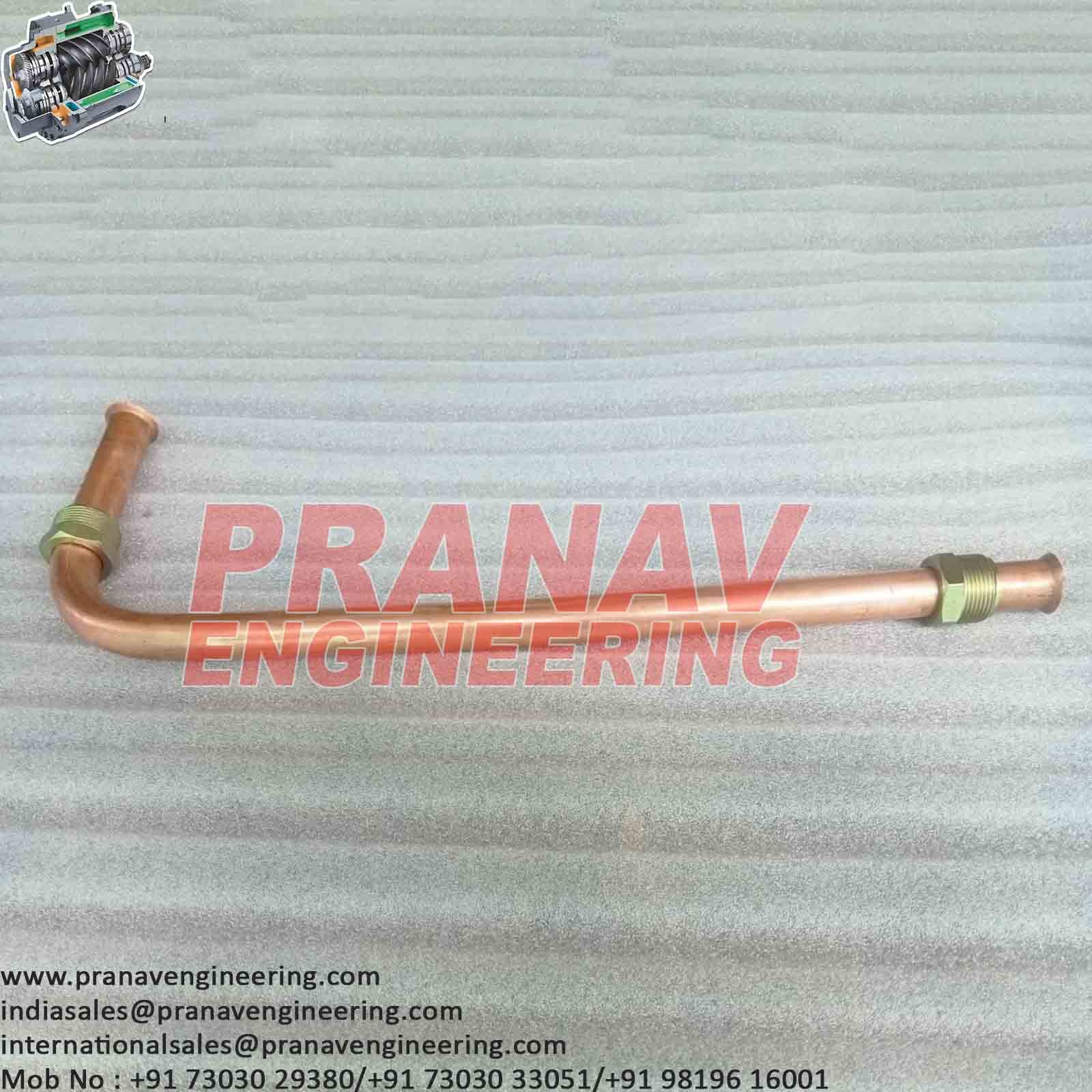
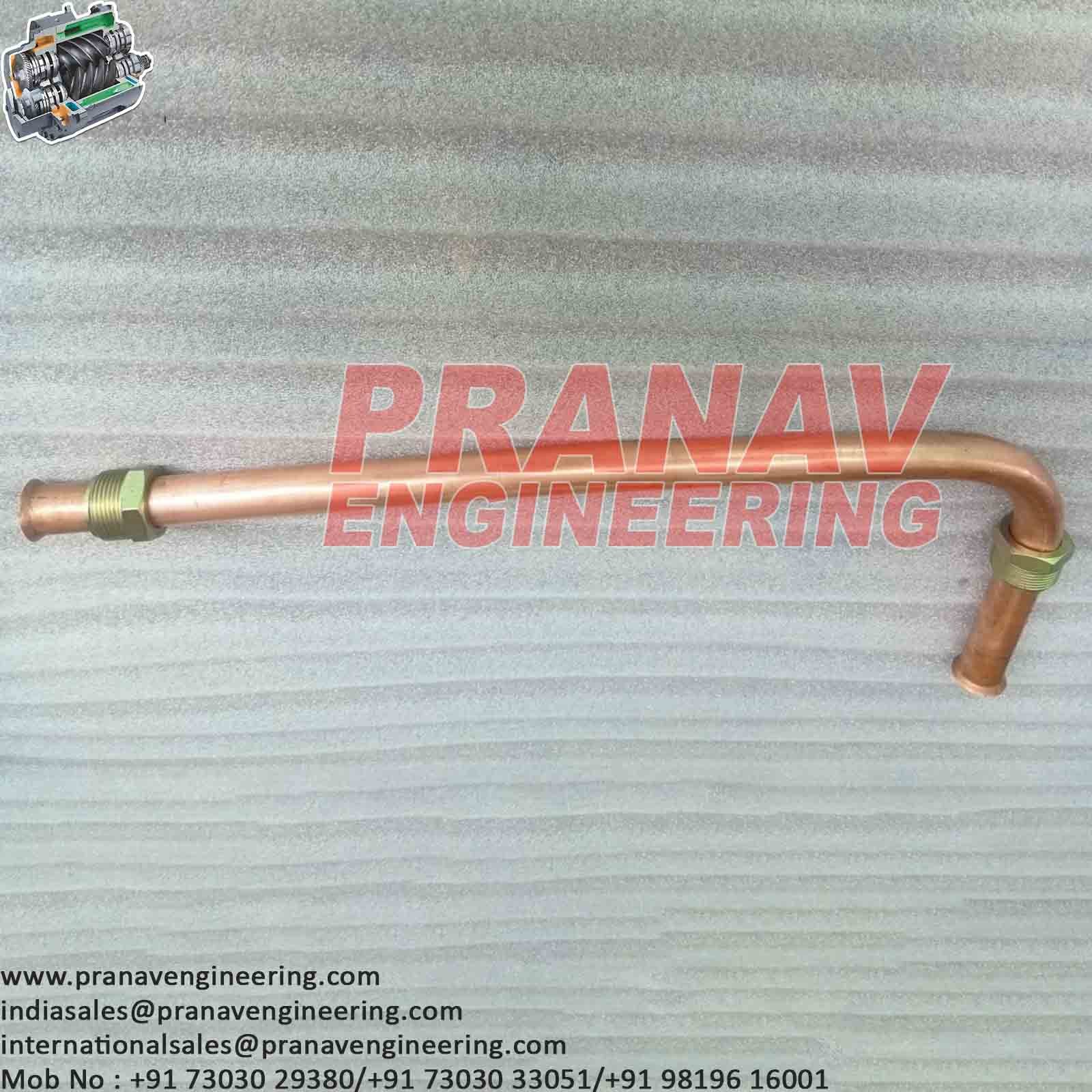
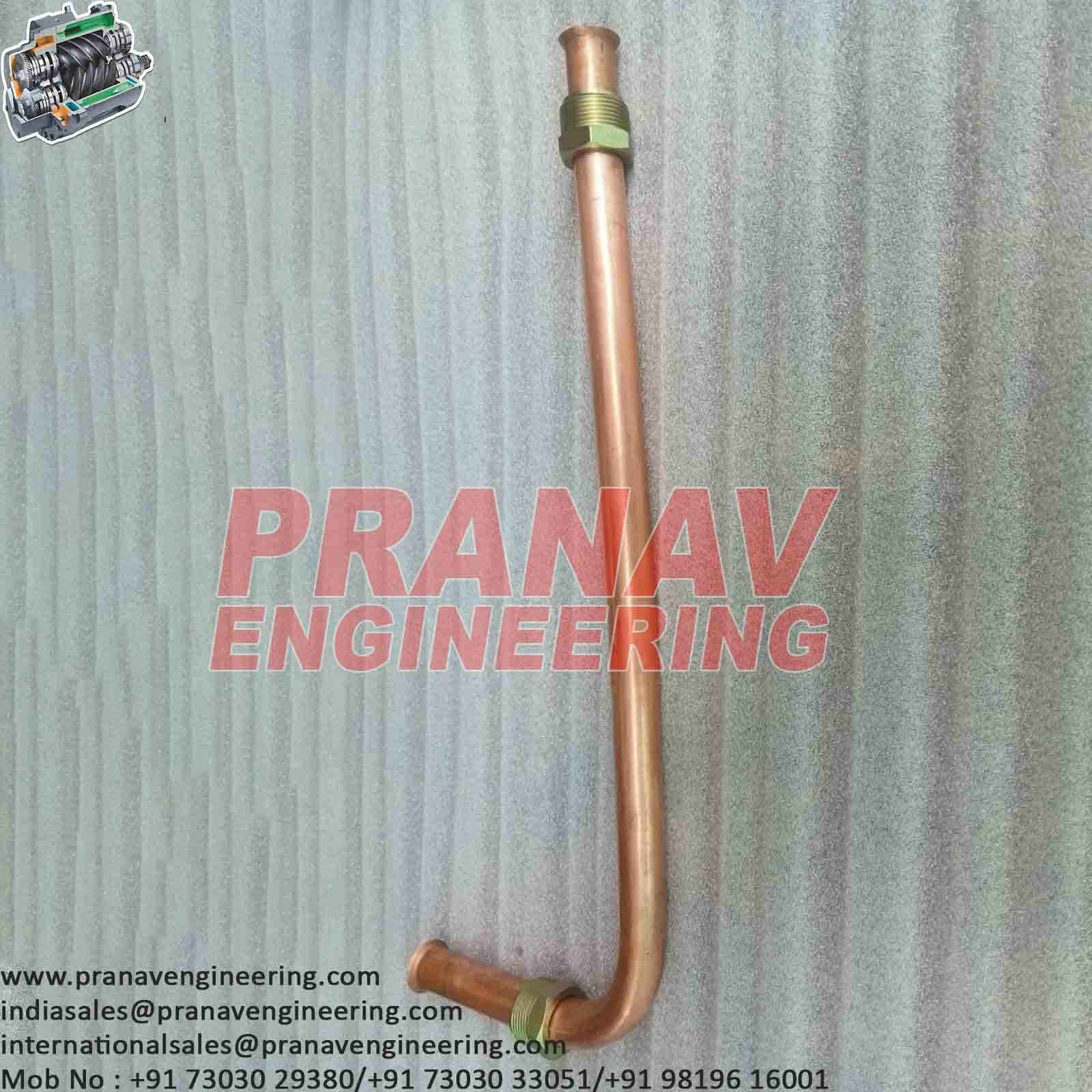
DISCHARGE TUBE-32308074
A discharge tube is an important component of a compressor system that carries compressed air or refrigerant gas from the compressor outlet to the next stage of the system.
A discharge tube is an important component of a compressor system that carries compressed air or refrigerant gas from the compressor outlet to the next stage of the system. It is designed to withstand high pressure, elevated temperatures, vibration, and continuous operating conditions. Discharge tubes are commonly used in air compressors, refrigeration compressors, air-conditioning systems, and various industrial compressed-gas applications.
The primary function of the discharge tube is to safely transport the compressed medium from the compressor to the receiver, condenser, separator, or other downstream equipment. During compression, the gas pressure and temperature increase significantly. The discharge tube provides a controlled flow path for this high-pressure gas while minimizing leakage and pressure losses. Its dimensions, material, and design are selected according to the compressor capacity, operating pressure, temperature, and type of gas being handled.
A typical discharge tube may be manufactured from copper, stainless steel, carbon steel, or other suitable materials depending on the application. In refrigeration and air-conditioning equipment, copper tubing is frequently used because of its good thermal conductivity, corrosion resistance, ease of forming, and compatibility with many refrigerants. Industrial compressor systems may use steel or stainless-steel tubing when higher mechanical strength or corrosion resistance is required.
The discharge tube is normally connected to the compressor using brazed joints, welded joints, threaded fittings, or specially designed connectors. Proper sealing of these connections is essential because leakage from the high-pressure side can reduce compressor efficiency and may create safety hazards. The tube must also be correctly supported to prevent excessive vibration and mechanical stress. Flexible sections or vibration-absorbing arrangements may be used where necessary to protect the tube and compressor connection from fatigue.
During operation, the discharge tube can become hot because the compressed gas leaving the compressor has a high temperature. Adequate clearance and insulation may therefore be required to protect nearby components and personnel. In some systems, the discharge line may also be designed to accommodate thermal expansion and prevent excessive stress caused by temperature changes.
A damaged, blocked, cracked, or leaking discharge tube can result in reduced system performance, abnormal pressure conditions, increased energy consumption, and possible compressor overheating. Regular inspection should therefore be carried out to check for corrosion, cracks, oil stains, loose connections, deformation, vibration damage, and leakage.
In conclusion, the discharge tube is a vital part of a compressor system because it provides a safe and efficient path for transporting compressed gas from the compressor to downstream equipment. Correct selection, installation, support, and maintenance of the discharge tube help ensure reliable operation, minimize pressure losses, prevent leakage, and extend the overall service life of the compressor system.