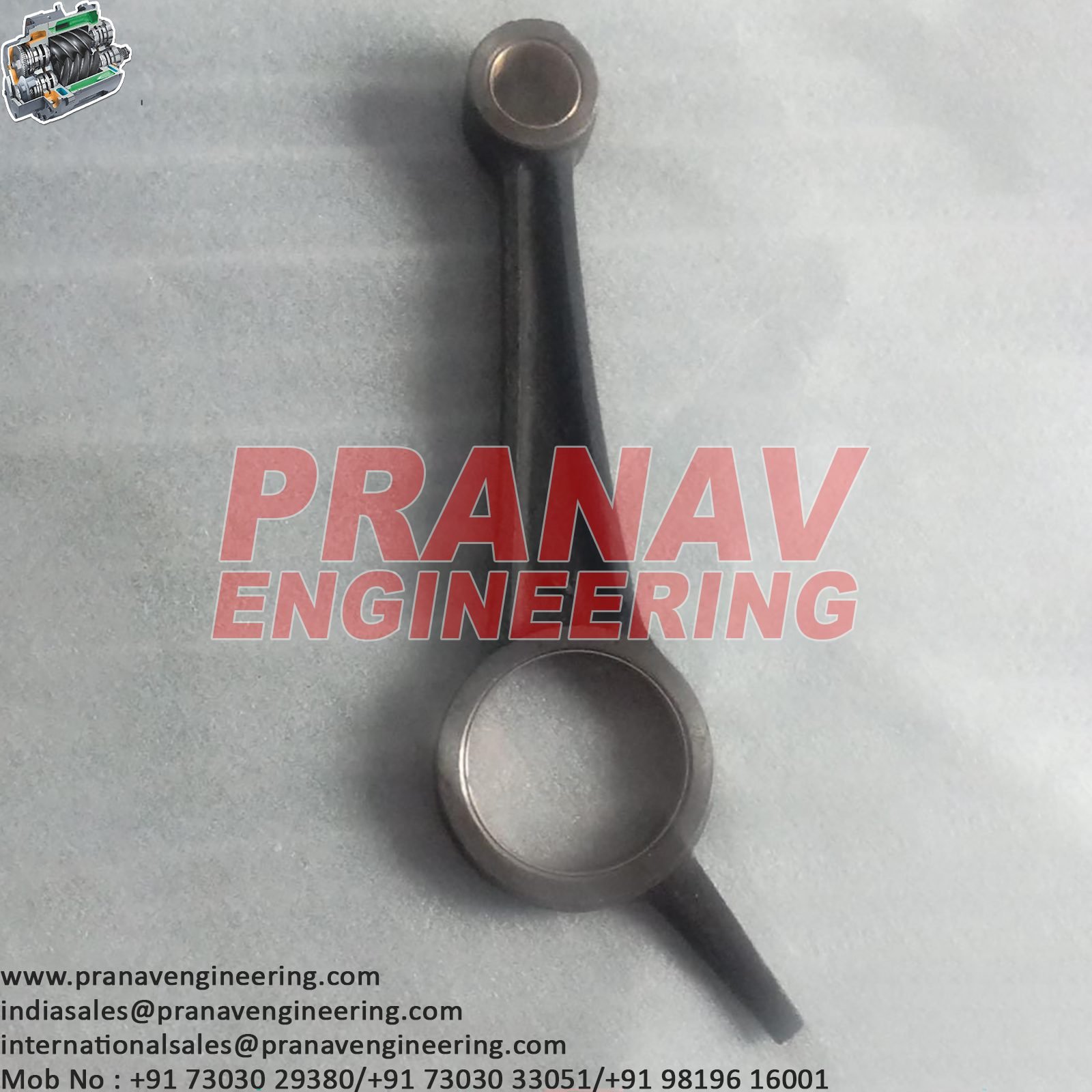
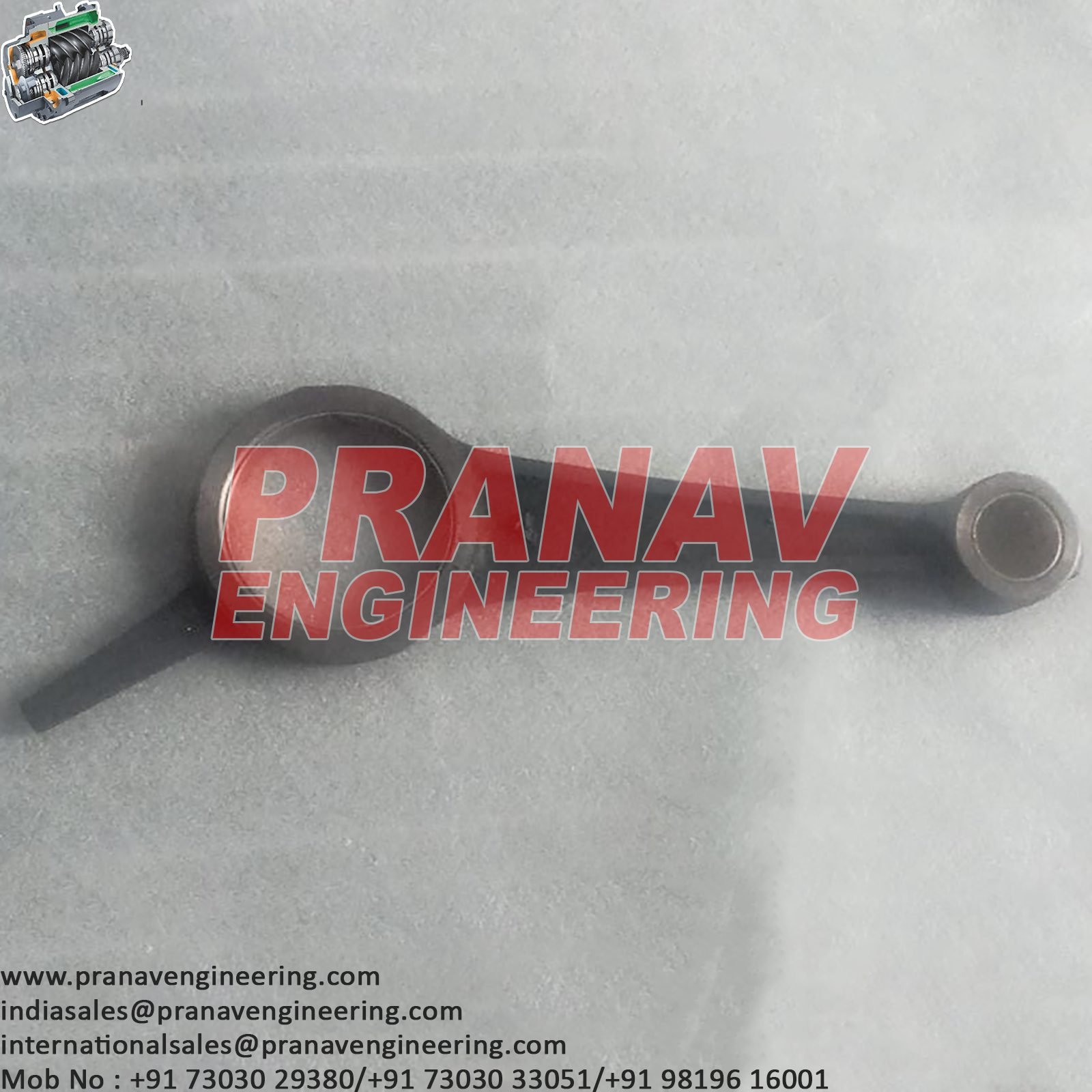
CONNECTING ROD-30217327
Common connecting-rod problems include bending, cracking, excessive wear, loose bolts, bearing damage, bush wear, and misalignment.
The connecting rod is one of the most important moving components in a reciprocating compressor. It provides the mechanical connection between the piston and the crankshaft and transfers the forces produced during the compression process. Its primary function is to convert the rotary motion of the crankshaft into reciprocating motion of the piston and to transmit the required mechanical load safely and continuously.
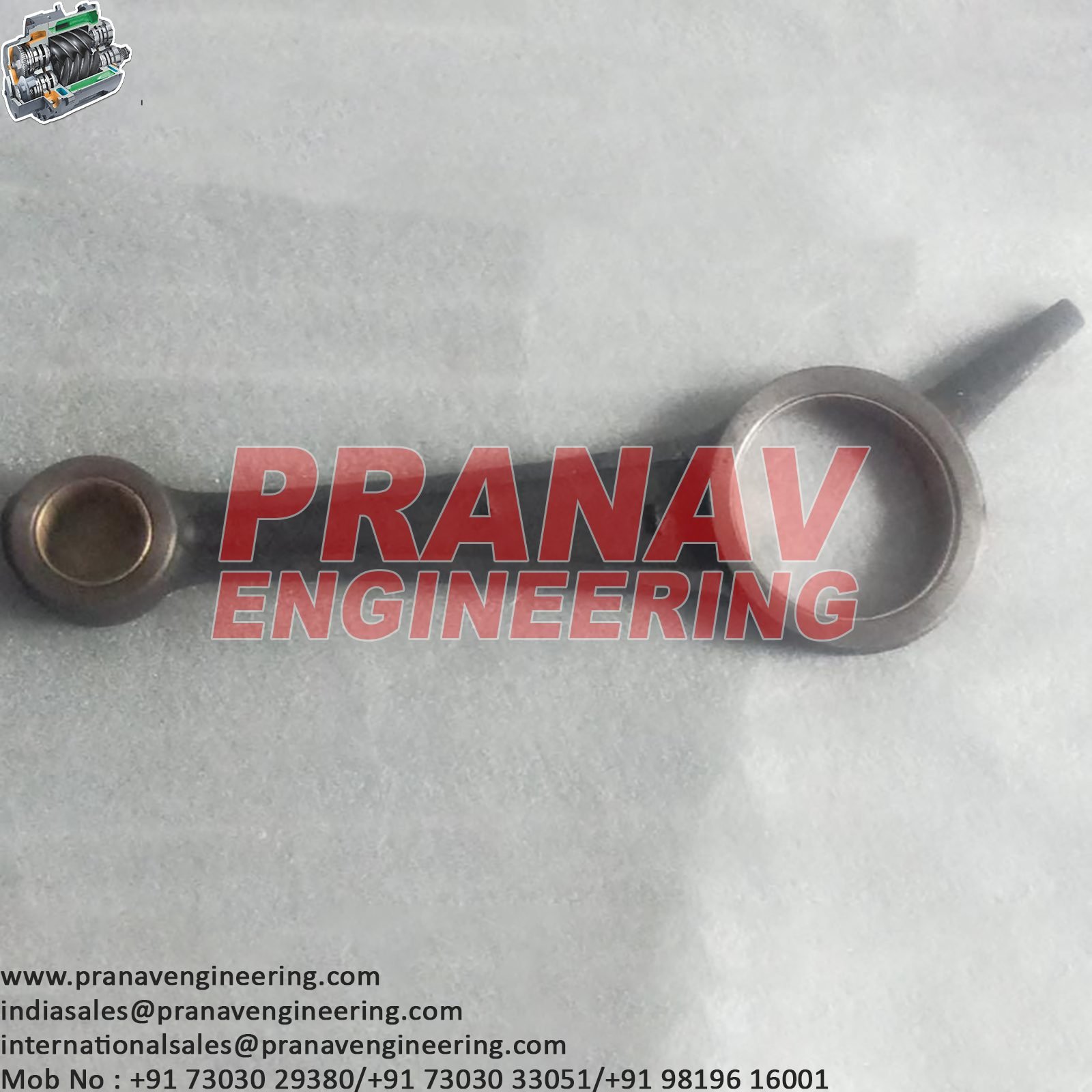
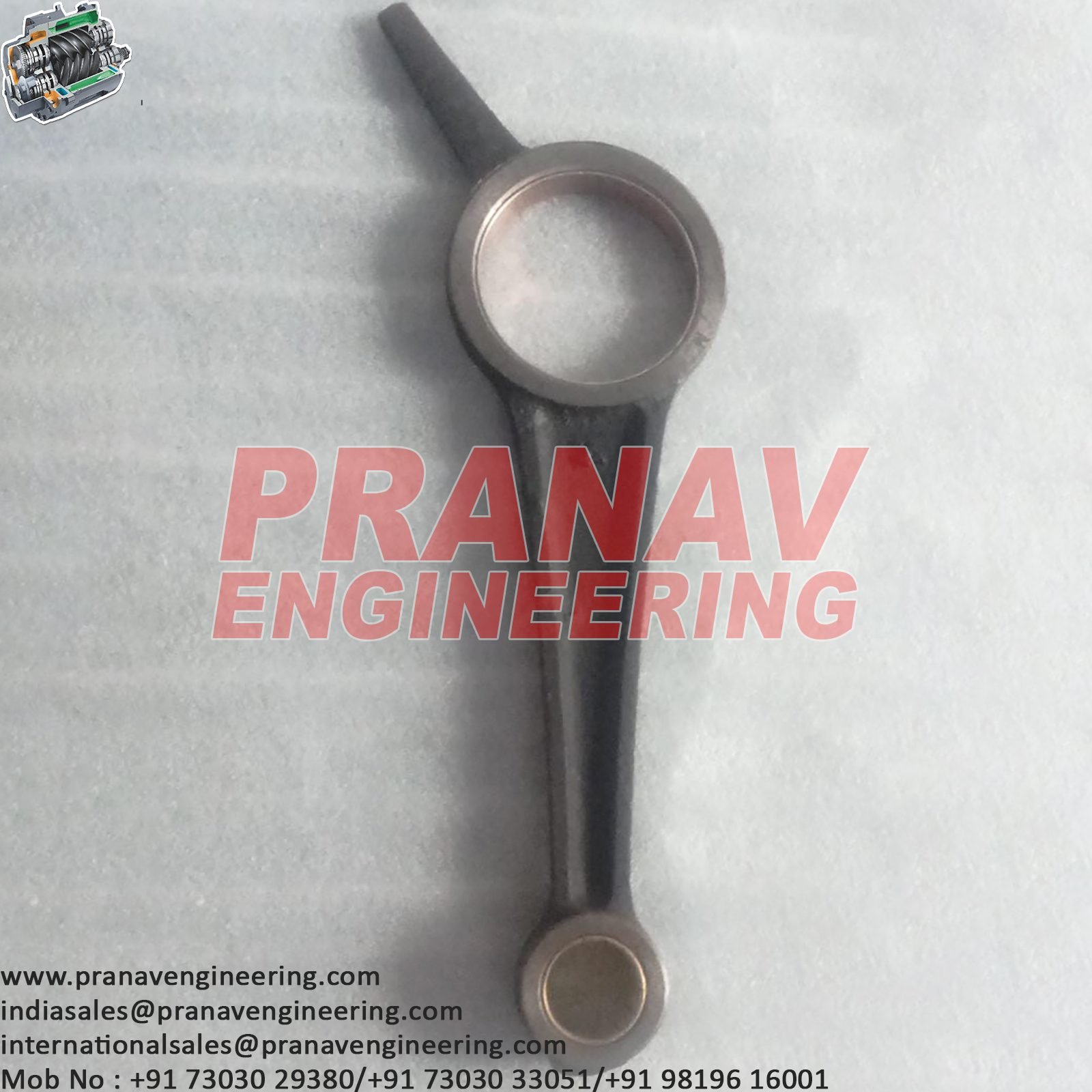
A typical compressor connecting rod consists of a rod body, small end, big end, connecting-rod cap, bushes or bearings, and connecting-rod bolts. The rod body is generally manufactured from high-strength forged steel or an appropriate alloy material. The material must have sufficient strength, rigidity, and fatigue resistance because the connecting rod is subjected to continuously changing loads during compressor operation.
The small end of the connecting rod is connected to the piston through a piston pin, also called a gudgeon pin. A bush may be installed at this end to reduce friction between the connecting rod and piston pin. The small end must allow the necessary movement while maintaining correct alignment between the piston and connecting rod.
The big end is connected to the crankshaft crankpin. It is usually divided into two sections: the connecting-rod body and a removable cap. Bearing shells or bushes are installed at the big end to provide a smooth running surface between the connecting rod and crankshaft. Correct bearing clearance is essential for maintaining proper lubrication and preventing excessive wear.
During compressor operation, the crankshaft rotates and causes the connecting rod to move. This movement drives the piston backward and forward inside the cylinder. During the suction stroke, the connecting rod pulls the piston to draw gas into the cylinder. During the compression stroke, it pushes the piston to compress the gas to the required pressure.
The connecting rod is exposed to high mechanical loads, vibration, and repeated stress. Proper lubrication is therefore necessary for the connecting-rod bushes and bearings. Lubricating oil reduces friction, removes heat, and protects the surfaces from wear. Insufficient lubrication or contaminated oil can cause overheating and premature failure.
Common connecting-rod problems include bending, cracking, excessive wear, loose bolts, bearing damage, bush wear, and misalignment. These problems may cause abnormal noise, increased vibration, high bearing temperature, reduced compressor performance, or serious internal damage. A connecting-rod failure can damage the piston, cylinder, crankshaft, and other compressor components.
During maintenance, the connecting rod should be inspected for cracks, deformation, wear, and correct alignment. The small-end bush and big-end bearing should be checked for proper clearance and surface condition. Connecting-rod bolts must be tightened according to the manufacturer’s specified torque, and lubrication passages should be clean.
In conclusion, the connecting rod is a critical component that ensures efficient transfer of motion and force between the crankshaft and piston. Proper lubrication, alignment, inspection, and timely replacement of worn components are essential for maintaining reliable compressor operation and extending the service life of the equipment.