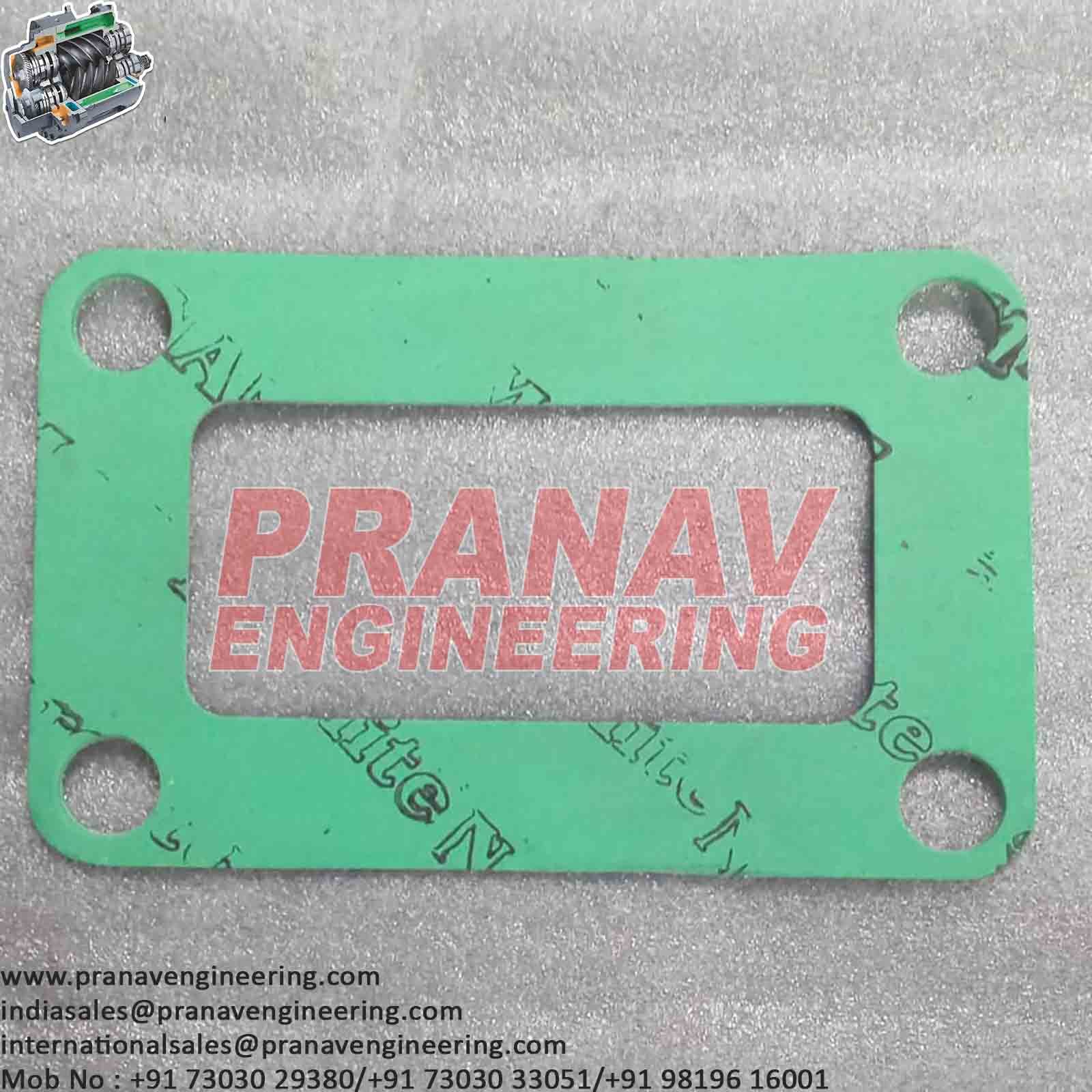
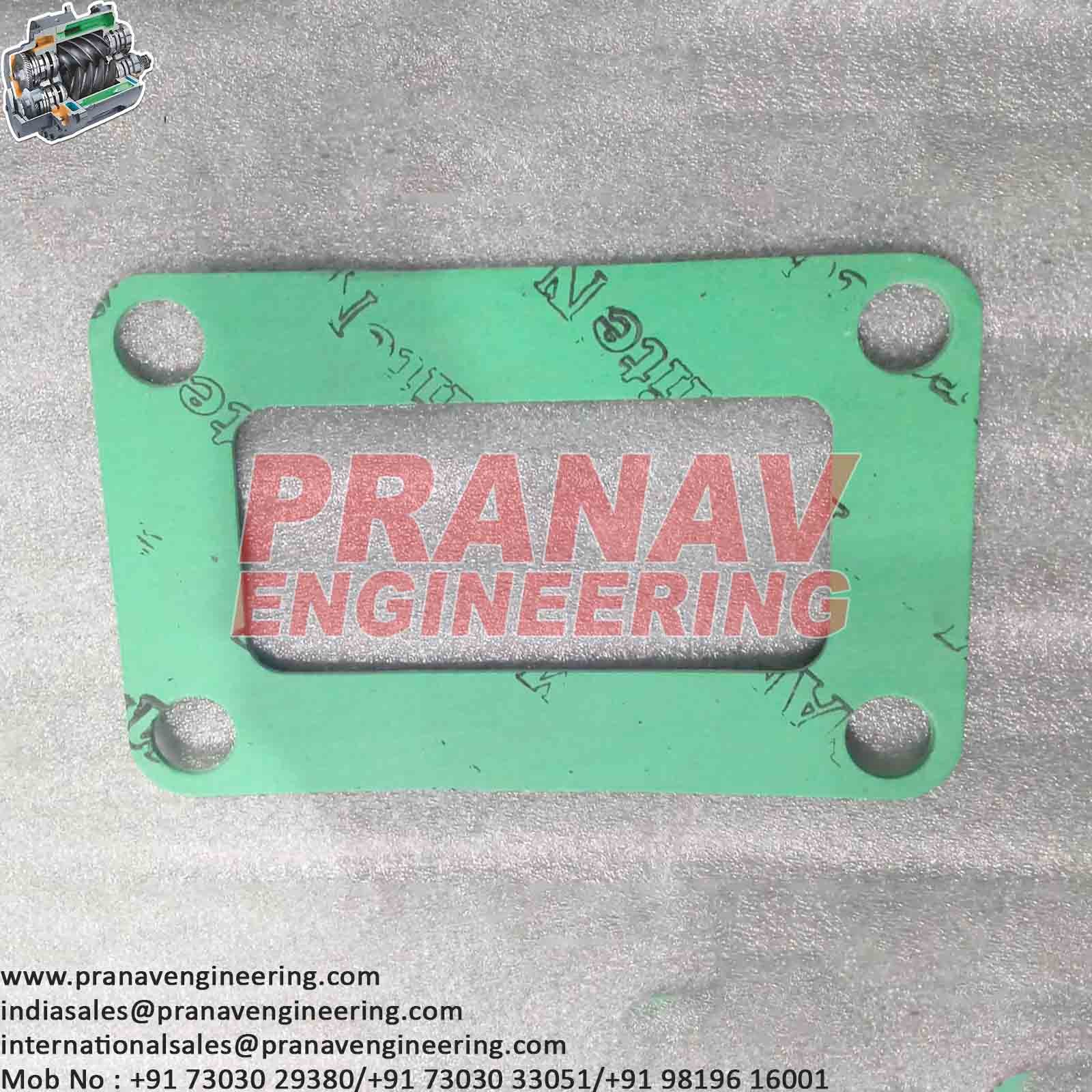
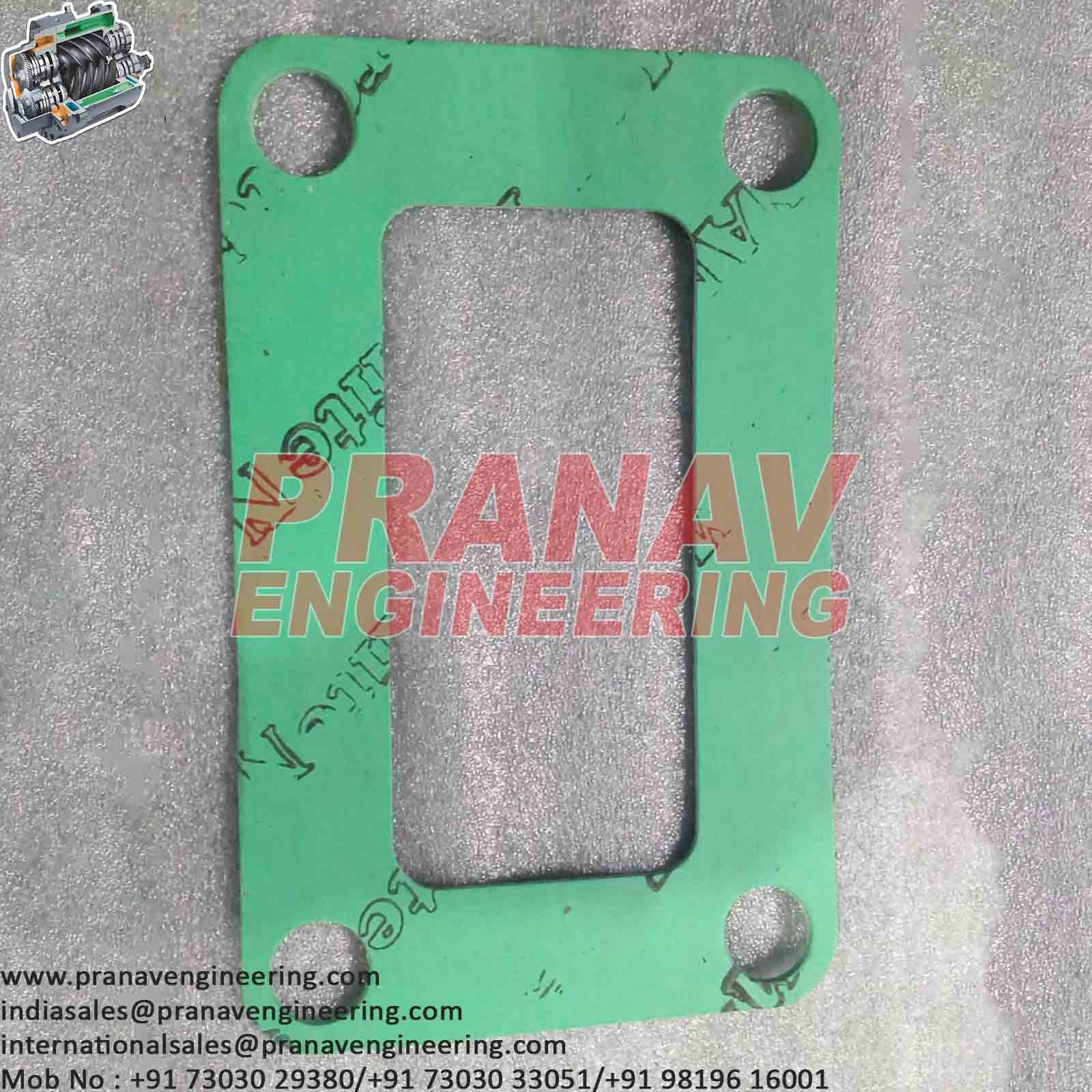
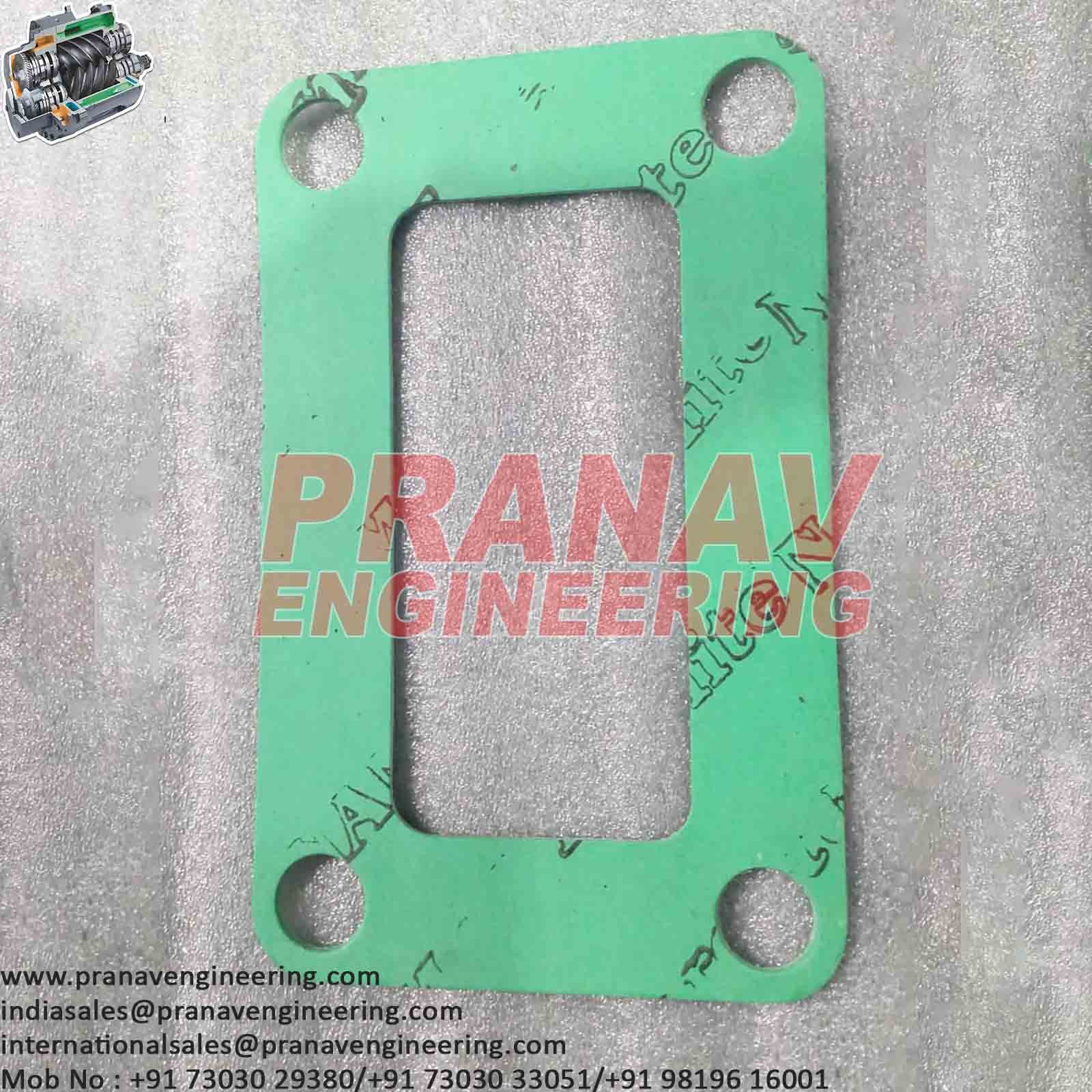
GASKET-39302948
During installation, the gasket is positioned accurately between the specified mating surfaces.
A Gasket used in a compressor is a sealing component installed between two mating surfaces to prevent the leakage of air, gas, oil, coolant, or other process fluids. It is an essential component in compressor assemblies because it helps maintain pressure within the system and prevents external contamination from entering critical areas. Gaskets are commonly used in cylinder heads, valve plates, crankcases, flanges, covers, pipelines, oil systems, and other compressor connections.
The primary function of a compressor gasket is to create a reliable seal between two stationary surfaces. Even when mating surfaces appear smooth, small irregularities can create leakage paths. The gasket fills these microscopic gaps when compressed between the surfaces. The correct gasket material, thickness, shape, and compression characteristics are selected according to the compressor design and operating conditions.
Gaskets can be manufactured from various materials, including compressed fiber, rubber, graphite, PTFE, cork, metallic materials, and composite materials. The material selection depends on operating temperature, pressure, chemical compatibility, fluid type, vibration, and the specific location of the gasket within the compressor. Metallic and spiral-wound gaskets are generally used for demanding high-pressure or high-temperature applications, while elastomeric and fiber-based gaskets may be suitable for lower-pressure connections.
During installation, the gasket is positioned accurately between the specified mating surfaces. Before installation, the surfaces should be cleaned thoroughly to remove dirt, oil, old gasket material, and other contaminants. The mating surfaces should also be inspected for scratches, corrosion, distortion, or other defects that could affect sealing performance. The bolts or fasteners are then tightened according to the recommended sequence and torque. Proper tightening is important because insufficient compression may cause leakage, while excessive compression can damage the gasket or distort the mating surfaces.
During compressor operation, the gasket must withstand repeated pressure cycles, temperature changes, vibration, and exposure to the working fluid. A properly installed gasket maintains a stable seal throughout these conditions. A damaged, hardened, cracked, or incorrectly installed gasket may result in leakage, pressure loss, reduced compressor efficiency, contamination, overheating, or equipment failure.
Regular inspection and timely replacement of gaskets are therefore important parts of compressor maintenance. Whenever a gasket is removed from a critical joint, replacement with a suitable new gasket is generally recommended rather than reusing the old one. The replacement gasket should match the original specification in dimensions, material, and thickness.
The major advantages of a properly selected gasket include effective sealing, prevention of fluid leakage, pressure retention, protection against contamination, reduced maintenance problems, and improved compressor reliability.
Overall, the gasket is a relatively simple but critical component of a compressor system. Correct selection, installation, tightening, inspection, and replacement of gaskets help maintain system integrity, improve operating efficiency, prevent leakage, and extend the service life of compressor components.